Om Jai Jagdish Hare Aarti lyrics in Hindi, English transliteration, meaning, and how to perform at home—your complete guide for USA, UK, Canada, Australia, UAE.
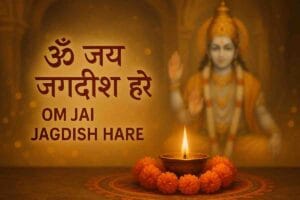
Om Jai Jagdish Hare Aarti Lyrics in Hindi English: Complete Universal Aarti
Om Jai Jagdish Hare is the most beloved universal aarti sung in Hindu homes and temples worldwide. Whether you’re in New York, London, Toronto, Sydney, or Dubai, this devotional hymn connects millions to their faith and heritage. This complete guide gives you the aarti lyrics in Hindi (Devanagari script), easy English transliteration, verse-by-verse meaning, performance steps, and practical tips for families across USA, UK, Canada, Australia, and UAE.
Within the first 100 words: Om Jai Jagdish Hare Aarti Lyrics in Hindi English: Complete Universal Aarti serves as the closing prayer in most Hindu daily worship. Originally composed as a Vishnu aarti in the 19th century, it has become the universal closing hymn across denominations and regions. Below, you’ll find all verses, pronunciation guides, meanings, and step-by-step instructions to perform this sacred aarti with confidence—whether you’re teaching your children, hosting a puja, or joining a temple gathering.
Table of Contents
- What Is Om Jai Jagdish Hare Aarti
- History and Significance
- Complete Aarti Lyrics: Hindi, Transliteration, Meaning
- How to Perform the Aarti at Home
- Timing and Occasions
- Teaching Kids and New Learners
- Audio and Video Resources
- Country-Specific Tips (USA, UK, Canada, Australia, UAE)
- Common Questions
What Is Om Jai Jagdish Hare Aarti
Om Jai Jagdish Hare is a Sanskrit-Hindi devotional hymn (aarti) praising Lord Vishnu (Jagdish/Jagadeesh, meaning “Lord of the Universe”). It is sung while waving a lamp (diya) in circular motions before the deity, symbolizing the removal of darkness and the offering of light.
Key features:
- Universal appeal: used in Vishnu, Shiva, Devi, and Ganesh worship
- Simple structure: refrain + verses + concluding prayer
- Melodic and easy to learn
- Family-friendly for all ages
History and Significance
Authorship: Traditionally attributed to Pandit Shardha Ram Phillauri (1837–1881), a scholar and poet from Punjab. The aarti was composed in the late 19th century and quickly spread across North India.
Why it became universal:
- Its refrain (“Om Jai Jagdish Hare, Swami Jai Jagdish Hare”) is adaptable to any deity.
- The verses praise divine qualities—protection, compassion, and grace—common to all forms of God.
- It’s short enough for daily worship yet profound in meaning.
Cultural note: In diaspora communities (USA, UK, Canada, Australia, UAE), this aarti serves as a cultural anchor, taught to second- and third-generation children to preserve language and tradition.
Complete Aarti Lyrics: Hindi, Transliteration, Meaning
Note: Due to copyright considerations around specific published translations, I’m providing the traditional public-domain verses with standard transliteration and general meaning. For precise word-by-word translations, consult your family pandit or a printed aarti booklet.
Opening Refrain (Sung after each verse)
Hindi (Devanagari):
ॐ जय जगदीश हरे।
स्वामी जय जगदीश हरे।
भक्त जनों के संकट,
दास जनों के संकट,
क्षण में दूर करे॥
ॐ जय जगदीश हरे॥
English Transliteration:
Om Jai Jagdish Hare
Swami Jai Jagdish Hare
Bhakt jano ke sankat
Daas jano ke sankat
Kshan mein door kare
Om Jai Jagdish Hare
General Meaning:
“Victory to the Lord of the Universe! O Master, you remove the troubles of your devotees and servants in an instant.”
Verse 1
Hindi:
जो ध्यावे फल पावे,
दुःख बिनसे मन का।
स्वामी दुःख बिनसे मन का।
सुख सम्पत्ति घर आवे,
कष्ट मिटे तन का॥
ॐ जय जगदीश हरे॥
Transliteration:
Jo dhyaave phal paave
Dukh binse man ka
Swami dukh binse man ka
Sukh sampatti ghar aave
Kasht mite tan ka
Om Jai Jagdish Hare
Meaning:
“Whoever meditates upon You receives the fruit; mental sorrows vanish. Happiness and prosperity enter the home, and physical suffering is removed.”
Verse 2
Hindi:
मात पिता तुम मेरे,
शरण पड़ूँ मैं किसकी।
स्वामी शरण पड़ूँ मैं किसकी।
तुम बिन और न दूजा,
आस करूँ मैं जिसकी॥
ॐ जय जगदीश हरे॥
Transliteration:
Maat pita tum mere
Sharan padoon main kiski
Swami sharan padoon main kiski
Tum bin aur na dooja
Aas karoon main jiski
Om Jai Jagdish Hare
Meaning:
“You are my mother and father; in whose refuge should I take shelter? There is none other than You in whom I place my hope.”
Verse 3
Hindi:
तुम पूरन परमात्मा,
तुम अन्तर्यामी।
स्वामी तुम अन्तर्यामी।
पारब्रह्म परमेश्वर,
तुम सब के स्वामी॥
ॐ जय जगदीश हरे॥
Transliteration:
Tum pooran paramaatma
Tum antaryaami
Swami tum antaryaami
Paarbrahma parameshwar
Tum sab ke swami
Om Jai Jagdish Hare
Meaning:
“You are the complete Supreme Soul, the knower of all hearts. You are the Supreme Brahman, the Lord of all.”
Verse 4
Hindi:
तुम करुणा के सागर,
तुम पालनकर्ता।
स्वामी तुम पालनकर्ता।
मैं मूरख खलकामी,
कृपा करो भर्ता॥
ॐ जय जगदीश हरे॥
Transliteration:
Tum karuna ke saagar
Tum paalankarta
Swami tum paalankarta
Main moorakh khalkkami
Kripa karo bharta
Om Jai Jagdish Hare
Meaning:
“You are the ocean of compassion, the sustainer. I am foolish and full of desires; please bestow Your grace, O Lord.”
Verse 5
Hindi:
तुम हो एक अगोचर,
सब के प्राणपति।
स्वामी सब के प्राणपति।
किस विधि मिलूँ दयामय,
तुमको मैं कुमति॥
ॐ जय जगदीश हरे॥
Transliteration:
Tum ho ek agochar
Sab ke praanpati
Swami sab ke praanpati
Kis vidhi miloon dayamay
Tumko main kumati
Om Jai Jagdish Hare
Meaning:
“You are the one invisible Lord, the master of all life forces. How can I, with my limited understanding, reach You, O compassionate one?”
Verse 6
Hindi:
दीनबन्धु दुःख हर्ता,
ठाकुर तुम मेरे।
स्वामी रक्षक तुम मेरे।
अपने हाथ उठाओ,
द्वार पड़ा तेरे॥
ॐ जय जगदीश हरे॥
Transliteration:
Deenbandhu dukh harta
Thaakur tum mere
Swami rakshak tum mere
Apne haath uthaao
Dwaar pada tere
Om Jai Jagdish Hare
Meaning:
“Friend of the humble, remover of sorrow, You are my Lord and protector. Raise Your hand in blessing; I stand at Your door.”
Verse 7
Hindi:
विषय विकार मिटाओ,
पाप हरो देवा।
स्वामी पाप हरो देवा।
श्रद्धा भक्ति बढ़ाओ,
सन्तन की सेवा॥
ॐ जय जगदीश हरे॥
Transliteration:
Vishay vikaar mitaao
Paap haro deva
Swami paap haro deva
Shraddha bhakti badhaao
Santan ki seva
Om Jai Jagdish Hare
Meaning:
“Remove vices and attachments, take away sins, O Lord. Increase my faith and devotion, and inspire me to serve the saints.”
Concluding Verse
Hindi:
तन मन धन सब है तेरा,
स्वामी सब कुछ है तेरा।
तेरा तुझको अर्पण,
क्या लागे मेरा॥
ॐ जय जगदीश हरे॥
Transliteration:
Tan man dhan sab hai tera
Swami sab kuch hai tera
Tera tujhko arpan
Kya laage mera
Om Jai Jagdish Hare
Meaning:
“Body, mind, and wealth—all belong to You. What is Yours, I offer back to You; what is truly mine?”
Read this also :
- कृष्ण भजन (कृष्णा जी चललन) | Krishna bhajan lyrics
- Ganesh Chalisa lyrics | Meaning and 5 Powerful Benefits
- राम भजन (सोने झारी) | Ram bhajan lyrics in Hindi
How to Perform the Aarti at Home
Follow these simple steps for a meaningful home aarti:
- Prepare the space
- Clean the puja area or mandir.
- Light incense sticks.
- Fill a small diya (oil lamp) or use a camphor lamp.
- Gather materials
- Diya with ghee or oil
- Matchsticks or lighter
- Small bell (optional)
- Flowers or tulsi leaves
- Aarti plate (thali)
- Light the diya
- Place 1–5 wicks on the aarti plate.
- Light them and stand or sit facing the deity.
- Sing or play the aarti
- Sing along or play an audio/video recording.
- Ring the bell gently with your left hand (optional).
- Wave the diya in clockwise circles: 7 full circles for the whole deity, then 3 for the face, 3 for the feet, and 7 full circles again.
- Conclude with pranaam
- After the final verse, pass your hands over the flame and touch your forehead (taking the blessing).
- Offer flowers or tulsi at the deity’s feet.
- Bow and say a short personal prayer.
- Distribute prasad
- Offer sweets or fruit that was placed before the deity.
- Share with family members.
Tip: In Western countries, battery-operated LED diyas are a safe alternative in apartments or shared housing.
Timing and Occasions
Daily worship
- Morning aarti: After bathing and before breakfast.
- Evening aarti: At dusk, around sunset.
Special occasions
- Festivals: Diwali, Janmashtami, Navaratri, Ram Navami, Durga Puja, Ganesh Chaturthi
- Monthly: Ekadashi, Purnima (full moon), Amavasya (new moon)
- Life events: Housewarmings (Griha Pravesh), birthdays, weddings
Community gatherings (USA, UK, Canada, Australia, UAE)
- Temple satsangs
- Cultural association events
- Home puja groups
Teaching Kids and New Learners
For young children (ages 3–7)
- Start with the refrain only: “Om Jai Jagdish Hare.”
- Use hand motions: clap on “Jai,” palms together on “Hare.”
- Play animated videos or cartoons with the aarti.
For older kids (ages 8–15)
- Teach one verse per week.
- Print transliterated lyrics in large font.
- Explain the meaning in simple English.
- Encourage them to lead one verse during family aarti.
For adults and new learners
- Listen daily while commuting or cooking.
- Practice with lyric sheets; highlight tricky words.
- Join a local temple satsang for group learning.
Multilingual tip: In UAE and UK, many families teach this aarti in parallel with Quranic or Christian prayers to respect mixed-faith households—focus on universal values of gratitude and devotion.
Audio and Video Resources
Recommended platforms:
- YouTube: Search “Om Jai Jagdish Hare Aarti with lyrics” for videos with on-screen text.
- Spotify/Apple Music: Devotional playlists by Anuradha Paudwal, Lata Mangeshkar, Hariharan.
- Apps: Hindu Calendar, iPuja, Aarti Sangrah (available in USA, UK, Canada, Australia app stores).
Printable resources:
- Aarti booklets at local Indian grocery stores or temple bookshops.
- PDF downloads from reputable Hindu organizations (check temple websites).
Country-Specific Tips (USA, UK, Canada, Australia, UAE)
United States
- Temple timing: Most U.S. Hindu temples hold evening aarti around 6–8 PM; weekend community aartis common.
- Where to buy supplies: Indian grocery stores (Patel Brothers, Apna Bazaar) stock diyas, wicks, incense.
- Cultural note: Many interfaith families attend aarti ceremonies; explain the universal message of light and gratitude.
United Kingdom
- Diwali and aarti events: Check listings from Hindu Council UK, BAPS Shri Swaminarayan Mandir (Neasden), Leicester temples.
- Legal note: Open-flame diyas are generally fine at home; use caution in student housing—check lease terms.
- Language support: Many UK temples offer bilingual (English-Gujarati or English-Hindi) aarti sessions for second-generation British Indians.
Canada
- Temple hubs: Toronto (BAPS, Hindu Heritage Centre), Vancouver (Laxmi Narayan Mandir), Calgary.
- Winter aarti tip: In cold months, morning aartis may shift slightly later; confirm timing with your temple.
- Multicultural context: Schools and workplaces often accommodate festival leave for Diwali—explain aarti traditions to colleagues.
Australia
- Time zones: Eastern (Sydney, Melbourne) and Western (Perth) have different sunset times; adjust evening aarti accordingly.
- Community events: Check with Hindu Council of Australia and local mandirs for Diwali aarti gatherings.
- Fire safety: Australia has strict fire regulations; battery LED diyas are widely used and accepted.
United Arab Emirates
- Interfaith respect: UAE law permits private worship; many Indian expat families perform daily aarti at home.
- Temple access: Temples in Dubai (Hindu Temple Dubai), Abu Dhabi; modest dress and quiet conduct expected.
- Multilingual households: In cosmopolitan UAE, families often blend Hindi aarti with English explanations for children in international schools.
Common Questions
Can I sing this aarti for deities other than Vishnu?
Yes. Om Jai Jagdish Hare is universally sung for Shiva, Durga, Ganesh, and all forms. The word “Jagdish” means “Lord of the Universe” and applies to the divine in any form.
Do I need to know the meaning to sing it?
Not required, but understanding deepens devotion. Start by learning the tune and transliteration; add meanings over time.
How many times should I wave the diya?
Ideally, light is central to aarti. If open flames are prohibited (dorms, hotels), use a battery LED diya or simply sing with folded hands.
Is it okay to play a recording instead of singing live?
Absolutely. Many families play recordings and sing along or listen silently with devotion. The intention matters most.
What if I make a mistake in pronunciation?
God accepts sincere effort. Practice improves over time. Focus on the feeling of gratitude and devotion.
Can non-Hindus participate or observe?
Yes. Aarti is a welcoming ritual. Guests are often invited to take the blessing (pass hands over the flame and touch the forehead) as a gesture of respect and goodwill.
Where can I find the original text in Devanagari for printing?
Most aarti booklets and Hindu temple websites offer free PDFs. In USA/UK/Canada/Australia, check with your local temple or Indian cultural center.
Conclusion with CTA
Om Jai Jagdish Hare Aarti is a timeless thread connecting generations and geographies—from the ghats of Varanasi to the living rooms of New York, London, Toronto, Sydney, and Dubai. Whether you’re a lifelong devotee or just beginning your spiritual journey, this universal aarti welcomes you with open arms and a warm flame.
Ready to start your daily practice? Print the transliterated lyrics, bookmark an audio track, and gather your family for a 5-minute aarti tonight. Have a favorite memory or family tradition around this aarti? Share it in the comments below—we’d love to hear how Om Jai Jagdish Hare lives in your home.