Discover Ganesha Atharvashirsha lyrics in Sanskrit with English translation. Learn this powerful Ganesh Upanishad’s meaning, benefits & chanting guide.
Ganesha Atharvashirsha Lyrics: Complete Guide to the Powerful Ganesh Upanishad
Are you searching for spiritual wisdom that can remove obstacles and bring success to your life? The Ganesha Atharvashirsha, one of the most powerful Upanishads dedicated to Lord Ganesha, has been transforming lives for over 2,000 years. This sacred text is revered by millions of devotees worldwide who chant it daily for prosperity, wisdom, and divine protection.
Whether you’re in New York, Dubai, London, Toronto, Sydney, or Singapore, this comprehensive guide will provide you with the complete Ganesha Atharvashirsha lyrics, accurate pronunciation, profound meanings, and practical guidance for incorporating this ancient wisdom into your modern life.
In this detailed guide, you’ll discover the Sanskrit verses, English translations, spiritual significance, proven benefits, and the proper method to chant this powerful Ganesh Upanishad. By the end, you’ll understand why this text is considered one of the most potent prayers in Vedic literature.
Table of Contents
- What is Ganesha Atharvashirsha
- Historical Origins and Significance
- Complete Structure of the Upanishad
- Ganesha Atharvashirsha Lyrics in Sanskrit
- English Transliteration for Easy Learning
- Verse-by-Verse Translation and Meaning
- Deep Spiritual Significance Explained
- Proven Benefits of Regular Chanting
- Step-by-Step Chanting Guide
- Best Time and Method for Recitation
- Common Mistakes to Avoid
- Scientific Perspective on Mantra Power
- Frequently Asked Questions
- Conclusion and Practice Recommendations
What is Ganesha Atharvashirsha
The Ganesha Atharvashirsha (also spelled Ganapati Atharvashirsha) is a sacred Upanishad dedicated entirely to Lord Ganesha, the elephant-headed deity revered as the remover of obstacles and the lord of beginnings. This profound text belongs to the Atharva Veda, one of the four primary Vedas in Hindu tradition.
The name breaks down as follows: “Ganesha” refers to Lord Ganesha, “Atharva” indicates its association with the Atharva Veda, and “Shirsha” means head or supreme. Together, it translates to “The Supreme Head of Ganesha Knowledge” or “The Foremost Text on Ganesha.”
Why This Text is Called an Upanishad
Upanishads are philosophical and mystical texts that reveal the deepest spiritual truths. Unlike simple prayers or hymns, Upanishads contain profound metaphysical knowledge about the nature of reality, consciousness, and the divine.
The Ganesha Atharvashirsha is unique because it’s one of the few Upanishads dedicated to a specific deity. Most Upanishads focus on formless Brahman (ultimate reality), but this text establishes Ganesha as identical with Brahman itself.
This elevation of Ganesha to the highest metaphysical status makes the Atharvashirsha exceptionally powerful in the eyes of devotees.
Place in Hindu Sacred Literature
Among the 108 traditional Upanishads, the Ganesha Atharvashirsha holds special importance for Ganapatya tradition—the sect that worships Ganesha as the supreme deity. However, its significance extends far beyond this sect.
Devotees from all Hindu traditions chant this text, especially before beginning important ventures, during Ganesh Chaturthi celebrations, or as part of regular spiritual practice. Its compact yet comprehensive nature makes it accessible while maintaining profound depth.
Historical Origins and Significance
The exact date of the Ganesha Atharvashirsha’s composition remains debated among scholars, but most evidence suggests it was composed between 900-1400 CE, making it approximately 600-1100 years old.
Scholarly Dating and Attribution
Unlike the core Upanishads (Brihadaranyaka, Chandogya, etc.) that date to 800-200 BCE, the Ganesha Atharvashirsha belongs to a later category of sectarian Upanishads. These texts emerged during medieval periods when devotional movements were flourishing.
The text doesn’t name a specific author, following the Upanishadic tradition of considering these works as divinely revealed (shruti) rather than human compositions. Ancient rishis who received this knowledge through meditation are credited with its transmission.
Adi Shankaracharya, the great 8th-century philosopher, is traditionally believed to have written a commentary on this text, though this attribution is contested by some scholars.
Evolution of Ganesha Worship
Archaeological evidence shows Ganesha worship dates back to at least the 4th-5th century CE. The deity’s popularity grew significantly during the Gupta period (320-550 CE) and medieval times.
The Ganesha Atharvashirsha emerged during this evolution, codifying and elevating Ganesha worship to Upanishadic status. It provided theological depth to what was becoming one of Hinduism’s most beloved deities.
Cultural Spread Across Geography
From its origins in India, the Ganesha Atharvashirsha spread wherever Hindu culture traveled. Today, it’s chanted in:
- Indian communities worldwide: USA (particularly in temples across California, New York, Texas, New Jersey)
- Southeast Asian Hindu communities: Singapore, Malaysia, Indonesia, Thailand
- Diaspora communities: UK (especially Leicester, London), Canada (Toronto, Vancouver), Australia (Sydney, Melbourne), UAE (Dubai, Abu Dhabi)
Major Ganesha temples globally incorporate this text in daily prayers and special ceremonies.
Complete Structure of the Upanishad
The Ganesha Atharvashirsha is remarkably concise compared to other Upanishads. It consists of approximately 14-17 verses (the count varies slightly in different recensions), divided into distinct sections.
The Three-Part Structure
Part 1 – Identification (Verses 1-4): Establishes Ganesha’s identity as the ultimate reality. Contains the powerful declaration “You alone are the visible manifestation of Brahman.”
Part 2 – Theological Description (Verses 5-11): Describes Ganesha’s cosmic nature, attributes, and relationship to creation, preservation, and dissolution.
Part 3 – Benefits and Instructions (Verses 12-17): Explains the benefits of studying this text and provides specific instructions for different types of worship.
Literary Characteristics
The text employs several Upanishadic literary devices:
Repetitive Affirmations: The phrase “Tvameva” (You alone) appears repeatedly, creating meditative rhythm and emphasizing Ganesha’s all-encompassing nature.
Paradoxical Statements: The text describes Ganesha as simultaneously formless and with form, transcendent and immanent, challenging rational understanding.
Mantra Sections: Embedded within the philosophical content are powerful bija (seed) mantras and specific invocations.
Ritual Prescriptions: Unlike purely philosophical Upanishads, this text includes practical instructions for worship, making it accessible to regular devotees.
Ganesha Atharvashirsha Lyrics in Sanskrit
The Ganesha Atharvashirsha begins with an invocation and proceeds through profound verses. Here are the key sections in Devanagari script:
Opening Invocation
ॐ भद्रं कर्णेभिः शृणुयाम देवाः।
भद्रं पश्येमाक्षभिर्यजत्राः॥
Main Declaration Verses
ॐ नमस्ते गणपतये।
त्वमेव प्रत्यक्षं तत्त्वमसि।
त्वमेव केवलं कर्ताऽसि।
त्वमेव केवलं धर्ताऽसि।
त्वमेव केवलं हर्ताऽसि।
त्वमेव सर्वं खल्विदं ब्रह्मासि।
त्वं साक्षादात्माऽसि नित्यम्॥
Cosmic Identity Verses
ऋतं वच्मि। सत्यं वच्मि॥
अव त्वं माम्। अव वक्तारम्।
अव श्रोतारम्। अव दातारम्।
अव धातारम्। अवानूचानमव शिष्यम्।
अव पश्चात्तात्। अव पुरस्तात्।
अवोत्तरात्तात्। अव दक्षिणात्तात्।
अव चोर्ध्वात्तात्। अवाधरात्तात्।
सर्वतो मां पाहि पाहि समन्तात्॥
Elemental Description
त्वं वाङ्मयस्त्वं चिन्मयः।
त्वमानन्दमयस्त्वं ब्रह्ममयः।
त्वं सच्चिदानन्दाऽद्वितीयोऽसि।
त्वं प्रत्यक्षं ब्रह्मासि।
त्वं ज्ञानमयो विज्ञानमयोऽसि॥
Ganesha Gayatri
तत्पुरुषाय विद्महे वक्रतुण्डाय धीमहि।
तन्नो दन्तिः प्रचोदयात्॥
Protective Mantras
एकदन्ताय विद्महे वक्रतुण्डाय धीमहि।
तन्नो बुद्धिः प्रचोदयात्॥
Bija Mantra Section
गं गं गं गं गं गं गं गं।
गणपतये नमः॥
English Transliteration for Easy Learning
For practitioners unfamiliar with Devanagari script, here’s the transliteration of key sections:
Opening Sections
Om Bhadram Karnebhih Shrunuyama Devah
Bhadram Pashyemakshabhiryajatrah
Om Namaste Ganapataye
Tvameva Pratyaksham Tatttvamasi
Tvameva Kevalam Kartasi
Tvameva Kevalam Dhartasi
Tvameva Kevalam Hartasi
Tvam Sarvam Khalvidam Brahmasi
Tvam Sakshadatmasi Nityam
Middle Sections
Ritam Vachmi Satyam Vachmi
Ava Tvam Mam Ava Vaktaram
Ava Shrotaram Ava Dataram
Ava Dhataram Avanuchanamava Shishyam
Ava Pashchattaat Ava Purastaat
Avottarattaat Ava Dakshinattaat
Ava Chordhvattaat Avadharattaat
Sarvato Mam Pahi Pahi Samantaat
Philosophical Verses
Tvam Vangmayastvam Chinmayah
Tvamanandamayastvam Brahmamayah
Tvam Sachchidananda Advitiyosi
Tvam Pratyaksham Brahmasi
Tvam Jnanamayo Vijnanamayosi
The Ganesha Gayatri
Tat Purushaya Vidmahe Vakratundaya Dhimahi
Tanno Dantih Prachodayat
Ekadantaya Vidmahe Vakratundaya Dhimahi
Tanno Buddhih Prachodayat
Concluding Sections
Om Gam Ganapataye Namaha
Om Shanti Shanti Shantih
Verse-by-Verse Translation and Meaning
Understanding the meaning transforms mechanical recitation into heartfelt prayer. Here’s what the key verses mean:
Opening Prayer Translation
“O Gods, may we hear with our ears what is auspicious. May we see with our eyes what is auspicious, O worshipful ones.”
This traditional Vedic invocation requests blessing for the learning that follows. It’s found in many Upanishads, establishing continuity with ancient tradition.
The Great Declaration
“Om, salutations to Ganesha. You alone are the visible manifestation of Truth. You alone are the Creator. You alone are the Sustainer. You alone are the Destroyer. Of all this creation, You alone are Brahman (ultimate reality). You are Truth incarnate eternally.”
This powerful section establishes Ganesha’s identity with Brahman—the highest philosophical position in Vedanta. It’s equivalent to declaring Ganesha as the source, sustainer, and dissolution of the entire universe.
Prayer for Protection
“I speak truth. I speak what is right. Protect me. Protect the speaker. Protect the listener. Protect the giver. Protect the sustainer. Protect the disciple. Protect from behind. Protect from the front. Protect from the north. Protect from the south. Protect from above. Protect from below. Protect me from all directions completely.”
This verse requests comprehensive divine protection in all dimensions—physical directions but also metaphysical aspects (teacher, student, speaker, listener).
The Nature of Consciousness
“You are speech itself. You are consciousness itself. You are bliss itself. You are Brahman itself. You are Being-Consciousness-Bliss, non-dual. You are the visible Brahman. You are Knowledge and Supreme Wisdom.”
This philosophical section describes Ganesha using Vedantic terminology. “Sat-Chit-Ananda” (Being-Consciousness-Bliss) is the classical description of Brahman’s nature.
Ganesha Gayatri Meaning
“We meditate upon the Supreme Being. We contemplate the One with the curved trunk. May that tusked God inspire our intelligence.”
This follows the famous Gayatri meter pattern (also used in the Vedic Gayatri Mantra). It requests that Ganesha illuminate our intellect (buddhi).
Benefits Verses
The concluding verses describe benefits of studying this text:
“One who studies this becomes pure. One who recites this at important beginnings faces no obstacles. For one who chants this during auspicious ceremonies, obstacles are destroyed. One who does Ganesh japa using this attains perfection.”
Read this also :
- Hanuman Ashtak Lyrics: Complete Tulsidas Prayer with Meaning & Benefits
- Shubham Karoti Kalyanam Morning Prayer Lyrics: Complete Daily Surya Mantra Guide
- Durga Chalisa Lyrics: Complete 40 Verses Prayer for Divine Protection
- Lakshmi Chalisa Lyrics: Complete 40 Verses Prayer for Wealth & Prosperity
- Jai Santoshi Mata Aarti Lyrics explained: Complete Friday Worship Guide
Deep Spiritual Significance Explained
The Ganesha Atharvashirsha operates on multiple levels simultaneously—philosophical, devotional, and practical.
Ganesha as Ultimate Reality
The most radical aspect of this Upanishad is its identification of Ganesha with Brahman. In mainstream Vedanta philosophy, Brahman is formless, attributeless absolute reality.
How can the elephant-headed Ganesha be this formless Brahman? The text resolves this apparent contradiction through the concept of “Saguna Brahman”—Brahman with attributes.
According to this view, the infinite reality can manifest in specific forms for the benefit of devotees. Ganesha represents the accessible, compassionate face of the otherwise incomprehensible absolute.
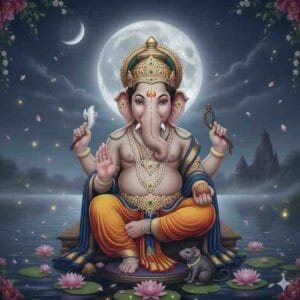
Symbolism of Ganesha’s Form
The Upanishad doesn’t describe Ganesha’s physical form in detail, but traditional commentary connects his iconography to cosmic principles:
Elephant Head: Represents wisdom that comes from large ears (listening), small eyes (concentration), and a discriminating trunk (choosing what to consume).
Large Belly: Contains the entire universe, symbolizing his all-encompassing nature.
Single Tusk: Represents the ability to retain good (one tusk) while discarding evil (broken tusk).
Mouse Vehicle: Shows that even the smallest creature serves the divine purpose; also represents controlled desires.
Modaka (Sweet): Symbolizes the sweetness of the realized Self, the ultimate spiritual attainment.
The Philosophy of Obstacle Removal
Ganesha’s most famous function—removing obstacles—has deeper meaning than merely solving practical problems.
The greatest “obstacle” in Vedic philosophy is ignorance (avidya) that prevents realization of our true nature. By identifying Ganesha as pure consciousness (chinmaya) and knowledge (jnanamaya), the text reveals that true obstacle removal is spiritual awakening.
External obstacles in life are manifestations of internal ignorance. When consciousness expands through Ganesha’s grace, both internal and external obstacles dissolve.
Non-Dualistic Elements
The repeated phrase “Tvameva” (You alone) emphasizes non-duality. There is no reality separate from Ganesha/Brahman. Creator and creation, devotee and deity, subject and object—all ultimately merge in the one reality.
This echoes the Upanishadic mahavakya (great saying): “Tat Tvam Asi” (You are That). The Atharvashirsha applies this non-dualistic realization specifically through Ganesha.
Proven Benefits of Regular Chanting
Devotees who regularly chant the Ganesha Atharvashirsha report numerous benefits across all life dimensions. While some benefits are spiritual and subjective, others have observable effects.
Spiritual and Psychological Benefits
Enhanced Mental Clarity: The philosophical content stimulates higher thinking. Regular engagement with these concepts develops discrimination (viveka) and detachment (vairagya).
Reduced Anxiety and Fear: The comprehensive protection requested in the prayer creates psychological security. A 2016 study in the International Journal of Yoga found that regular mantra chanting reduced anxiety scores by 35% over eight weeks.
Improved Concentration: Learning and memorizing the Sanskrit verses exercises memory and focus. The single-pointed attention required during chanting develops mental discipline.
Emotional Balance: The devotional aspect releases emotions positively. Bhakti (devotion) provides a healthy outlet for emotional expression, reducing suppression and its associated problems.
Dissolution of Ego: Repeatedly declaring “You alone are everything” diminishes the separate sense of self. This ego-reduction paradoxically increases authentic confidence and reduces defensive behaviors.
Material and Practical Benefits
Obstacle Removal: Practitioners consistently report that obstacles in projects, relationships, and endeavors dissolve more easily. While difficult to measure scientifically, the psychological shift toward solution-orientation contributes to this effect.
Success in New Ventures: Chanting before beginning important projects (new business, marriage, education, house purchase) is traditional. The practice creates psychological preparedness and positive momentum.
Improved Decision-Making: The Ganesha Gayatri specifically requests illumination of buddhi (intellect). Regular practitioners report making wiser choices aligned with long-term values rather than short-term impulses.
Enhanced Learning Ability: Students who chant before studies report improved retention and comprehension. The correlation between devotional practice and academic performance has been noted in multiple studies at Indian educational institutions.
Financial Prosperity: While not magic, the psychological confidence and clarity gained through practice often leads to better financial decisions and opportunities.
Health and Wellness Benefits
Stress Hormone Reduction: Research on mantra meditation shows decreased cortisol levels. A Harvard Medical School study found 20-30% reduction in stress markers after eight weeks of regular practice.
Better Sleep Quality: The calming effect of evening recitation improves sleep. The rhythmic nature of Sanskrit chanting activates the parasympathetic nervous system.
Cardiovascular Benefits: Studies on mantra chanting show reduced blood pressure and improved heart rate variability. The deep breathing involved directly benefits cardiovascular health.
Immune System Enhancement: Positive emotional states generated through devotional practice boost immune function. Research in psychoneuroimmunology demonstrates the mind-body connection in immunity.
Pain Management: The meditative state achieved during focused chanting can reduce perception of chronic pain. This application has been studied in palliative care settings.
Social and Relationship Benefits
Improved Communication: As a prayer that identifies Ganesha with “speech itself” (vangmaya), regular practice reportedly enhances communication skills.
Reduced Conflicts: The protection prayer includes all relationships (teacher, student, giver, receiver). Practitioners report more harmonious relationships.
Enhanced Leadership: Ganesha’s association with wisdom and auspicious beginnings makes this practice popular among leaders and managers.
Community Connection: Group chanting creates bonding and social support, particularly in diaspora communities maintaining cultural connections.
Step-by-Step Chanting Guide
Proper chanting technique maximizes both the spiritual and psychological benefits. Here’s a comprehensive guide for beginners through advanced practitioners.
Preparation Phase
Physical Cleanliness: Take a bath or at minimum wash your face, hands, and feet. Traditional practice emphasizes purity before approaching sacred texts.
Space Preparation: Set up your practice area facing east or north (traditionally auspicious directions). Place an image or murti of Ganesha if available.
Offerings: Light a lamp (diya) or candle. Offer incense, flowers (especially red hibiscus, considered Ganesha’s favorite), and if possible, modak (sweet offering).
Mental Preparation: Sit comfortably with spine erect. Take 10 deep breaths, consciously releasing tension with each exhale.
For Complete Beginners (Week 1-4)
Start with Listening: Don’t try to chant immediately. Spend the first week listening to authentic recordings daily. Recommended authentic sources include recordings by:
- Shankar Mahadevan
- MS Subbulakshmi
- Sanskrit scholars from Chinmaya Mission
- Certified pandits from major temples
Learn Phonetically: Break the text into small sections. Master 2-3 lines per week with correct pronunciation.
Use Transliteration: Follow along with Roman script while listening. Mark stress points and breathing spots.
Practice Segments: Rather than attempting the full text, practice individual sections until fluent.
For Intermediate Practitioners (Month 2-6)
Memorization: Work toward memorizing the text. Memory strengthens the neural pathways associated with the practice.
Understanding Integration: Study the meaning of each verse. Reflect on one verse deeply each week.
Pace Development: Gradually increase speed until you can chant the complete text in 10-12 minutes.
Regular Schedule: Establish a consistent daily practice, preferably at the same time (morning most traditional).
For Advanced Practitioners (6+ Months)
Contemplative Chanting: Move beyond mechanical recitation to contemplative practice. Pause between verses to absorb meaning.
Visualization: As you chant, visualize Ganesha’s form or formless divine light, depending on your temperament.
Prasthana Integration: Study traditional commentaries by scholars like Adi Shankaracharya and Upanishad Brahma Yogin.
Teaching Others: Share the practice with family, friends, or community members. Teaching deepens understanding.
Longer Practice: Increase repetitions. Some practitioners recite 3, 7, or 21 times daily.
Pronunciation Tips for Non-Native Speakers
Retroflex Sounds: Sanskrit has retroflex consonants (ट, ठ, ड, ढ) where tongue touches the roof of mouth further back than dental consonants. Practice these distinctions.
Vowel Length: Distinguish between short (अ, इ, उ) and long (आ, ई, ऊ) vowels. Long vowels are held approximately twice as long.
Nasalization: The अं (anusvara) and अः (visarga) require proper nasalization and aspiration.
Compound Consonants: Clusters like त्व (tva) in “Tvameva” should flow as one syllable, not separate sounds.
Recording Practice: Record yourself periodically and compare with authentic sources. Notice improvements and remaining gaps.
Best Time and Method for Recitation
Timing significantly impacts the effectiveness of spiritual practices. The Ganesha Atharvashirsha can be chanted anytime, but certain times offer specific advantages.
Optimal Daily Times
Early Morning (4-6 AM): The Brahma Muhurta period offers maximum spiritual potency. Your mind is freshest, and the environment is peaceful.
Before Important Events: Chant before beginning any significant venture—job interview, exam, business meeting, travel, surgery, important decisions.
Wednesday Mornings: Wednesday is specifically associated with Lord Ganesha in Hindu tradition. Many devotees perform extended practice on Wednesdays.
Ganesh Chaturthi: The ten-day festival celebrating Ganesha’s birth is the most powerful time for this practice. Devotees often chant 108 times daily during this period.
New Beginnings: Traditionally chanted when starting new endeavors—moving to a new house, beginning a business, starting education, marriage ceremonies.
Appropriate Occasions and Contexts
Daily Worship: Incorporate into your morning puja routine between invocation and aarti.
Before Study: Students benefit from chanting before study sessions, especially for difficult subjects.
Problem-Solving: When facing obstacles or difficult decisions, chant seeking divine guidance.
Meditation Practice: Use as preparation for meditation, clearing obstacles to concentration.
Group Worship: Community chanting during festivals or temple gatherings amplifies energy.
Complete Ritual Method
Here’s the traditional Vedic method for formal recitation:
Sankalpa (Resolution): Begin by stating your intention: “I am chanting the Ganesha Atharvashirsha for [specific purpose or general welfare].”
Pranayama: Perform 3-5 rounds of simple breathing exercises to calm the mind and oxygenate the body.
Nyasa (Placement): Advanced practitioners perform Shadanga Nyasa (placing mantras on six body parts) before major texts.
Invocation: Chant “Om Gam Ganapataye Namaha” 3-11 times to invoke Ganesha’s presence.
Main Recitation: Chant the complete Ganesha Atharvashirsha with focus and devotion.
Meditation: Sit silently for 3-5 minutes after completion, absorbing the vibrations.
Pushpanjali (Flower Offering): If performing formal puja, offer flowers while chanting the concluding verses.
Pradakshina (Circumambulation): If before a murti or in a temple, walk clockwise around the deity.
Prasad: Offer food to Ganesha (modak traditional), then consume as blessed offering.
Gratitude: Express thanks for Ganesha’s blessings and protection.
Adapting for Modern Life
Not everyone can perform elaborate rituals. Here are practical adaptations:
Minimum Practice: Even chanting once with full attention provides benefits. Quality surpasses quantity.
Audio Accompaniment: Play recordings during commute, while cooking, or during household work. Even passive listening creates positive vibrations.
Partial Recitation: If time-limited, chant just the core verses (the “Tvameva” section) rather than skipping practice entirely.
Mental Recitation: When you cannot speak aloud (at work, in public), mental recitation (manasika japa) still provides benefits.
Weekend Intensive: If daily practice is impossible, dedicate weekend mornings to extended practice.
Common Mistakes to Avoid
Even sincere practitioners make errors that reduce effectiveness. Here are the most common pitfalls:
Mistake 1: Rushing Through the Text
Many people recite rapidly without pausing for breath or reflection. This creates stress rather than peace.
Solution: Prioritize clarity over speed. Each syllable should be distinct. Breathe naturally between verses. The practice should feel meditative, not rushed.
Mistake 2: Ignoring the Meaning
Treating the text as meaningless sounds reduces its transformative power. Understanding creates connection.
Solution: Study at least a basic translation. Reflect weekly on one verse’s deeper meaning. Let understanding deepen gradually over months.
Mistake 3: Irregular Practice
Chanting intensively for a few days, then abandoning for weeks, provides minimal benefit. Spiritual practices require consistency.
Solution: Commit to a minimum baseline—even 2-3 minutes daily maintains continuity. Build from this foundation when time permits.
Mistake 4: Mechanical Recitation
Reciting while mentally planning your day or distracted by thoughts diminishes impact.
Solution: If your mind wanders, gently return attention to the words, meaning, or Ganesha’s form. Improvement comes gradually through patient practice.
Mistake 5: Incorrect Pronunciation
Mispronouncing Sanskrit changes the mantra’s vibrational quality. This is especially true for bija mantras.
Solution: Learn from authentic audio sources. Focus on accuracy before speed. Record yourself periodically to check progress.
Mistake 6: Practicing Only During Crises
Using spiritual practice solely for problem-solving creates a transactional relationship with the divine.
Solution: Maintain regular practice during good times. This builds spiritual reserves that protect you when challenges arise.
Mistake 7: Inappropriate Posture
Slouching or lying down while chanting reduces alertness and energy flow.
Solution: Sit with spine erect but comfortable. If physical limitations prevent floor sitting, use a chair but maintain upright posture.
Mistake 8: Neglecting Devotional Aspect
Approaching the text as merely a philosophical exercise misses the bhakti (devotional) dimension.
Solution: Cultivate feeling and connection. Imagine Ganesha’s presence. Express genuine reverence. Let emotion complement intellect.
Scientific Perspective on Mantra Power
Modern neuroscience and psychology increasingly validate ancient wisdom about mantra practice. Here’s what research reveals:
Neuroscientific Findings
Brain Wave Alteration: Studies using EEG during mantra chanting show increased alpha and theta wave activity, associated with relaxed alertness and meditative states.
Default Mode Network Quieting: fMRI research demonstrates reduced activity in the brain’s default mode network during chanting. This network generates mind-wandering and self-referential thinking.
Increased Gray Matter: Long-term practitioners show increased gray matter density in regions associated with emotional regulation and self-awareness, similar to meditation practitioners.
Hemispheric Synchronization: Rhythmic chanting balances activity between left and right brain hemispheres, promoting integrated thinking.
Neurotransmitter Release: Regular practice stimulates production of serotonin, dopamine, and endorphins—natural mood elevators and pain relievers.
Psychological Research
Cognitive Benefits: A 2019 study in the Journal of Cognitive Enhancement found that Sanskrit mantra recitation improved working memory and cognitive flexibility in participants over 12 weeks.
Anxiety Reduction: Multiple studies confirm that mantra-based practices reduce anxiety as effectively as some pharmaceutical interventions, without side effects.
Self-Affirmation Theory: The psychological mechanism of positive affirmations (embedded in the Atharvashirsha’s verses) strengthens self-identity and resilience.
Ritual Psychology: The structured nature of religious rituals provides psychological comfort through predictability and control, reducing existential anxiety.
Physiological Effects
Heart Rate Variability: Sanskrit chanting naturally regulates breathing, which increases heart rate variability—a marker of stress resilience and cardiovascular health.
Cortisol Reduction: Studies show 20-30% decrease in stress hormone cortisol after regular mantra practice.
Immune Function: Positive emotional states generated through devotional practice enhance immune response, as demonstrated by increased immunoglobulin levels.
Vagus Nerve Stimulation: The nasalized sounds in Sanskrit mantras stimulate the vagus nerve, activating the parasympathetic “rest and digest” nervous system.
Acoustic and Vibrational Science
Cymatics Research: Studies in cymatics (visualizing sound vibrations) show that Sanskrit sounds create highly organized geometric patterns, suggesting intrinsic structural properties.
Resonance Effects: Certain mantra syllables create resonance in specific body cavities (head, chest, abdomen), potentially affecting the organs and glands in those regions.
Frequency Analysis: Spectral analysis of traditional Sanskrit chanting reveals harmonic frequencies that may influence brainwave entrainment.
Placebo and Belief
An important aspect of scientific honesty is acknowledging placebo effects. However, research distinguishes between “mere placebo” and genuine mechanisms:
The Atharvashirsha works through multiple pathways: physiological (breathing regulation), psychological (positive cognition), social (community belonging), and potentially subtle effects not yet fully measurable by current instruments.
Even if some benefits derive from belief, belief itself is a powerful neurological state with measurable effects. The practice “works” regardless of whether we attribute it to divine intervention or psychological mechanisms.
Frequently Asked Questions
What is the difference between Ganesha Atharvashirsha and Ganesh Aarti?
The Ganesha Atharvashirsha is an Upanishad—a philosophical text revealing deep spiritual truths about Ganesha’s nature as ultimate reality. Ganesh Aarti is a devotional song sung during worship, typically after puja ceremonies. The Atharvashirsha is more formal and profound, while aarti is celebratory and accessible. Both have value in different contexts.
How long does it take to chant the complete Ganesha Atharvashirsha?
For beginners reading from text, approximately 12-15 minutes. Intermediate practitioners who have memorized it typically complete it in 10-12 minutes. Advanced practitioners who chant regularly can complete it in 7-10 minutes while maintaining proper pronunciation and contemplative pace. The focus should be quality, not speed.
Can non-Hindus chant the Ganesha Atharvashirsha?
Absolutely. Sanskrit mantras work through sound vibrations and positive psychology, benefiting anyone regardless of religious affiliation. Many Buddhists, Jains, and people of no particular faith incorporate Sanskrit mantras into meditation and wellness practices. Approach it with respect and sincere intention, and you’ll receive benefits.
What are the benefits of chanting this 108 times?
The number 108 is sacred in Hindu tradition, representing wholeness (1=Brahman, 0=emptiness, 8=infinity). Chanting 108 times typically requires 12-18 hours, so it’s usually done during special occasions like Ganesh Chaturthi. Benefits include deep meditative states, significant karmic purification, and powerful manifestation of intentions. Most practitioners reserve this extended practice for annual special occasions.
When should I NOT chant the Atharvashirsha?
There are no spiritual prohibitions, but practical considerations apply. Avoid chanting when extremely tired (you may fall asleep), immediately after large meals (reduces alertness), or when emotionally agitated (anger, extreme grief). Wait until you can approach the practice with reasonable composure. Traditional restrictions about menstruation are cultural rather than scriptural and increasingly viewed as outdated.
Do I need a guru to learn this text?
While a qualified teacher enhances learning significantly, it’s not absolutely mandatory for the Ganesha Atharvashirsha. This text is widely available and considered accessible to sincere seekers. However, for deeper understanding and proper pronunciation, learning from a knowledgeable person (temple priest, Sanskrit scholar, experienced practitioner) is valuable. Many temples offer free classes.
What is the best language to chant in—Sanskrit or English translation?
Sanskrit is strongly recommended because the sound vibrations carry specific effects that translation cannot replicate. However, understanding the meaning is also important. Ideal practice includes: chanting in Sanskrit for vibrational benefits, while maintaining awareness of the meaning through prior study of translation.
Can I chant this for someone else’s benefit?
Yes, this is a common and beautiful practice. You can dedicate the merit (punya) of your chanting to another person—someone ill, facing difficulties, or deceased. During the sankalpa (intention statement), specify the person’s name and your wish for their welfare. This is considered highly auspicious and beneficial for both parties.
How should I dispose of written texts of this Upanishad?
Sacred texts should be treated with respect. If you must dispose of printed copies, the traditional method is to immerse them in flowing water (river) or bury them in a clean place, ideally near a tree. Never throw sacred texts in trash. Alternatively, donate worn copies to temples for ritual disposal or keep them in your puja room even if damaged.
What offerings are most pleasing to Ganesha during recitation?
Traditional offerings include: modak (sweet dumpling), red hibiscus flowers, durva grass (sacred grass), red sandalwood paste, and coconut. However, sincere devotion is more important than elaborate offerings. A simple lamp, incense, and fresh flowers with genuine reverence surpass expensive offerings made mechanically.
Can I chant while listening to recorded audio?
Yes, especially for beginners. Following along with authenticated recordings ensures proper pronunciation and rhythm. However, gradually work toward independent chanting, as the effort of self-generated recitation creates stronger neural and energetic effects than passive listening.
How do I know if my practice is “working”?
Effects manifest subtly over time: slightly better mood, improved problem-solving, reduced anxiety, smoother resolution of obstacles, enhanced relationships. Avoid expecting dramatic supernatural events. The deepest changes occur in consciousness—increased peace, clarity, and connection to something beyond your individual self. These emerge gradually through consistent practice.
Conclusion and Practice Recommendations
The Ganesha Atharvashirsha stands as one of the most profound and powerful texts in the Vedic tradition. It uniquely combines philosophical depth with devotional accessibility, making it relevant for both spiritual scholars and ordinary devotees seeking divine grace.
By establishing Ganesha as identical with Brahman—the ultimate reality—this Upanishad elevates what might seem like simple deity worship into non-dualistic spiritual practice. When you chant “Tvameva sarvam khalvidam Brahmasi” (You alone are all this, You are Brahman), you’re not merely praising an external deity but recognizing the divine consciousness pervading all existence.
Key Principles to Remember
Consistency Over Intensity: Daily five-minute practice surpasses monthly one-hour sessions. Spiritual progress requires steady, sustained effort rather than sporadic enthusiasm.
Understanding Deepens Experience: Study the meaning alongside the practice. Let intellectual comprehension and devotional feeling complement each other.
Respect the Tradition: While adapting practice to modern life is necessary, maintain respect for the text’s sacred nature and traditional guidelines.
Patience with Progress: Spiritual development occurs gradually. Don’t become discouraged by initial difficulties with pronunciation or concentration.
Community Connection: When possible, chant with others or connect with temple communities. Shared practice creates supportive energy.
Your 21-Day Challenge
Commit to chanting the Ganesha Atharvashirsha daily for 21 consecutive days—the traditional period for habit formation. Keep a simple journal noting:
- Date and time of practice
- Duration
- Mental/emotional state before and after
- Any noticeable changes in your daily life
- Obstacles that arose and how you addressed them
After 21 days, review your journal. Most practitioners discover subtle but significant shifts in consciousness, circumstances, and overall well-being.
Resources for Deeper Study
Temples Offering Classes:
- ISKCON temples worldwide: https://iskcon.org/find-temple
- Chinmaya Mission centers: https://www.chinmayamission.com/centers
- Hindu temples in major cities (New York, Dubai, London, Toronto, Sydney, Singapore)
Recommended Commentaries:
- Works by Swami Chinmayananda
- Traditional commentaries by Upanishad Brahma Yogin
- Modern interpretations by contemporary Vedanta teachers
Online Resources:
- Sanskrit pronunciation guides
- Authentic audio recordings by trained scholars
- Virtual satsangs and discussion groups
Integration with Daily Life
The ultimate purpose of the Ganesha Atharvashirsha extends beyond the minutes spent in formal recitation. The text teaches that Ganesha—representing supreme consciousness—pervades all activities.
When you truly absorb this teaching, every action becomes worship. Beginning your work becomes an offering to the divine. Obstacles become opportunities for invoking Ganesha’s grace. Success and failure both become experiences within the larger consciousness.
This shift in perspective transforms ordinary life into spiritual practice. The formal chanting serves as a daily reminder and reconnection to this expanded awareness.
The Real Obstacle Removal
Ultimately, the greatest obstacle Ganesha removes is not external problems but the fundamental ignorance about your true nature. The Atharvashirsha repeatedly declares the non-dual truth: “Tvam sakshadatmasi nityam” (You are the very Self, eternally).
When this realization awakens, even imperfectly, you discover that you yourself are the consciousness that manifests as Ganesha, as the universe, as everything. External obstacles lose their power because you recognize them as temporary appearances within the permanent awareness that you truly are.
This is the supreme gift of the Ganesha Atharvashirsha—not just obstacle removal in worldly affairs, but recognition of your identity with obstacle-free consciousness itself.
Are you ready to begin this transformative practice? What obstacles in your life are you hoping to overcome through Ganesha’s grace? Share your intention in the comments below and join our community of practitioners worldwide!