Discover the complete Karagre Vasate Lakshmi lyrics in Sanskrit with English translation, meaning & benefits. Learn this powerful morning palm prayer properly.
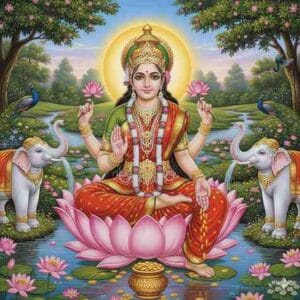
Karagre Vasate Lakshmi Morning Prayer Lyrics: The Sacred Palm Prayer That Transforms Your Mornings
Every morning, millions of Hindus worldwide begin their day by gazing at their palms and reciting an ancient Sanskrit verse. This practice has continued for thousands of years, but what makes the Karagre Vasate Lakshmi morning prayer so powerful?
The Karagre Vasate Lakshmi lyrics contain profound spiritual wisdom compressed into just a few lines. This palm prayer acknowledges that divinity resides right in your hands—literally. Whether you’re in New York, Dubai, London, Toronto, Sydney, or Singapore, this timeless morning ritual can transform how you start each day.
In this comprehensive guide, you’ll discover the complete lyrics in Sanskrit and transliteration, the exact English translation, the deeper meaning behind each word, when and how to recite it properly, and the spiritual benefits that practitioners have experienced for generations. You’ll also learn the fascinating story behind this prayer and practical tips for incorporating it into your modern lifestyle.
Table of Contents
- What is Karagre Vasate Lakshmi Morning Prayer
- Complete Karagre Vasate Lakshmi Lyrics in Sanskrit (Original Form)
- Karagre Vasate Lakshmi Lyrics in English Transliteration
- Word-by-Word Meaning and Translation
- Complete English Translation and Interpretation
- The Deep Spiritual Significance of the Palm Prayer
- When and How to Recite This Morning Prayer
- Scientific and Spiritual Benefits of This Practice
- The Story and Origin Behind the Prayer
- Common Mistakes to Avoid While Reciting
- Frequently Asked Questions
- Conclusion
What is Karagre Vasate Lakshmi Morning Prayer
The Karagre Vasate Lakshmi is a traditional Sanskrit shloka (sacred verse) recited immediately upon waking. This prayer is part of the broader Hindu practice of Pratah Smaranam (morning remembrance).
The prayer’s central teaching is simple yet profound. It declares that three major deities reside in different parts of your palm. Goddess Lakshmi lives at the tips of your fingers, Goddess Saraswati resides in the middle of your palm, and Lord Govinda (Vishnu) dwells at the base of your palm.
Why look at palms specifically? In Vedic philosophy, hands represent karma (action). The prayer reminds you that before you start acting in the world, you should remember that divine energy flows through every action you perform.
This morning ritual takes less than 30 seconds but sets a spiritual foundation for the entire day. Additionally, it serves as a mindful transition from sleep to wakefulness, replacing the modern habit of immediately checking smartphones.
The practice is particularly popular in South India but has spread globally wherever Hindu communities have settled. Therefore, you’ll find practitioners reciting these Karagre Vasate Lakshmi lyrics from temples in California to community centers in Melbourne.
Complete Karagre Vasate Lakshmi Lyrics in Sanskrit (Original Form)
Here are the authentic Karagre Vasate Lakshmi lyrics in traditional Devanagari script:
करग्रे वसते लक्ष्मीः करमध्ये सरस्वती ।
करमूले तु गोविन्दः प्रभाते करदर्शनम् ॥
This verse appears in various ancient Hindu texts including the Padma Purana and collections of Suprabhatam (morning hymns). The verse maintains its original form across different regional variations, demonstrating its sacred authenticity.
Important pronunciation note: Sanskrit is a precise language where pronunciation affects meaning. The Devanagari script ensures proper pronunciation when read correctly.
Furthermore, this verse follows the classical Sanskrit Anushtubh meter (also called Shloka meter), which contains 32 syllables arranged in a specific pattern. This metrical structure makes the prayer naturally rhythmic and easy to memorize.
The verse structure follows this pattern:
- Line 1: करग्रे वसते लक्ष्मीः करमध्ये सरस्वती
- Line 2: करमूले तु गोविन्दः प्रभाते करदर्शनम्
Each line contains 16 syllables, creating a balanced, harmonious sound when chanted. Therefore, even without understanding Sanskrit, the prayer has a calming, meditative quality.
Karagre Vasate Lakshmi Lyrics in English Transliteration
For those who cannot read Devanagari script, here is the accurate Roman transliteration with pronunciation guidance:
Karagre Vasate Lakshmih Karamadhye Saraswati |
Karamoole Tu Govindah Prabhate Karadarshanam ||
Pronunciation Guide:
First line: Karagre Vasate Lakshmih Karamadhye Saraswati
- Ka-ra-gre (kuh-ruh-gray): “Kara” = hand/palm; “agre” = at the tip
- Va-sa-te (vuh-suh-tay): resides/dwells
- Laksh-mih (luck-shmee): Goddess Lakshmi
- Ka-ra-ma-dhye (kuh-ruh-muh-dhyay): “madhya” = middle of the palm
- Sa-ras-wa-ti (suh-rus-wuh-tee): Goddess Saraswati
Second line: Karamoole Tu Govindah Prabhate Karadarshanam
- Ka-ra-moo-le (kuh-ruh-moo-lay): “moola” = root/base of the palm
- Tu (too): emphasis particle meaning “indeed”
- Go-vin-dah (go-vin-duh): Lord Govinda (Krishna/Vishnu)
- Pra-bha-te (pruh-bhaa-tay): in the morning/at dawn
- Ka-ra-dar-sha-nam (kuh-ruh-dur-shuh-num): viewing/seeing of the palm
Stress points: In Sanskrit, generally, the emphasis falls on the syllable before the last consonant cluster. However, maintaining a steady, meditative rhythm matters more than perfect pronunciation for spiritual practice.
Word-by-Word Meaning and Translation
Understanding each Sanskrit word deepens your connection with the Karagre Vasate Lakshmi lyrics. Here’s a detailed breakdown:
Line One: करग्रे वसते लक्ष्मीः करमध्ये सरस्वती
करग्रे (Karagre):
- कर (Kara) = hand, palm
- अग्रे (Agre) = at the tip, foremost part
- Combined meaning: At the tips of the fingers
वसते (Vasate):
- Root verb: वस् (Vas) = to dwell, to reside
- Form: Present tense, third person singular
- Meaning: Resides, dwells, lives
लक्ष्मीः (Lakshmih):
- Goddess Lakshmi
- Deity of wealth, prosperity, fortune, and abundance
- Consort of Lord Vishnu
करमध्ये (Karamadhye):
- कर (Kara) = palm
- मध्ये (Madhye) = in the middle, center
- Combined meaning: In the middle/center of the palm
सरस्वती (Saraswati):
- Goddess Saraswati
- Deity of knowledge, wisdom, learning, arts, and speech
- Consort of Lord Brahma
Line Two: करमूले तु गोविन्दः प्रभाते करदर्शनम्
करमूले (Karamoole):
- कर (Kara) = palm
- मूले (Moole) = at the root, base
- Combined meaning: At the base/root of the palm (near the wrist)
तु (Tu):
- Emphatic particle
- Meaning: Indeed, certainly, verily
- Adds emphasis to the statement
गोविन्दः (Govindah):
- Go = cow, earth, senses
- Vinda = one who gives pleasure/knowledge
- Lord Govinda (another name for Krishna/Vishnu)
- The sustainer and protector deity
प्रभाते (Prabhate):
- Root: प्रभात (Prabhata) = dawn, morning
- Form: Locative case
- Meaning: In the morning, at dawn, during early hours
करदर्शनम् (Karadarshanam):
- कर (Kara) = palm, hand
- दर्शनम् (Darshanam) = viewing, seeing, beholding
- Combined meaning: The viewing/seeing of the palm
Therefore, the complete literal translation reads: “At the fingertips resides Lakshmi, in the middle of the palm Saraswati, at the base of the palm indeed Govinda; in the morning, the viewing of the palm [should be done].”
Complete English Translation and Interpretation
Direct Translation:
“Goddess Lakshmi resides at the tips of my fingers, Goddess Saraswati dwells in the middle of my palm, and Lord Govinda lives at the base of my palm. Therefore, I behold my palms in the early morning.”
Deeper Interpretation:
The Karagre Vasate Lakshmi lyrics carry multiple layers of meaning that reveal themselves through contemplation.
Surface meaning: The prayer describes the divine geography of your palm. Three major deities occupy specific locations on your hand, making your palm itself a sacred space worthy of morning reverence.
Symbolic meaning: Your hands are instruments of action (karma). Before beginning your daily activities, you acknowledge that:
- Lakshmi at the fingertips: Wealth and prosperity flow through the work you do with your hands
- Saraswati in the middle: Knowledge and wisdom guide the actions you perform
- Govinda at the base: Divine protection and consciousness form the foundation of everything you do
Practical meaning: This prayer teaches that you already possess everything you need. Wealth, wisdom, and divine grace aren’t external acquisitions—they reside within you, literally at your fingertips.
Philosophical meaning: The prayer represents the Hindu concept of Advaita (non-dualism). The divine isn’t separate from you or located only in distant temples. God exists in your very body, accessible every moment.
Additionally, the prayer follows a progression from material (Lakshmi/wealth) through intellectual (Saraswati/knowledge) to spiritual (Govinda/divine consciousness). This sequence mirrors the spiritual journey from worldly concerns toward ultimate realization.
Modern interpretation: In contemporary terms, the prayer encourages mindfulness and gratitude. Before checking your phone or rushing into tasks, you pause to remember your capabilities and blessings. You recognize that your hands—whether typing on keyboards, caring for family, or creating art—channel something greater than mere physical action.
Read this also :
- Shani Dev Aarti Lyrics: Complete Saturday Worship Prayer & Benefits
- Sudarshan Chakra Mantra: Complete Guide to Vishnu’s Powerful Protection Mantra
- Ganesha Atharvashirsha Lyrics: Complete Powerful Ganesh Upanishad Guide
- Shubham Karoti Kalyanam Morning Prayer Lyrics: Complete Daily Surya Mantra Guide
- Durga Chalisa Lyrics: Complete 40 Verses Prayer for Divine Protection
The Deep Spiritual Significance of the Palm Prayer
The Karagre Vasate Lakshmi morning prayer holds profound significance in Hindu spiritual practice. Understanding this depth transforms the prayer from mere recitation into transformative ritual.
The Trinity of Life’s Essential Elements
The three deities mentioned represent everything humans need for a fulfilling life:
Lakshmi (Wealth/Prosperity): Represents material security and abundance. However, in Hindu philosophy, wealth isn’t only money—it includes health, relationships, and resources. Lakshmi’s position at the fingertips suggests that prosperity comes through action and effort.
Saraswati (Knowledge/Wisdom): Symbolizes intellectual and creative capacity. Saraswati governs education, arts, music, and all forms of learning. Her central position indicates that knowledge should guide and direct our actions toward prosperity.
Govinda (Divine Consciousness): Represents spiritual awareness and divine protection. As the foundation, Govinda reminds us that material success and intellectual achievement ultimately rest on spiritual consciousness.
Together, these three create balance: material wellbeing, intellectual growth, and spiritual awareness.
The Significance of Palm Worship
Why palms? In Vedic tradition, every body part has spiritual significance. Palms hold special importance for several reasons:
First, palms are instruments of giving and receiving. Through your hands, you perform charity (dana), receive blessings (prasad), and offer worship (puja).
Second, palmistry (hasta samudrika shastra) is an ancient Vedic science. Palm lines are believed to contain your karmic blueprint. Therefore, looking at your palms connects you with your destiny.
Third, hands represent the execution of divine will. God may inspire, but hands manifest those inspirations into reality.
Furthermore, the palm contains numerous nerve endings. Modern science confirms that the hands have dense neural connections to the brain. Consequently, focusing attention on your palms during the prayer creates a mindfulness anchor.
Morning as a Sacred Time
The prayer specifically mentions prabhate (morning) for important reasons. In Hindu timekeeping, the period before sunrise called Brahma Muhurta (approximately 4:00-6:00 AM) is considered most auspicious.
During these hours, the mind is naturally calm, the environment is quiet, and spiritual practices yield maximum benefits. Therefore, the Karagre Vasate Lakshmi lyrics are ideally recited during or shortly after waking.
Additionally, starting your day with divine remembrance sets a positive, grateful tone. Instead of anxiety or task-oriented thinking dominating your first conscious moments, you begin with awareness of blessings and capabilities.
Karmic Purification Through Awareness
Another significant aspect involves karma (action) and its consequences. Hindu philosophy teaches that actions create karmic impressions (samskaras) that shape future experiences.
By acknowledging divinity in your palms before beginning daily activities, you spiritualize your actions. Regular practice cultivates the awareness that you’re an instrument of divine will rather than an isolated ego acting independently.
This shift in perspective gradually purifies karma. Actions performed with divine awareness create beneficial rather than binding karmic effects.
When and How to Recite This Morning Prayer
Proper practice enhances the benefits of the Karagre Vasate Lakshmi lyrics. Here’s a complete guide to traditional and practical methods.
Best Time to Recite
Ideal timing: Immediately upon waking, before leaving your bed. This timing ensures the prayer is truly the first activity of your day.
Traditional timing: During Brahma Muhurta (1.5 hours before sunrise), considered the most spiritually potent time. For most locations:
- Summer months: 4:00-5:30 AM
- Winter months: 5:00-6:30 AM
- Varies by geographical location and season
Practical timing: If Brahma Muhurta isn’t feasible with your schedule, recite within 30 minutes of waking, before starting other activities.
Can be recited: Anywhere from your bed, though ideally facing east (the direction of the rising sun, symbolizing new beginnings and divine light).
Step-by-Step Recitation Method
Step 1: Preparation
Upon opening your eyes, avoid immediately thinking about tasks or checking devices. Instead, take 2-3 deep breaths to center yourself.
Step 2: Hand Position
Bring both palms together in front of your chest in Anjali Mudra (prayer position) or hold your palms open facing upward at eye level.
Step 3: Observation
Gently gaze at your palms for a few seconds. Notice the lines, the texture, the capability these hands possess.
Step 4: Recitation
Recite the complete shloka slowly and mindfully:
Karagre Vasate Lakshmih Karamadhye Saraswati
Karamoole Tu Govindah Prabhate Karadarshanam
Step 5: Visualization (Optional but Powerful)
- Visualize golden light at your fingertips (Lakshmi)
- See white/yellow light in your palm center (Saraswati)
- Imagine blue light at your palm base (Govinda)
Step 6: Gratitude
Mentally offer thanks for the capabilities, knowledge, and divine protection residing in your hands.
Step 7: Intention
Set a brief intention: “May all actions I perform today be blessed and beneficial.”
How Many Times to Recite
Minimum: Once is sufficient for the basic practice.
Traditional: Three times is considered auspicious (representing body, speech, and mind).
Extended practice: Some practitioners recite 11 or 108 times using a mala (prayer beads), though this extends beyond the simple morning ritual.
What matters most: Sincerity and awareness matter far more than repetition count. One mindful recitation surpasses twenty mechanical repetitions.
Additional Practice Tips
Consistency beats perfection: Reciting with approximate pronunciation daily is better than waiting until you achieve perfect Sanskrit pronunciation.
Combine with other prayers: Many practitioners follow this with other morning prayers like Karacharana Kritam (forgiveness prayer) or Pratasmaraami (remembrance prayer).
Teach children early: This simple prayer is excellent for introducing children to morning spiritual practice. The hand-gazing naturally appeals to young children.
Adaptation for modern life: If you use an alarm clock, let this prayer be your “snooze button” ritual—recite before checking the time or phone.
Maintain during travel: The prayer requires no props, space, or preparation, making it perfect for maintaining during travel across USA, UAE, UK, Canada, Australia, Singapore, or anywhere globally.
Scientific and Spiritual Benefits of This Practice
The Karagre Vasate Lakshmi lyrics offer benefits validated both by spiritual tradition and modern understanding of psychology and neuroscience.
Spiritual Benefits
1. Divine Connection:
Establishes immediate conscious connection with the divine upon waking. Regular practice creates a habit of beginning each day with spiritual awareness rather than mundane concerns.
2. Karmic Purification:
Spiritualizes your daily actions by acknowledging divine presence in the instruments of action (your hands). This awareness gradually purifies the karmic quality of everything you do.
3. Protection and Blessings:
Traditional belief holds that the three deities invoked provide their respective blessings—Lakshmi grants prosperity, Saraswati bestows wisdom, and Govinda offers protection.
4. Mindfulness Development:
Creates a daily touchstone for mindful awareness. The simple act of looking at your palms can become an “anchor” you return to throughout the day during stressful moments.
5. Gratitude Cultivation:
Regularly acknowledging the divine gifts residing in your hands develops a grateful mindset. Gratitude is considered a fundamental spiritual virtue across traditions.
Psychological and Mental Benefits
1. Reduced Morning Anxiety:
Starting the day with a calming ritual rather than immediately checking email or news reduces morning anxiety and stress hormones like cortisol.
2. Enhanced Focus:
The brief meditation on your palms activates mindful attention circuits in the brain, improving focus for subsequent activities.
3. Positive Priming:
Psychology research shows that morning routines significantly influence mood and productivity throughout the day. Beginning with this positive, empowering prayer creates beneficial priming effects.
4. Break from Technology:
Creates a technology-free buffer period upon waking. This prevents the documented negative effects of immediate smartphone use, including reduced wellbeing and increased distraction.
5. Identity Reinforcement:
For Hindus living in predominantly non-Hindu countries (USA, UK, Canada, Australia, Singapore), morning prayers reinforce cultural and spiritual identity.
Physical Benefits
1. Mindful Awakening:
Provides a gentle transition from sleep to wakefulness rather than jarring alarm-induced stress. This supports healthier cortisol awakening response.
2. Hand Awareness:
Focusing attention on hands activates sensory-motor cortex regions. Some practitioners report increased hand dexterity and awareness through regular practice.
3. Improved Breathing:
The recitation naturally regulates breathing, providing mild pranayama (breath control) benefits even without formal technique.
4. Postural Awareness:
Bringing hands into prayer position or viewing position improves upper body posture upon waking.
Social and Practical Benefits
1. Family Bonding:
When practiced as a family ritual, the prayer creates shared spiritual moments and teaches children traditional values.
2. Cultural Continuity:
Preserves and transmits ancient wisdom across generations, particularly important for diaspora communities.
3. Requires No Resources:
Unlike many spiritual practices, this prayer requires no special space, equipment, or financial investment—making it universally accessible.
4. Travel-Friendly:
Can be practiced anywhere—hotel rooms, airplanes, or camping—maintaining spiritual routine regardless of external circumstances.
5. Interfaith Appreciation:
The universal themes of gratitude, mindfulness, and recognizing your capabilities transcend religious boundaries, allowing others to appreciate the practice’s wisdom.
The Story and Origin Behind the Prayer
Understanding the origins of the Karagre Vasate Lakshmi lyrics connects you with thousands of years of spiritual tradition.
Ancient Scriptural Origins
The Karagre Vasate Lakshmi prayer appears in several ancient Hindu texts, though pinpointing a single origin proves difficult. The verse is referenced in:
Padma Purana: One of the eighteen major Puranas, this vast text contains extensive material on rituals, geography, and cosmology. The prayer appears in sections describing morning worship practices.
Skanda Purana: Another major Purana that details worship methods and pilgrimage sites. Some versions include this hand-prayer among morning rituals.
Suprabhatam Collections: Various compilations of morning prayers and hymns include this verse as part of the pratah smarana (morning remembrance) sequence.
The exact dating of these texts ranges from 500 CE to 1500 CE, though they claim to preserve much older oral traditions. Therefore, the practice likely predates written documentation by centuries.
The Philosophical Foundation
The prayer reflects core Hindu philosophical concepts:
Pantheism: The belief that divinity permeates all existence. The prayer’s assertion that gods reside in your palms exemplifies this worldview—the sacred isn’t separate from the mundane.
Embodied Divinity: Unlike purely transcendent concepts of God, Hinduism recognizes divinity in the physical body. Each body part has divine associations, making the body itself a temple.
Karma Yoga: The path of action as spiritual practice. By acknowledging divinity in the instruments of action (hands), the prayer aligns with Karma Yoga teachings from the Bhagavad Gita.
Cultural Transmission and Practice
The prayer has been transmitted through several channels:
Family Tradition: Grandparents and parents teach children these morning prayers as part of cultural upbringing. In traditional households, children learn the Karagre Vasate Lakshmi lyrics by age 4-5.
Temple Education: Balavihar (children’s spiritual education) programs at Hindu temples worldwide include this prayer in curriculum.
Ashram Practices: Spiritual retreats and ashrams incorporate this prayer into morning routines, introducing it to seekers.
Published Collections: Printed prayer books and now digital resources have made these lyrics accessible globally.
Regional Variations and Practices
While the core Karagre Vasate Lakshmi lyrics remain consistent, regional practices show some variation:
South India: Particularly in Tamil Nadu, Karnataka, and Andhra Pradesh, this prayer is very commonly taught and practiced. Often recited in combination with other morning shlokas.
North India: Less universally practiced but known among Sanskrit-educated families and Vaishnava communities.
Diaspora Communities: Hindu communities in USA, Canada, UK, Australia, UAE, and Singapore often emphasize these traditional prayers as cultural anchors. Weekend temple schools typically include this prayer.
Modern Adaptations: Some contemporary teachers have created musical versions or simplified explanations to engage younger generations.
Common Mistakes to Avoid While Reciting
Proper practice enhances benefits and shows respect for the tradition. Here are frequent mistakes and corrections:
Pronunciation Mistakes
Mistake 1: Pronouncing “Karagre” as “Kara-gray” with hard English “g”
Correction: Sanskrit “g” is softer, closer to “kara-grey” with the “g” sound from “get”
Mistake 2: Rushing through without clear syllable separation
Correction: Sanskrit syllables should be distinct. Practice slowly: Ka-ra-gre Va-sa-te Laksh-mih
Mistake 3: Ignoring the natural rhythm and meter
Correction: The shloka has inherent musicality. Listen to traditional recitations to catch the proper rhythm
Practice Mistakes
Mistake 4: Reciting while doing other activities (brushing teeth, checking phone)
Correction: Give the prayer your complete attention for just 30 seconds. Quality matters more than multitasking.
Mistake 5: Reciting mechanically without understanding meaning
Correction: Periodically contemplate the meaning. Understanding transforms recitation from rote habit into meaningful practice.
Mistake 6: Inconsistent practice—reciting only occasionally
Correction: Consistency creates the habit. Even if you miss occasionally, aim for daily practice. Set phone reminders if needed.
Mistake 7: Feeling guilty about imperfect Sanskrit
Correction: Sincerity matters most. God understands the intention behind imperfect pronunciation. Keep practicing and gradually improve.
Conceptual Mistakes
Mistake 8: Treating it as superstition or magical formula
Correction: The prayer is a mindfulness tool and spiritual reminder, not a magic spell. Benefits come from awareness and practice, not supernatural intervention.
Mistake 9: Believing the prayer alone ensures wealth and success
Correction: The prayer acknowledges divine potential within you, but you must still take appropriate action. It complements effort rather than replacing it.
Mistake 10: Practicing without ever looking at your actual palms
Correction: The prayer specifically mentions karadarshanam (viewing the palm). Actually look at your hands while reciting.
Respectful Practice
Mistake 11: Reciting with unclean hands or in bathroom
Correction: Hindu tradition emphasizes purity (shuddhi). Wash hands if dirty, and avoid reciting in impure spaces.
Mistake 12: Reciting loudly in shared spaces without consideration
Correction: The prayer can be recited mentally (in your mind) when sharing rooms with others who might be sleeping.
Tip for Improvement: Record yourself reciting and compare with traditional recordings available on temple websites or YouTube channels of authentic sources.
Frequently Asked Questions About Karagre Vasate Lakshmi Prayer
1. What is the best time to recite the Karagre Vasate Lakshmi prayer?
The ideal time is immediately upon waking, preferably during Brahma Muhurta (approximately 1.5 hours before sunrise). However, reciting anytime in the morning before starting daily activities is beneficial. The prayer should ideally be the first thing you do after opening your eyes, before checking phones or devices. Consistency matters more than exact timing—choose a time that fits your schedule and stick with it daily.
2. Can I recite this prayer if I don’t understand Sanskrit?
Absolutely yes. While understanding enhances the experience, millions of practitioners recite Sanskrit prayers with limited comprehension. The sound vibrations (mantra shakti) themselves are considered beneficial in Hindu tradition. That said, reading the translation periodically and gradually learning the meaning will deepen your practice. Start by understanding the basic message: Lakshmi, Saraswati, and Govinda reside in your palm, so view it with reverence each morning.
3. Do I need to be Hindu to recite the Karagre Vasate Lakshmi lyrics?
No religious restriction exists. The prayer’s core message—gratitude for your capabilities, mindfulness upon waking, and acknowledgment of sacred potential within you—transcends religious boundaries. Many people of various backgrounds appreciate the wisdom and practice similar morning gratitude rituals. However, respecting the prayer’s cultural and religious origins is important. Approach it with sincerity rather than as mere exotic practice.
4. Which palm should I look at—right, left, or both?
Traditional practice suggests viewing both palms together, held open in front of you at chest or eye level. Some practitioners prefer the Anjali Mudra (both palms pressed together in prayer position) and then opening them to gaze at both simultaneously. The symbolic meaning applies to both hands since you perform actions with both. There’s no strict rule, so follow what feels natural and reverent.
5. Can I recite this prayer in the evening or other times of day?
The prayer specifically references prabhate (morning) and is designed as a morning practice. The theological purpose is to sanctify the beginning of your active day before performing actions. However, if you wake up in the afternoon due to night shift work, recite it upon your waking regardless of clock time. Some people also recite it before important activities requiring use of hands (surgery, exams, artistic performances) as a blessing, though this extends beyond traditional practice.
6. How long does it take to memorize the Karagre Vasate Lakshmi prayer?
Most people can memorize this short shloka within 3-7 days of consistent practice. The prayer contains only two lines with rhythmic structure, making memorization relatively easy. Practice method: Day 1-2, read from written text while reciting. Day 3-4, try reciting with occasional glances at text. Day 5-7, recite from memory. The regular daily repetition naturally embeds it in memory. Teaching it to children often helps adults memorize too.
7. Are there any specific rituals or puja required before reciting this prayer?
No elaborate rituals are needed. The beauty of this prayer lies in its simplicity. Ideally, wash your hands and face before reciting (standard morning cleanliness), but even this isn’t absolutely mandatory if you’re reciting immediately upon waking in bed. Some traditional practitioners sit facing east and may touch their eyes and forehead with their fingertips before reciting, but these are customs rather than requirements. Sincere attention is the only true requirement.
Conclusion: Transform Your Mornings Starting Tomorrow
The Karagre Vasate Lakshmi morning prayer offers a profound yet simple practice that takes less than one minute but can transform your entire day. By acknowledging that Goddess Lakshmi resides at your fingertips, Goddess Saraswati in your palm’s center, and Lord Govinda at the base, you begin each morning with awareness of the divine potential literally at hand.
These ancient Karagre Vasate Lakshmi lyrics have guided millions of practitioners for thousands of years across India and now globally throughout USA, UK, Canada, Australia, UAE, Singapore, and beyond. The prayer reminds you that before rushing into emails, tasks, and demands, you possess within yourself the three essentials for a meaningful life: prosperity (Lakshmi), wisdom (Saraswati), and spiritual consciousness (Govinda).
Starting tomorrow morning, try this practice. Keep the transliterated lyrics by your bedside. Upon waking, before reaching for your phone, bring your palms together or hold them open before you. Gaze at these remarkable instruments that allow you to create, connect, and contribute. Recite the prayer slowly, even if imperfectly. Notice how this small shift in your morning routine gradually creates a more mindful, grateful, and purposeful approach to each day.
Your hands are ready. The divine presence awaits your recognition. Will you transform your mornings with this ancient wisdom?
Share your experience: Have you practiced the Karagre Vasate Lakshmi prayer? What changes have you noticed in your morning routine or mindset? Leave a comment below and join our community of practitioners.