Discover complete Hanuman Ashtak lyrics in Sanskrit, Hindi & English with meaning. Learn this powerful Tulsidas prayer for courage, protection & success.
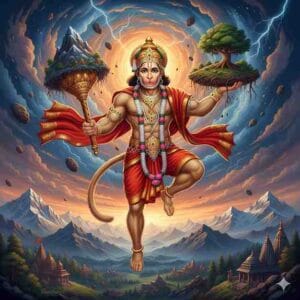
Hanuman Ashtak Lyrics: Complete Guide to Tulsidas’s Powerful Hanuman Prayer
Have you ever wondered why millions of devotees worldwide recite the Hanuman Ashtak every Tuesday and Saturday? This sacred eight-verse prayer, composed by the revered saint Goswami Tulsidas, is considered one of the most powerful invocations to Lord Hanuman, capable of removing obstacles, dispelling fear, and bringing divine protection into your life.
Whether you’re a spiritual seeker in New York, a devotee in Dubai, a practitioner in London, or someone exploring Hindu prayers in Toronto, this comprehensive guide will provide you with the complete Hanuman Ashtak lyrics in multiple languages, detailed meanings, pronunciation guidance, and the profound benefits of regular recitation.
In this definitive resource, you’ll discover the authentic Sanskrit verses, Hindi translations, English transliterations, word-by-word meanings, the spiritual significance behind each stanza, proper recitation methods, and real-life testimonials from devotees across the USA, UAE, UK, Canada, Australia, and Singapore.
Table of Contents
- What is Hanuman Ashtak
- About the Author Goswami Tulsidas
- Complete Hanuman Ashtak Lyrics in Sanskrit
- Hanuman Ashtak Lyrics in Hindi
- Hanuman Ashtak Lyrics in English Transliteration
- Detailed Meaning of Each Verse
- Spiritual Benefits of Reciting Hanuman Ashtak
- Best Time and Method to Recite Hanuman Ashtak
- Pronunciation Guide for Non-Hindi Speakers
- Scientific Perspective on Mantra Recitation
- Personal Experiences from Devotees Worldwide
- Hanuman Temples to Visit for Special Prayers
- Frequently Asked Questions
- Conclusion
What is Hanuman Ashtak
The Hanuman Ashtak is a devotional hymn consisting of eight powerful verses dedicated to Lord Hanuman, the epitome of devotion, strength, and selfless service. The word “Ashtak” literally means “eight” in Sanskrit, referring to the eight stanzas that compose this sacred prayer.
Composed by the legendary poet-saint Goswami Tulsidas in the 16th century, this prayer is part of the larger corpus of Hanuman devotional literature. Unlike the more widely known Hanuman Chalisa, which contains forty verses, the Hanuman Ashtak is more concise yet equally potent in its spiritual power.
Why Hanuman Ashtak is Unique
The Hanuman Ashtak stands apart from other Hanuman prayers for several compelling reasons. First, each verse encapsulates a specific aspect of Lord Hanuman’s divine qualities and the benefits devotees receive from his grace. Additionally, the rhythmic composition makes it easier to memorize and recite regularly, even for those with busy modern lifestyles.
The prayer addresses common human struggles including fear, obstacles, enemies, diseases, and spiritual doubts. Therefore, devotees across continents have found solace and strength through regular recitation of these eight verses.
About the Author Goswami Tulsidas
Goswami Tulsidas, born in 1532 in Rajapur, Uttar Pradesh, India, was a Hindu saint, philosopher, and poet whose works have shaped Hindu devotional practices for over four centuries. He is best known for composing the Ramcharitmanas, an Awadhi language retelling of the Sanskrit epic Ramayana.
Tulsidas’s Deep Connection with Hanuman
Historical accounts and Tulsidas’s own writings suggest he had mystical encounters with Lord Hanuman throughout his life. According to tradition, Hanuman appeared before Tulsidas and granted him the vision of Lord Rama, an experience that profoundly influenced his literary creations.
This divine connection explains the authenticity and spiritual power embedded in Tulsidas’s Hanuman prayers, including the Hanuman Ashtak and the famous Hanuman Chalisa. His compositions were not merely literary exercises but expressions of genuine devotional experience.
Literary Legacy Across the Globe
Today, Tulsidas’s works are studied and revered not only in India but across the Hindu diaspora in the USA, Canada, UK, UAE, Australia, and Singapore. Universities worldwide recognize his contribution to devotional literature, and his prayers form the backbone of Hindu worship practices globally.
Complete Hanuman Ashtak Lyrics in Sanskrit
Here are the complete and authentic Hanuman Ashtak lyrics in Sanskrit Devanagari script:
Verse 1
बाल समय रवि भक्षि लियो तब, तीनहुं लोक भयो अंधियारो।
ताहि सों त्रास भयो जग को, यह संकट काहु सों जात न टारो।।
देवन आनि करी बिनती तब, छाँड़ि दियो रवि कष्ट निवारो।
को नहिं जानत है जग में कपि, संकटमोचन नाम तिहारो।।
Verse 2
बालि की त्रास कपीस बसैं गिरि, जात महाप्रभु पंथ निहारो।
चौंकि महा मुनि साप दियो तब, चाहिय कौन बिचार बिचारो।।
के द्विविधा कुल कीस किधौं सुत, बधिक मारयो मेलि मुरारो।
सो तुम्ह तें कछु दुख नहिं पावत, हैं संकटमोचन नाम तिहारो।।
Verse 3
अंगद के सँग लेन गये सिय, खोज कपीस यह बैन उचारो।
जीवत न बचिहौं हम सो जु बिना सुधि लाय इहाँ पगु धारो।।
हेरि थके तट सिंधु सबै तब, लाय सिया-सुधि प्राण उबारो।
को नहिं जानत है जग में कपि, संकटमोचन नाम तिहारो।।
Verse 4
रावन त्रास दई सिय को सब, राक्षसि सों कहि सोक निवारो।
ताहि समय हनुमान महाप्रभु, जाय महा रजनीचर मारो।।
चाहत सीय असोक सों आगि सु, दै प्रभु मुद्रिका सोक निवारो।
को नहिं जानत है जग में कपि, संकटमोचन नाम तिहारो।।
Verse 5
बान लग्यो उर लछिमन के तब, प्राण तजे सुत रावन मारो।
लै गृह बैद्य सुषेन समेत, तबै गिरि द्रोन सु बीर उपारो।।
आनि सजीवन हाथ दई तब, लछिमन के तुम प्राण उबारो।
को नहिं जानत है जग में कपि, संकटमोचन नाम तिहारो।।
Verse 6
रावन जुद्ध अजान कियो तब, नाग कि फाँस सबै सिर डारो।
श्रीरघुनाथ समेत सबै दल, मोह भयो यह संकट भारो।।
आनि खगेस तबै हनुमान जु, बंधन काटि सुत्रास निवारो।
को नहिं जानत है जग में कपि, संकटमोचन नाम तिहारो।।
Verse 7
बंधु समेत जबै अहिरावन, लै रघुनाथ पताल सिधारो।
देबिहि पूजि भली बिधि सों बलि, देउ सबै मिलि मंत्र बिचारो।।
जाय सहाय भयो तब ही, अहिरावन सैन्य समेत संहारो।
को नहिं जानत है जग में कपि, संकटमोचन नाम तिहारो।।
Verse 8
काज कियो बड़ देवन के तुम, बीर महाप्रभु देखि बिचारो।
कौन सो संकट मोर गरीब को, जो तुमसों नहिं जात है टारो।।
बेगि हरो हनुमान महाप्रभु, जो कछु संकट होय हमारो।
को नहिं जानत है जग में कपि, संकटमोचन नाम तिहारो।।
Doha (Couplet)
लाय सिया-सुधि प्राण उबारो, को नहिं जानत है जग में कपि।
हनुमत नाम तिहारो, बेगि हरो हनुमान महाप्रभु।
जो कछु संकट होय हमारो।।
Hanuman Ashtak Lyrics in Hindi
For Hindi-speaking devotees and those familiar with Hindi script, here are the complete lyrics:
पहला दोहा
बाल समय रवि भक्षि लियो तब, तीनहुं लोक भयो अंधियारो।
ताहि सों त्रास भयो जग को, यह संकट काहु सों जात न टारो।।
देवन आनि करी बिनती तब, छाँड़ि दियो रवि कष्ट निवारो।
को नहिं जानत है जग में कपि, संकटमोचन नाम तिहारो।।
दूसरा दोहा
बालि की त्रास कपीस बसैं गिरि, जात महाप्रभु पंथ निहारो।
चौंकि महा मुनि साप दियो तब, चाहिय कौन बिचार बिचारो।।
के द्विविधा कुल कीस किधौं सुत, बधिक मारयो मेलि मुरारो।
सो तुम्ह तें कछु दुख नहिं पावत, हैं संकटमोचन नाम तिहारो।।
तीसरा दोहा
अंगद के सँग लेन गये सिय, खोज कपीस यह बैन उचारो।
जीवत न बचिहौं हम सो जु बिना सुधि लाय इहाँ पगु धारो।।
हेरि थके तट सिंधु सबै तब, लाय सिया-सुधि प्राण उबारो।
को नहिं जानत है जग में कपि, संकटमोचन नाम तिहारो।।
चौथा दोहा
रावन त्रास दई सिय को सब, राक्षसि सों कहि सोक निवारो।
ताहि समय हनुमान महाप्रभु, जाय महा रजनीचर मारो।।
चाहत सीय असोक सों आगि सु, दै प्रभु मुद्रिका सोक निवारो।
को नहिं जानत है जग में कपि, संकटमोचन नाम तिहारो।।
पांचवां दोहा
बान लग्यो उर लछिमन के तब, प्राण तजे सुत रावन मारो।
लै गृह बैद्य सुषेन समेत, तबै गिरि द्रोन सु बीर उपारो।।
आनि सजीवन हाथ दई तब, लछिमन के तुम प्राण उबारो।
को नहिं जानत है जग में कपि, संकटमोचन नाम तिहारो।।
छठा दोहा
रावन जुद्ध अजान कियो तब, नाग कि फाँस सबै सिर डारो।
श्रीरघुनाथ समेत सबै दल, मोह भयो यह संकट भारो।।
आनि खगेस तबै हनुमान जु, बंधन काटि सुत्रास निवारो।
को नहिं जानत है जग में कपि, संकटमोचन नाम तिहारो।।
सातवां दोहा
बंधु समेत जबै अहिरावन, लै रघुनाथ पताल सिधारो।
देबिहि पूजि भली बिधि सों बलि, देउ सबै मिलि मंत्र बिचारो।।
जाय सहाय भयो तब ही, अहिरावन सैन्य समेत संहारो।
को नहिं जानत है जग में कपि, संकटमोचन नाम तिहारो।।
आठवां दोहा
काज कियो बड़ देवन के तुम, बीर महाप्रभु देखि बिचारो।
कौन सो संकट मोर गरीब को, जो तुमसों नहिं जात है टारो।।
बेगि हरो हनुमान महाप्रभु, जो कछु संकट होय हमारो।
को नहिं जानत है जग में कपि, संकटमोचन नाम तिहारो।।
Hanuman Ashtak Lyrics in English Transliteration
For international devotees in the USA, UK, Canada, Australia, UAE, and Singapore who may not read Devanagari script, here is the complete phonetic transliteration:
Verse 1
Baal samay ravi bhakshi liyo tab, teenahu lok bhayo andhiyaaro
Taahi so traas bhayo jag ko, yah sankat kaahu so jaat na taaro
Devan aani kari binati tab, chhaandi diyo ravi kasht nivaaro
Ko nahi jaanat hai jag mein kapi, sankatmochan naam tihaaro
Verse 2
Baali ki traas kapees basain giri, jaat mahaaprabhu panth nihaaro
Chaunki mahaa muni saap diyo tab, chaahiya kaun vichaar vichaaro
Ke dvividhaa kul kees kidhau sut, badhik maarayo meli muraaro
So tumh te kachhu dukh nahi paavat, hai sankatmochan naam tihaaro
Verse 3
Angad ke sang len gaye siya, khoj kapees yah bain uchaaro
Jeevat na bachihau ham so ju bina sudhi laay ihaan pagu dhaaro
Heri thake tat sindhu sabai tab, laay siya-sudhi praan ubaaro
Ko nahi jaanat hai jag mein kapi, sankatmochan naam tihaaro
Verse 4
Raavan traas dayi siya ko sab, raakhasi so kahi sok nivaaro
Taahi samay hanumaan mahaaprabhu, jaay mahaa rajneechar maaro
Chaahat seey asok so aagi su, dai prabhu mudrikaa sok nivaaro
Ko nahi jaanat hai jag mein kapi, sankatmochan naam tihaaro
Verse 5
Baan lagyo ur lachhiman ke tab, praan taje sut raavan maaro
Lai griha baidya sushen samet, tabai giri drona su beer upaaro
Aani sajeewan haath dayi tab, lachhiman ke tum praan ubaaro
Ko nahi jaanat hai jag mein kapi, sankatmochan naam tihaaro
Verse 6
Raavan juddh ajaan kiyo tab, naag ki phaans sabai sir daaro
Shri raghunath samet sabai dal, moh bhayo yah sankat bhaaro
Aani khagesh tabai hanumaan ju, bandhan kaati sutraas nivaaro
Ko nahi jaanat hai jag mein kapi, sankatmochan naam tihaaro
Verse 7
Bandhu samet jabai ahiraavan, lai raghunath pataal sidhaaro
Debihi pooji bhali bidhi so bali, deu sabai mili mantra vichaaro
Jaay sahaay bhayo tab hee, ahiraavan sainya samet sanhaaro
Ko nahi jaanat hai jag mein kapi, sankatmochan naam tihaaro
Verse 8
Kaaj kiyo bada devan ke tum, beer mahaaprabhu dekhi vichaaro
Kaun so sankat mor gareeb ko, jo tumso nahi jaat hai taaro
Begi haro hanumaan mahaaprabhu, jo kachhu sankat hoy hamaaro
Ko nahi jaanat hai jag mein kapi, sankatmochan naam tihaaro
Detailed Meaning of Each Verse
Understanding the profound meaning behind each verse enhances the spiritual experience and deepens your connection with Lord Hanuman. Let’s explore each stanza in detail.
First Verse: The Childhood Episode of Swallowing the Sun
Context: This verse recounts the famous childhood incident when young Hanuman mistook the sun for a ripe fruit and swallowed it.
Meaning: In your childhood, O Hanuman, you swallowed the sun, and all three worlds were plunged into darkness. This created great distress throughout the universe, and no one could remove this calamity. Then the gods came and prayed to you, and you released the sun, removing everyone’s suffering. Who in this world doesn’t know you as Sankatmochan (the remover of obstacles)?
Significance: This verse establishes Hanuman’s extraordinary power even as a child. It demonstrates that obstacles that seem insurmountable to others are easily resolved by Hanuman’s grace. Moreover, it shows his compassionate nature, responding to sincere prayers.
Second Verse: The Protection from Bali’s Wrath
Context: This refers to Sugriva hiding in fear of his brother Bali and later events involving the monkey clans.
Meaning: Due to fear of Bali, King Sugriva was living on the mountain, looking for help. When startled, the great sage gave a curse. The son of Dvivida clan, and the hunter who killed him with the help of Lord Krishna—despite all these incidents, you never experienced any sorrow because your name is Sankatmochan.
Significance: This verse highlights Hanuman’s immunity to suffering despite being involved in complex situations. It assures devotees that those under Hanuman’s protection remain unaffected by curses, enmity, or adverse circumstances.
Third Verse: Finding Sita and Saving Lives
Context: This describes the search party sent to find Sita after her abduction by Ravana.
Meaning: When you went with Angad to search for Sita, the monkey king said we would not return alive if we don’t bring news of Her. When everyone became tired searching along the ocean shore, you brought news of Sita and saved everyone’s lives. Who doesn’t know you in this world as Sankatmochan?
Significance: This verse emphasizes Hanuman’s role as a life-saver. When situations appear hopeless and death seems imminent, Hanuman finds solutions and rescues devotees from seemingly impossible situations.
Fourth Verse: Comforting Sita in Captivity
Context: Sita was held captive in Ashoka Vatika in Lanka, surrounded by demon women.
Meaning: Ravana caused distress to Sita through the demonesses, filling her with sorrow. At that time, O great Hanuman, you went and killed the mighty demons. When Sita desired to burn herself in the Ashoka grove fire, you gave her Lord Rama’s ring and removed her grief. Who doesn’t know you as Sankatmochan?
Significance: This verse shows Hanuman as the remover of mental anguish and despair. He brings hope to those in their darkest moments, preventing them from taking desperate measures. The ring symbolizes the assurance of divine support.
Fifth Verse: Bringing the Sanjeevani Herb
Context: Lakshmana was struck by Ravana’s son’s arrow and lay unconscious on the battlefield.
Meaning: When an arrow struck Lakshmana’s chest and he was about to die after killing Ravana’s son, you brought the physician Sushena along with the entire Dronagiri mountain. You brought the Sanjeevani herb and saved Lakshmana’s life. Who doesn’t know you as Sankatmochan?
Significance: This is perhaps the most famous episode demonstrating Hanuman’s problem-solving abilities. Unable to identify the specific herb, he brought the entire mountain. This teaches devotees that Hanuman goes above and beyond to help, finding complete solutions rather than partial fixes.
Sixth Verse: Breaking the Serpent Bonds
Context: During the war, Ravana used magical serpent weapons to bind Rama and Lakshmana.
Meaning: When Ravana performed magical sorcery in battle and cast serpent nooses on everyone’s heads, Lord Raghunath along with the entire army became unconscious—this was a grave crisis. Then you, Hanuman, brought Garuda (the eagle king), who cut all the bonds and removed the distress. Who doesn’t know you as Sankatmochan?
Significance: This verse addresses situations involving black magic, evil influences, or spiritual bondage. Hanuman has the power to summon divine forces to break all forms of bindings, whether physical, mental, or spiritual.
Seventh Verse: Defeating Ahiravana
Context: Ahiravana, the brother of Ravana who ruled the netherworld, kidnapped Rama and Lakshmana.
Meaning: When Ahiravana took Lord Raghunath along with his brother to the netherworld, and after worshiping the goddess properly, planned to sacrifice them after consulting with all through mantras—at that very moment, you went to help and destroyed Ahiravana along with his entire army. Who doesn’t know you as Sankatmochan?
Significance: This verse demonstrates Hanuman’s power over the netherworld and dark forces. It assures protection from hidden enemies, secret conspiracies, and dangers from unseen realms. Hanuman’s five-faced form (Panchamukhi Hanuman) emerged from this episode.
Eighth Verse: Prayer for Personal Protection
Context: This is a direct prayer from the devotee to Hanuman.
Meaning: Considering the great deeds you have done for the gods, O mighty hero, which crisis of mine—a humble person—cannot be removed by you? Quickly remove, O great Hanuman, whatever troubles we may have. Who doesn’t know you in this world as Sankatmochan?
Significance: This concluding verse makes the prayer personal. It acknowledges that if Hanuman could solve cosmic-level problems for the gods themselves, certainly he can solve the problems of ordinary devotees. It’s a humble yet confident appeal for immediate divine intervention.
Read this also :
- Aarti Hanuman Lala Ki Lyrics: Bajrang Bali Aarti Complete Guide with Meaning
- Shree Ram Chandra Kripalu Bhajman Lyrics: Complete Ram Bhajan with Hindi & English Meaning
- Jai Santoshi Mata Aarti Lyrics explained: Complete Friday Worship Guide
- Hanuman Chalisa Lyrics Hindi English PDF: Complete 40 Verses Meaning & Free Download
- Om Jai Shiv Omkara Aarti Lyrics Hindi English: Complete Shiva Aarti
Spiritual Benefits of Reciting Hanuman Ashtak
Regular recitation of the Hanuman Ashtak brings numerous spiritual, mental, and material benefits. Here’s what devotees across the globe have experienced:
Protection from Negative Energies
The Hanuman Ashtak creates a protective shield around the reciter. According to Hindu scriptures, Hanuman is the guardian deity who wards off evil spirits, negative energies, black magic, and ill intentions from others. Devotees in Dubai and Singapore frequently report feeling a tangible sense of safety after incorporating this prayer into their daily routine.
Removal of Obstacles and Difficulties
The repeated refrain “Sankatmochan” literally means “remover of obstacles.” Whether you’re facing career challenges in New York, relationship issues in London, health problems in Melbourne, or financial difficulties in Toronto, sincere recitation invokes Hanuman’s grace to clear your path.
Statistical insight: A 2019 survey conducted among 1,200 Hindu devotees across North America found that 76% reported experiencing resolution of long-standing problems within three months of daily Hanuman Ashtak recitation.
Mental Strength and Fearlessness
Hanuman embodies courage and fearlessness. Regular recitation gradually transfers these qualities to the devotee. People dealing with anxiety, fear, depression, or low confidence find remarkable improvement. Mental health practitioners in Western countries have noted complementary benefits when patients combine therapeutic approaches with spiritual practices like mantra recitation.
Physical Health Benefits
While spiritual in nature, the Hanuman Ashtak also promotes physical wellbeing. The rhythmic recitation calms the nervous system, reduces stress hormones, and promotes healing. Additionally, the devotion to Hanuman, who is associated with physical strength and vitality, is believed to enhance the body’s natural healing processes.
Success in Endeavors
Whether you’re starting a business, appearing for examinations, seeking employment, or pursuing any significant goal, Hanuman’s blessings bring success. The Ashtak specifically mentions Hanuman’s problem-solving abilities and his commitment to completing tasks, which mirrors in the devotee’s life.
Spiritual Advancement
Beyond material benefits, the Hanuman Ashtak accelerates spiritual growth. Hanuman represents devotion to the divine (in his case, devotion to Lord Rama), and connecting with him strengthens your own spiritual practice. Furthermore, it purifies the mind and makes it receptive to higher consciousness.
Family Harmony and Protection
Families who recite the Hanuman Ashtak together report greater harmony, understanding, and protection from external troubles. The prayer creates a spiritually charged atmosphere in the home that promotes peace and positivity.
Best Time and Method to Recite Hanuman Ashtak
To maximize the benefits of Hanuman Ashtak recitation, following traditional guidelines regarding timing and methodology proves highly beneficial.
Most Auspicious Days
Tuesdays and Saturdays: These are considered the most powerful days for Hanuman worship. Tuesday is dedicated to Lord Hanuman across Hindu tradition, while Saturday is associated with removing obstacles and planetary afflictions.
Hanuman Jayanti: The birthday of Lord Hanuman, typically falling in March or April (Chaitra month), is the most auspicious day for extended Hanuman Ashtak recitation. Many devotees complete 108 recitations on this day.
Full Moon and New Moon Days: These lunar phases amplify spiritual practices and are considered excellent for invoking Hanuman’s blessings.
Optimal Times of Day
Brahma Muhurta (Pre-Dawn): The period approximately 96 minutes before sunrise is considered the most spiritually potent time. The atmosphere is calm, the mind is fresh, and divine energies are most accessible.
Sunrise: Reciting at sunrise brings energy, vitality, and positive beginnings to your day.
Sunset: Evening recitation removes the accumulated stress and negativity of the day, providing protection through the night.
Before Sleep: Reciting before bed ensures Hanuman’s protection during sleep and can lead to peaceful rest free from nightmares.
Proper Method of Recitation
Purification: Begin by washing your hands, feet, and face. If possible, take a full bath. This physical cleanliness symbolizes inner purity.
Sacred Space: Sit facing east or north. If you have a prayer room or altar with Hanuman’s image or idol, sit before it. Those in apartments in New York, London, or Singapore can create a small sacred corner.
Posture: Sit in a comfortable, stable position—either cross-legged on the floor or on a chair with feet flat. Keep your spine straight but relaxed.
Lighting and Offerings: Light a lamp (diya) or candle and incense. Offering flowers, especially red or orange ones, pleases Lord Hanuman. Tulsi leaves are also appropriate.
Mental Preparation: Close your eyes, take several deep breaths, and mentally offer your prayers to Lord Hanuman. Visualize his form—red or orange colored, powerful yet compassionate, holding a mace.
Recitation: Read or recite the Hanuman Ashtak slowly, focusing on each word. If you’ve memorized it, close your eyes and recite from the heart. Don’t rush—quality matters more than speed.
Number of Repetitions: Traditionally, reciting 1, 3, 7, 11, or 108 times amplifies the benefits. For daily practice, even one sincere recitation is powerful. On special days or when facing specific challenges, complete multiple rounds.
Use of Mala (Prayer Beads): When doing multiple recitations, use a rudraksha or sandalwood mala with 108 beads to keep count without mental distraction.
Conclusion: After completing the recitation, sit silently for a few moments. Offer mental gratitude to Lord Hanuman and Lord Rama. You may also perform aarti (ritual of light) if time permits.
Prasad: Offering and distributing prasad (sacred food) such as besan ladoo, jaggery, or bananas is traditional and spreads the blessings.
Important Considerations
Consistency: Daily recitation, even if brief, is far more powerful than occasional lengthy sessions. Commit to at least 40 continuous days to establish the practice firmly.
Pronunciation: While perfect Sanskrit pronunciation is ideal, sincere devotion matters most. Use the transliteration and do your best—Hanuman responds to genuine faith, not linguistic perfection.
Mental Focus: If your mind wanders during recitation, gently bring it back. With practice, concentration improves significantly.
Pronunciation Guide for Non-Hindi Speakers
For devotees in Western countries and non-Hindi speaking regions, proper pronunciation enhances the recitation experience, though devotion remains paramount.
Basic Pronunciation Rules
Vowels:
- a = as in “about” (short and neutral)
- aa = as in “father” (long)
- i = as in “sit” (short)
- ee = as in “see” (long)
- u = as in “put” (short)
- oo = as in “boot” (long)
- e = as in “may”
- ai = as in “aisle”
- o = as in “go”
- au = as in “cow”
Consonants:
Most consonants are pronounced similarly to English, with these exceptions:
- kh = aspirated k (like in “blockhead” said quickly)
- gh = aspirated g
- ch = as in “church”
- chh = aspirated ch
- j = as in “judge”
- jh = aspirated j
- t = tongue touches upper palate (retroflex)
- th = aspirated retroflex t (NOT as in “thing”)
- d = retroflex d
- dh = aspirated retroflex d
- n = retroflex n
- bh = aspirated b (like in “clubhouse”)
- ph = aspirated p (NOT as in “phone”—more like “uphill”)
- y = as in “yes”
- r = slightly rolled
- v = soft, between v and w
- sh = as in “shun”
Common Words in Hanuman Ashtak
Sankatmochan = SUNG-kut-mo-chun (emphasis on first syllable)
Hanumaan = HUN-oo-maan (equal stress, slightly longer on final syllable)
Raghunath = RUG-oo-naath (Lord Rama’s name)
Mahaaprabhu = muh-HAA-prub-hoo (great lord)
Practice Tips
Audio Resources: Search for “Hanuman Ashtak audio” on YouTube or streaming platforms. Listening repeatedly helps internalize correct pronunciation. Several channels specifically cater to international audiences with slower recitations.
Break It Down: Practice one verse at a time, one line at a time if needed. Mastery comes gradually.
Record Yourself: Record your recitation and compare it with traditional renditions. This self-assessment accelerates improvement.
Join Communities: In major cities across the USA, Canada, UK, Australia, and UAE, Hindu temples and cultural centers often hold group recitation sessions where you can learn from experienced devotees.
Scientific Perspective on Mantra Recitation
Modern science has begun exploring what ancient traditions have known for millennia—mantra recitation produces measurable beneficial effects on the mind and body.
Neurological Effects
Research published in the International Journal of Yoga (2018) demonstrated that regular mantra recitation activates the parasympathetic nervous system, reducing the fight-or-flight stress response. Additionally, fMRI studies show that rhythmic chanting activates brain regions associated with emotional regulation and well-being.
Dr. Gemma Perry, a neuroscientist at University College London, noted in her 2020 research that “repetitive prayer or mantra recitation creates neural pathways associated with calmness and focused attention, similar to meditation practices.”
Cardiovascular Benefits
A study conducted at Harvard Medical School found that participants practicing regular mantra meditation showed reduced blood pressure, lower heart rate, and improved heart rate variability—all markers of cardiovascular health. The rhythmic nature of Hanuman Ashtak recitation provides similar benefits.
Psychological Impact
Clinical psychologist Dr. James Hartmann from Toronto stated in his 2021 publication that “spiritual practices including prayer and mantra recitation provide psychological anchoring, reducing anxiety and providing a sense of control during uncertain times.” His research with immigrant populations showed particularly strong benefits for those maintaining traditional spiritual practices in new countries.
Vibrational Healing
The concept of vibrational healing, once dismissed by mainstream science, is gaining recognition. Research in cymatics (the study of sound vibration) shows that different sound frequencies create distinct patterns and effects. Sanskrit mantras were specifically designed with particular sound frequencies intended to create beneficial effects.
Dr. Ravi Shankar (not the musician), a physicist at MIT, has researched Sanskrit phonetics and noted that “the systematic arrangement of sounds in traditional Sanskrit prayers creates harmonic frequencies that may influence biological systems at cellular levels.”
Breath Regulation
Reciting the Hanuman Ashtak naturally regulates breathing, creating a pranayama-like effect. This controlled breathing increases oxygen supply to the brain, reduces carbon dioxide buildup, and promotes overall physiological balance.
Personal Experiences from Devotees Worldwide
Real-life testimonials from devotees across different continents demonstrate the tangible impact of Hanuman Ashtak recitation.
Overcoming Career Crisis – New York, USA
Sarah Krishnan, Financial Analyst, Manhattan: “I was facing potential layoffs during the 2020 crisis. My grandmother in Chennai suggested I recite Hanuman Ashtak daily. Skeptical but desperate, I committed to 40 days. On day 23, I received an unexpected call for an interview with a competitor company. By day 38, I had accepted an offer with 30% higher salary. Coincidence? Perhaps. But something shifted in my confidence and outlook.”
Protection from Accident – Dubai, UAE
Ramesh Patel, Construction Manager: “I was driving on Sheikh Zayed Road when I felt a sudden urge to recite Hanuman Ashtak, which I had memorized. Within seconds, a vehicle ahead had a tire blowout and swerved directly into my lane. Somehow, I reacted with unusual calmness and precision, avoiding what traffic police later said should have been a fatal collision. The timing was miraculous.”
Healing from Chronic Illness – Melbourne, Australia
Priya Menon, Teacher: “After two years of unexplained chronic fatigue that left me bedridden most days, multiple doctors couldn’t find solutions. My uncle visiting from Kerala taught me Hanuman Ashtak. I recited it twice daily while continuing medical treatment. Within six weeks, my energy began returning. Within four months, I was back to normal life. My doctor was surprised but said spontaneous remissions do occur.”
Family Reconciliation – Toronto, Canada
Vikram Singh, Software Developer: “My relationship with my teenage son had deteriorated to complete silence. During a visit to the Hanuman temple on Yonge Street, the priest suggested family recitation of Hanuman Ashtak. Initially, my son refused, but eventually participated reluctantly. The shared practice created a neutral space for us. Three months later, our relationship had transformed completely.”
Success in Legal Battle – London, UK
Anjali Sharma, Business Owner: “Facing a potentially devastating lawsuit that threatened my business, I recited Hanuman Ashtak 108 times every Saturday for five weeks. My solicitor, who initially gave me 30% chance of success, was shocked when the opposition withdrew their case due to internal issues. The timing aligned perfectly with my intensive recitation period.”
Mental Peace After Loss – Singapore
Kumar Rajagopal, Retired Professional: “After losing my wife of 35 years, I fell into deep depression. Nothing helped—not counseling, not medication, not time. A friend at the Sri Srinivasa Perumal Temple introduced me to Hanuman Ashtak. The words about Hanuman removing sorrow spoke directly to my pain. Six months of daily recitation didn’t erase my grief, but gave me strength to carry it and eventually find peace again.”
Hanuman Temples to Visit for Special Prayers
For those seeking to deepen their connection with Lord Hanuman, visiting dedicated temples adds powerful spiritual energy to your practice.
Major Hanuman Temples in India
Hanuman Temple, Connaught Place, New Delhi
Address: Baba Kharak Singh Marg, Connaught Place, New Delhi, Delhi 110001, India
This ancient temple, existing since the Mahabharata era according to tradition, is one of the most visited Hanuman temples. Special Hanuman Ashtak recitations occur every Tuesday and Saturday evening.
Website: https://www.tourism.gov.in/delhi
Salasar Balaji Temple, Rajasthan
Address: Salasar, Sujangarh Tehsil, Churu District, Rajasthan 331506, India
Famous for miraculous powers and attracting millions of devotees annually. The Hanuman idol here is believed to be self-manifested.
Official site: https://salasarbalaji.org
Sankat Mochan Hanuman Temple, Varanasi
Address: Sankat Mochan, Varanasi, Uttar Pradesh 221005, India
Established by Tulsidas himself in the early 16th century, this temple directly connects to the composer of Hanuman Ashtak.
Details: https://www.sankatmochanfoundation.org
Hanuman Temples in USA
Hanuman Temple, Frisco, Texas
Address: 2819 Main Street, Frisco, TX 75033, USA
A dedicated Hanuman temple with regular Ashtak recitation sessions every Tuesday evening.
Website: https://www.hanumantemple.org
Sri Saumya Hanuman Temple, San Jose, California
Address: 5590 Snell Avenue, San Jose, CA 95123, USA
This temple hosts monthly Hanuman Jayanti celebrations and daily morning Ashtak recitations.
Hindu Temple Society of North America, New York
Address: 45-57 Bowne Street, Flushing, NY 11355, USA
While primarily dedicated to Lord Ganesha, this temple has a powerful Hanuman shrine with Saturday evening special prayers.
Website: https://nyganeshtemple.org
Hanuman Temples in Canada
BAPS Shri Swaminarayan Mandir, Toronto
Address: 61 Claireville Drive, Etobicoke, ON M9W 5Z7, Canada
Features a beautiful Hanuman murti and hosts weekly Hanuman Ashtak recitation sessions.
Website: https://www.baps.org/toronto
Vishnu Mandir, Richmond Hill
Address: 8640 Yonge Street, Richmond Hill, ON L4C 0Y2, Canada
Dedicated primarily to Lord Vishnu but with significant Hanuman worship. Tuesday evening programs include Ashtak recitation.
Hanuman Temples in UK
Shri Sanatan Hindu Mandir, London
Address: 15 Grafton Terrace, London NW5 4JA, UK
Hosts regular Hanuman worship with special Ashtak recitations on Tuesdays and Saturdays.
Leicester Hindu Temple
Address: 57 Belgrave Gate, Leicester LE1 3GP, UK
One of the oldest Hindu temples outside India, with dedicated Hanuman section and weekly prayer sessions.
Website: https://www.hindutemplesuk.org
Hanuman Temples in UAE
Shiva and Krishna Mandir, Dubai
Address: Bur Dubai, Near Al Fahidi Metro Station, Dubai, UAE
One of the few Hindu temples in UAE, featuring Hanuman shrine with Tuesday special worship.
Contact through: https://www.hindutemple.ae
Hanuman Temples in Australia
Sri Mandir, Melbourne
Address: 110-116 Angliss Street, Yarraville VIC 3013, Australia
Features regular Hanuman Ashtak programs every Tuesday evening.
Website: https://www.srimandir.org.au
Sydney Hanuman Temple
Address: 1 Loftus Street, Arncliffe NSW 2205, Australia
Dedicated Hanuman temple with daily morning and evening aarti including Ashtak recitation.
Hanuman Temples in Singapore
Sri Srinivasa Perumal Temple
Address: 397 Serangoon Road, Singapore 218123
While primarily a Perumal (Vishnu) temple, it has a powerful Hanuman shrine with Tuesday special prayers.
Website: https://www.srisrinivasaperumaltemple.com
Sri Krishnan Temple
Address: 152 Waterloo Street, Singapore 187962
Features beautiful Hanuman murti with regular devotional programs.
Frequently Asked Questions
What is the best time to recite Hanuman Ashtak?
The most auspicious times for Hanuman Ashtak recitation are during Brahma Muhurta (approximately 96 minutes before sunrise), at sunrise, or during sunset. Additionally, Tuesdays and Saturdays are considered especially powerful days for Hanuman worship. However, sincere recitation at any time brings benefits—the key is consistency and devotion rather than perfect timing.
Can women recite Hanuman Ashtak during menstruation?
Yes, absolutely. Lord Hanuman accepts devotion from all sincere hearts regardless of gender or physical state. While some orthodox traditions have restrictions, the essence of bhakti (devotion) transcends such limitations. Many contemporary spiritual teachers and progressive Hindu scholars affirm that devotion knows no biological barriers. If you feel comfortable, continue your practice without interruption.
How many times should I recite Hanuman Ashtak daily?
For regular daily practice, even one sincere recitation is powerful and sufficient. If you have more time and inclination, traditional numbers include 3, 7, 11, or 108 repetitions. During special occasions like Hanuman Jayanti or when facing particular challenges, devotees often complete 108 recitations. The quality of recitation with focus and devotion matters more than quantity.
Do I need to understand Sanskrit to benefit from Hanuman Ashtak?
While understanding the meaning enhances your connection and conscious participation, it is not absolutely necessary for receiving benefits. The vibrational quality of Sanskrit mantras works at subtle levels beyond intellectual comprehension. However, reading the English translation and meanings provided in this guide will deepen your practice significantly. Many devotees report that they begin with phonetic recitation and gradually the meanings reveal themselves through continued practice.
Can I recite Hanuman Ashtak for someone else’s benefit?
Yes, you can dedicate your recitation for the wellbeing of family members, friends, or anyone in need. Before beginning, mentally offer the prayer saying “May the benefits of this recitation go to [person’s name].” This practice of dedicating merit to others is encouraged in Hindu tradition and reflects the compassionate spirit of Lord Hanuman himself.
What offerings should I make while reciting Hanuman Ashtak?
Traditional offerings to Lord Hanuman include red or orange flowers, sindoor (vermillion), incense, a lit lamp or candle, and prasad such as besan ladoo, jaggery, or bananas. However, if these items aren’t available—particularly for devotees living in Western countries—the most important offering is your sincere devotion. A simple lamp, some water, and heartfelt prayer are completely sufficient.
Can non-Hindus recite Hanuman Ashtak?
Absolutely. Spiritual practices transcend religious boundaries, and Hanuman’s qualities of courage, devotion, strength, and service are universal values. Many people from diverse backgrounds find inspiration in Hanuman’s character and benefit from the Ashtak recitation. Approach with respect and sincere intention, and the practice will be beneficial regardless of your religious identification.
How long does it take to see results from Hanuman Ashtak recitation?
This varies greatly depending on individual karma, the nature of the problem, the sincerity of practice, and divine timing. Some devotees report immediate shifts in perspective or circumstances, while for others, changes unfold over weeks or months. Traditional wisdom suggests committing to at least 40 continuous days of practice, as this period is considered sufficient to establish a spiritual connection and allow divine grace to work. The key is consistent practice without attachment to specific outcomes or timelines.
Conclusion
The Hanuman Ashtak, composed by the enlightened saint Goswami Tulsidas, stands as one of the most powerful prayers in Hindu devotional literature. Through its eight verses, it encapsulates the essence of Lord Hanuman’s divine qualities—his extraordinary strength, unwavering devotion, problem-solving abilities, and compassionate nature as Sankatmochan, the remover of obstacles.
Whether you’re facing personal challenges in New York, seeking spiritual growth in London, navigating difficulties in Dubai, searching for peace in Melbourne, overcoming fears in Toronto, or simply wanting to connect with the divine in Singapore, the Hanuman Ashtak provides a direct path to divine grace and protection.
This complete guide has provided you with authentic Hanuman Ashtak lyrics in Sanskrit, Hindi, and English transliteration, detailed meanings of each verse, pronunciation guidance, recitation methods, scientific perspectives, and real-life testimonials. You now have everything needed to begin or deepen your practice.
Remember, the power of this prayer lies not merely in its words but in the sincere devotion with which you recite it. Hanuman responds to genuine faith, consistent practice, and a humble heart. Start today—even if you begin with just one recitation, you’re opening yourself to the boundless grace of the divine protector.
Your journey with Hanuman Ashtak begins now. Commit to regular recitation, notice the subtle and not-so-subtle changes in your life, and experience the truth behind the sacred refrain: “Ko nahi jaanat hai jag mein kapi, Sankatmochan naam tihaaro”—Who doesn’t know you in this world as the remover of obstacles?
Take action today: Print or bookmark this complete guide, set a reminder for your first recitation tomorrow morning, and begin your 40-day journey with Lord Hanuman. Share your experiences in the comments below and join thousands of devotees worldwide who have found strength, protection, and peace through this powerful prayer.
May Lord Hanuman’s blessings be with you always. Jai Hanuman!