Complete Rudrabhishek puja vidhi guide: 11 sacred items, step-by-step procedure, powerful mantras & benefits. Learn authentic Shiva abhishekam at home with results.
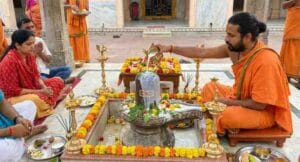
Rudrabhishek Puja Vidhi: Complete Guide to Shiva Abhishekam with 11 Sacred Items
Table of Contents
- Introduction to Rudrabhishek Puja
- What is Rudrabhishek and Its Significance
- Spiritual and Material Benefits of Rudrabhishek
- Best Days and Times to Perform Rudrabhishek
- Who Can Perform Rudrabhishek Puja
- Complete List of 11 Abhishekam Items
- Detailed Significance of Each Item
- Essential Materials and Preparation
- Rudrabhishek Puja Vidhi Step by Step
- Sacred Mantras for Rudrabhishek
- Rudram and Chamakam Chanting
- Offering Procedures and Etiquette
- Common Mistakes to Avoid
- Monthly and Special Occasion Rudrabhishek
- Mahashivratri Rudrabhishek Special Procedure
- Home vs Temple Rudrabhishek
- Frequently Asked Questions
- Conclusion
Did you know that performing Rudrabhishek—the sacred bathing ritual of Lord Shiva—is considered one of the most powerful spiritual practices in Hinduism, capable of transforming lives, removing obstacles, and granting both material prosperity and spiritual liberation? Ancient scriptures declare that even celestial beings perform this ritual to receive Shiva’s boundless grace.
Rudrabhishek puja vidhi involves bathing the Shiva lingam with 11 sacred items while chanting the powerful Rudram hymns from the Krishna Yajurveda. This ancient Vedic ritual, practiced for over 3,000 years, combines precise procedures, devotional offerings, and sacred sound vibrations to invoke Lord Shiva’s transformative energy into the devotee’s life.
Whether you’re facing health challenges, seeking career advancement, removing planetary afflictions, or simply deepening your spiritual practice, understanding and performing Rudrabhishek correctly can create profound shifts. This comprehensive guide provides authentic step-by-step instructions, explains the significance of each element, teaches proper mantras, and reveals the life-changing benefits awaiting sincere practitioners.
What is Rudrabhishek and Its Significance
Rudrabhishek represents one of the most sacred and powerful rituals dedicated to Lord Shiva in his fierce yet benevolent aspect as Rudra—the howler, the cosmic dissolver who removes suffering and ignorance.
Etymology and Meaning
The word “Rudrabhishek” combines three Sanskrit terms. “Rudra” refers to Lord Shiva’s fierce manifestation mentioned extensively in Vedic texts. “Abhishek” derives from “abhi” (toward) and “sic” (to sprinkle), meaning ceremonial bathing or anointing. Thus, Rudrabhishek literally means “the sacred bathing of Lord Rudra.”
This ritual differs from regular Shiva puja through its specific structure, incorporation of Vedic Rudram chanting, and systematic bathing with multiple sacred substances. The procedure follows ancient Agamic and Vedic protocols preserved through millennia.
Vedic Origins
Rudrabhishek’s foundation lies in the Sri Rudram, also called Rudra Prashna, appearing in the Krishna Yajurveda’s Taittiriya Samhita (4.5 and 4.7). These ancient hymns, among Hinduism’s oldest continuously chanted texts, praise Rudra’s cosmic functions while seeking His benevolence and protection.
The Shiva Puranas, Agamas, and various Tantric texts elaborate on Rudrabhishek procedures, each adding layers of ritual sophistication while maintaining core Vedic elements. Different traditions—Shaivite, Vedic, Tantric—practice variations, but all honor the fundamental structure of bathing the Shiva lingam with sacred substances while chanting Rudram.
Spiritual Philosophy
At its deepest level, Rudrabhishek symbolizes the purification of consciousness itself. The Shiva lingam represents the formless absolute reality manifesting in form. Bathing it with various substances symbolizes offering all aspects of material existence back to divine source.
Each item used in abhishekam represents different elements and qualities—earth, water, fire, air, ether, and their refined essences. Through systematic offerings, practitioners symbolically purify the five elements within themselves, dissolving ego identification with material form and awakening recognition of their true divine nature.
The act of pouring substances over the lingam while chanting creates a multi-sensory meditation. Visual focus on the lingam, tactile engagement with offerings, auditory absorption in mantra vibrations, and devotional emotion combine to induce powerful meditative states conducive to spiritual transformation.
Cultural Importance
Rudrabhishek holds central importance in Hindu spiritual culture, particularly among Shaivite traditions. Major temples perform elaborate Rudrabhisheks daily, with special versions during Shravan month (July-August), Mondays, and Mahashivratri.
The ritual bridges priestly and lay practice. While Vedic priests perform highly complex versions with extensive Rudram chanting, simplified forms allow ordinary devotees to participate directly, democratizing access to this powerful spiritual technology.
In contemporary practice, Rudrabhishek has gained popularity beyond traditional Hindu communities, with yoga practitioners, meditation seekers, and spiritual aspirants worldwide discovering its transformative potential.
The Cosmic Shiva
Understanding Rudrabhishek requires recognizing Shiva’s cosmic functions. As Mahadeva (Great God), Shiva represents the ultimate reality beyond all attributes. As Rudra, He manifests cosmic dissolution—not mere destruction, but transformation that removes the old to enable new creation.
Shiva governs time, death, regeneration, and consciousness itself. He is simultaneously the austere yogi meditating in Himalayan caves and the cosmic dancer whose movements create and dissolve universes. This paradoxical nature makes Shiva particularly accessible—approachable by anyone regardless of status, caste, or circumstance.
Rudrabhishek taps into this cosmic function, invoking Shiva’s power to dissolve obstacles, karmic blockages, and limitations preventing devotees from realizing their full potential.
Spiritual and Material Benefits of Rudrabhishek
Ancient texts and contemporary practitioners report extraordinary benefits from regular Rudrabhishek practice, spanning spiritual, mental, physical, and material dimensions.
Spiritual Benefits
Liberation and Self-Realization: The highest benefit is moksha—liberation from the cycle of birth and death. Regular Rudrabhishek with devotion and understanding gradually dissolves karmic impressions and ego identification, revealing one’s true nature as pure consciousness.
Purification of Sins: Scriptures declare that Rudrabhishek performed with proper devotion purifies even severe sins accumulated over lifetimes. The Shiva Purana states that sincere worship of the lingam through abhishekam burns karmic debts like fire consumes dry grass.
Spiritual Awakening: The practice activates dormant spiritual energy (kundalini), accelerating evolution through higher states of consciousness. Many practitioners report profound experiences during or after Rudrabhishek—visions, mystical insights, or sudden clarity about life purpose.
Divine Grace: Perhaps most importantly, Rudrabhishek attracts Lord Shiva’s compassionate grace. Unlike rigid karmic law, divine grace can transform circumstances miraculously, granting blessings beyond what practitioners might deserve through their efforts alone.
Mental and Emotional Benefits
Peace of Mind: The ritual’s meditative nature calms mental turbulence. Chanting mantras and performing systematic procedures quiets the thinking mind, inducing states of peace that often persist long after the ritual concludes.
Emotional Healing: Rudrabhishek helps process and release deep emotional wounds. The ritual creates safe space for confronting grief, trauma, anger, and fear, allowing these energies to dissolve in divine presence.
Clarity and Focus: Regular practice sharpens mental clarity and concentration. The discipline required trains attention, improving focus applicable to all life areas—work, relationships, creative pursuits.
Reduced Anxiety and Depression: Many practitioners report significant reduction in anxiety, depression, and stress-related conditions. The combination of ritual structure, devotional focus, and divine connection provides psychological support equivalent to therapeutic interventions.
Physical Health Benefits
Disease Prevention and Cure: Traditional belief holds that Rudrabhishek can prevent illness and support healing from existing conditions. While not replacing medical treatment, the practice may support healing through stress reduction, immune enhancement, and mysterious energetic mechanisms.
Longevity: Scriptures promise extended healthy lifespan to regular Rudrabhishek practitioners. The Shiva Mahapurana describes cases of devotees granted extra years through sincere worship.
Protection from Accidents: Devotees commonly report protection from potential accidents, dangerous situations, or untimely death. Stories abound of miraculous escapes attributed to regular Shiva worship.
Material and Worldly Benefits
Obstacle Removal: Rudrabhishek excels at removing obstacles blocking success in any endeavor—career advancement, business growth, educational achievement, legal matters.
Financial Prosperity: Lakshmi, goddess of wealth, resides in places where Shiva is properly worshipped. Regular Rudrabhishek attracts material abundance, often in unexpected ways.
Career Success: The ritual removes planetary afflictions and negative influences affecting professional life, opening paths to promotions, recognition, and career fulfillment.
Relationship Harmony: Rudrabhishek can heal troubled relationships, attract suitable marriage partners, and create domestic peace. As the ideal householder (with consort Parvati), Shiva blesses family life when properly worshipped.
Protection from Enemies: The fierce Rudra aspect protects devotees from enemies, competitors, negative energies, and malevolent influences. Many perform Rudrabhishek specifically for protection.
Astrological Remedies
Rahu-Ketu Afflictions: Rudrabhishek powerfully neutralizes negative effects of the shadow planets Rahu and Ketu, which cause confusion, obstacles, and sudden upheavals.
Saturn (Shani) Troubles: During challenging Saturn transits (Sade Sati, Dhaiya), regular Rudrabhishek mitigates difficulties and transforms Saturn’s lessons into wisdom rather than suffering.
General Planetary Peace: The ritual harmonizes all planetary influences, balancing the cosmic energies affecting individual destiny.
Testimonials and Evidence
While scientific validation remains limited, millennia of consistent practice and countless personal testimonials suggest genuine transformative effects. Practitioners report career breakthroughs following months of dedicated practice, miraculous healings, relationship resolutions, and profound spiritual experiences.
The key lies in consistency, proper procedure, and genuine devotion. Rudrabhishek is not magic granting instant wishes, but a spiritual discipline that gradually transforms consciousness, karma, and life circumstances through divine grace.
Best Days and Times to Perform Rudrabhishek
Timing enhances Rudrabhishek’s effectiveness, with certain days and hours considered especially auspicious according to Vedic astrology and spiritual tradition.
Most Auspicious Days
Mondays: Monday, governed by the Moon and dedicated to Lord Shiva, ranks as the single best day for Rudrabhishek. Weekly Monday worship creates powerful cumulative effects. Many devotees perform simplified Rudrabhishek every Monday and elaborate versions monthly.
Pradosh Days: The 13th lunar day (Trayodashi) of each fortnight, called Pradosh, holds special significance for Shiva worship. Evening worship during the 1.5-hour period before sunset (Pradosh Kaal) on these days is particularly powerful.
Mahashivratri: The “Great Night of Shiva” in February/March represents the most auspicious occasion for Rudrabhishek. All-night worship with multiple abhishekams on Mahashivratri grants maximum spiritual merit.
Shravan Mondays: Throughout the sacred month of Shravan (July-August), Monday Rudrabhisheks carry multiplied benefits. Millions perform this practice during Shravan, creating collective spiritual energy.
Amavasya (New Moon): The moonless night, especially Amavasya falling on Monday, provides powerful timing for Rudrabhishek addressing ancestral karmas and removing obstacles.
Solar/Lunar Eclipses: Though requiring specific protocols, Rudrabhishek performed during eclipses in sacred locations multiplies effects thousands of times according to scriptural mathematics.
Personal Birth Stars: Performing Rudrabhishek on one’s nakshatra (birth star) day each month brings personalized benefits aligned with individual karma and destiny.
Optimal Times of Day
Brahma Muhurta (Pre-dawn): The period approximately 1.5 hours before sunrise (4:00-6:00 AM depending on location and season) represents the most spiritually potent time. Consciousness remains subtle from sleep, the environment stays quiet, and cosmic energies favor meditation and worship.
Morning Hours: If Brahma Muhurta isn’t feasible, any morning time before noon works well. Morning worship sets positive spiritual tone for the entire day.
Pradosh Kaal (Dusk): The 1.5-hour period before sunset, when day transitions to night, carries special power for Shiva worship. This twilight time, called Sandhya, facilitates connection between earthly and divine realms.
Night Time: Shiva is Mahakal, the lord of time and night. Late evening or night worship, especially on Mahashivratri and Mondays, deeply pleases the night-loving deity.
Days to Avoid
Traditional guidelines suggest avoiding Rudrabhishek on certain inauspicious days:
- One’s own or family member’s birth anniversary (tithi)
- Death anniversaries of close relatives
- During menstruation (for women following traditional practices)
- Inauspicious astrological combinations (consult knowledgeable astrologer)
However, Shiva’s accessible nature means sincere devotion transcends technical timing considerations. If circumstances permit worship only on supposedly “inauspicious” days, proceed with faith—Lord Shiva accepts genuine devotion regardless of temporal technicalities.
Frequency Recommendations
Daily: Advanced practitioners or those with specific urgent needs may perform simplified Rudrabhishek daily, particularly during challenging life phases.
Weekly (Mondays): Most common frequency for regular practitioners, balancing spiritual benefit with practical feasibility.
Monthly: On specific Mondays (especially during Pradosh) or personal birth stars provides minimum recommended frequency for continuous protection and blessings.
Special Occasions: Performing elaborate Rudrabhishek during Mahashivratri, one’s birthday, marriage anniversary, or when beginning important ventures multiplies benefits.
Consistency Over Grandeur
Regular simple Rudrabhishek exceeds occasional elaborate versions in long-term benefit. Daily or weekly practice with basic items and sincere devotion surpasses annual grand ceremonies performed mechanically without devotional feeling.
Who Can Perform Rudrabhishek Puja
One of Rudrabhishek’s beautiful aspects is its accessibility—with few restrictions, almost anyone can perform this powerful ritual.
Universal Accessibility
Unlike some Vedic rituals restricted to initiated Brahmins or specific castes, Rudrabhishek is remarkably democratic. Lord Shiva, called “Bholenath” (the simple lord), accepts worship from anyone approaching with sincere devotion regardless of birth, caste, gender, nationality, or social status.
Historical examples demonstrate this accessibility. Great Shiva devotees included forest dwellers, outcastes, women, kings, and ascetics—all finding equal acceptance before the Lord who wears the Ganga in His hair and dwells in cremation grounds.
Gender Inclusivity
Both men and women can perform Rudrabhishek. While some orthodox traditions suggest women avoid temple visits during menstruation, home worship remains acceptable. Many contemporary teachers emphasize that Shiva, who contains both masculine and feminine principles (Ardhanarishvara form), welcomes worship from all genders equally.
Women have produced some of history’s greatest Shiva devotees—Karaikkal Ammaiyar, Akka Mahadevi, and many others whose intense devotion earned profound spiritual realization.
Age Considerations
Children can participate in simplified Rudrabhishek under adult supervision, learning devotional practices early. Elderly practitioners find Rudrabhishek particularly suitable as it requires minimal physical exertion while providing deep spiritual engagement.
Beginners and Advanced Practitioners
Beginners can start with simplified versions—basic abhishekam with water or milk while chanting “Om Namah Shivaya”—gradually learning more elaborate procedures. Advanced practitioners may perform complete Rudram-Chamakam chanting with all 11 items and complex ritual elements.
The practice scales beautifully, accommodating practitioners at every level while maintaining core spiritual effectiveness.
Special Qualifications
While anyone can perform Rudrabhishek, certain qualifications enhance effectiveness:
Vegetarian Diet: Preferably maintain vegetarian diet, at least on worship days. Many practitioners adopt vegetarianism permanently.
Mental Purity: Approach with positive intention, letting go of anger, jealousy, and negative emotions before beginning.
Basic Cleanliness: Bathe before worship, wear clean clothes, and maintain physical cleanliness as external reflection of internal purity.
Devotional Attitude: Most important qualification—sincere devotion (bhakti) and faith in Lord Shiva’s grace. Without devotional feeling, ritual becomes mere mechanical action.
Learning and Guidance
While anyone can perform basic Rudrabhishek, learning proper procedures from experienced practitioners or authentic teachers enhances practice quality. Many temples offer classes teaching correct procedures, mantras, and philosophy.
Books, online resources, and video tutorials provide additional learning support. However, nothing replaces direct transmission from knowledgeable teachers who can correct mistakes and answer questions specific to individual practice.
Priestly Assistance
For complex versions or lack of confidence in self-performance, hiring trained priests to perform Rudrabhishek on one’s behalf remains perfectly acceptable. Many temples offer Rudrabhishek seva where priests perform the ritual with the devotee’s sankalpam (stated intention), conferring full benefits.
The key is participation—whether direct or through sponsorship—combined with devotional engagement rather than passive observation.
Complete List of 11 Abhishekam Items
The traditional Rudrabhishek uses 11 sacred substances for bathing the Shiva lingam, each carrying specific spiritual significance and effects.
The Sacred 11 Items
- Jal (Water): Preferably from sacred rivers—Ganga, Yamuna, Godavari—or pure clean water
- Dugdh (Milk): Fresh cow’s milk, representing purity and nourishment
- Dahi (Yogurt/Curd): Made from cow’s milk, symbolizing transformation
- Ghee (Clarified Butter): Pure cow’s ghee representing divine radiance
- Shahad (Honey): Natural honey symbolizing sweetness and divine nectar
- Shakar (Sugar): Representing sweetness and removal of bitterness
- Panchamrit (Five Nectars): Mixture of milk, yogurt, ghee, honey, and sugar
- Gandha (Sandalwood Paste): Cooling fragrant paste for peace
- Bhasma (Sacred Ash): Vibhuti or sacred ash representing dissolution of ego
- Bel Patra Juice (Bilva Leaf Extract): Juice from Shiva’s most sacred leaf
- Ganga Jal (Sacred Water): Final purifying bath with holy Ganga water
Alternative Substances
Some traditions include variations or additions:
- Coconut Water: Fresh, pure coconut water
- Sugarcane Juice: Sweet natural juice
- Rose Water: Fragrant floral water
- Tender Coconut Flesh: Blended for bathing
- Fruit Juices: Apple, pomegranate, or other pure juices
Simplified Version for Beginners
For those beginning practice or lacking access to all items, simplified versions remain effective:
Three-Item Abhishekam: Water, milk, and Panchamrit
Five-Item Abhishekam: Water, milk, yogurt, honey, and Panchamrit
Single-Item Abhishekam: Pure water with devotion equals elaborate ceremonies without devotion
The principle is that sincere devotion matters more than material completeness. Start simply and expand as knowledge and resources permit.
Sourcing Items
Water: Use filtered or purified water. Sacred river water (available bottled from Ganga, etc.) enhances the ritual but isn’t essential.
Dairy Products: Fresh, high-quality organic milk, yogurt, and ghee from reputable sources. Traditional preference for cow’s milk products reflects cultural context; substitutions based on dietary restrictions or availability are acceptable.
Honey and Sugar: Pure, unadulterated varieties without additives or processing chemicals.
Sandalwood Paste: Available at Indian grocery stores or online. Authentic sandalwood (not synthetic fragrance) preferred.
Sacred Ash: Available from Shiva temples or Indian stores. Some advanced practitioners prepare their own through specific Vedic fire rituals.
Bilva Leaves: Fresh bilva (bel patra) leaves from bilva trees. If unavailable, use dried leaves available at Indian stores, though fresh leaves are ideal.
Quantity Guidelines
For home Rudrabhishek on a small lingam:
- Water: 250-500 ml per bathing round
- Milk: 200-300 ml
- Other items: 100-200 ml or 2-3 tablespoons for pastes
Quantities scale based on lingam size. Temple Rudrabhisheks on large lingams use liters of each substance.
Detailed Significance of Each Item
Understanding why each substance is used deepens spiritual engagement and maximizes benefits.
1. Water (Jal) – Purification
Water represents the universal solvent, the primordial element from which creation emerges. Bathing with water symbolizes purifying consciousness from mental impurities—desires, attachments, and illusions.
Sacred river water, especially Ganga, carries additional spiritual potency. The Ganga descended from heaven through Shiva’s matted locks, making Ganga water a direct link to divine grace. Water abhishekam cools Shiva’s fierce energy, earning His benevolence.
Benefits: Mental purification, clarity, removal of sins, protection from negative influences.
2. Milk (Dugdh) – Nourishment and Purity
Milk represents the pure sattvic (harmonious) quality, maternal nourishment, and innocent devotion. Bathing with milk pleases Shiva immensely, symbolizing offering of pure, unadulterated devotion.
In Puranic stories, even demonic beings earned Shiva’s grace through milk abhishekam, demonstrating its power to purify even the most corrupted consciousness.
Benefits: Prosperity, health, longevity, family happiness, removal of doshas (afflictions).
3. Yogurt (Dahi) – Transformation
Yogurt represents transformation—milk changed through fermentation into something new yet retaining essence. This symbolizes spiritual transformation, where ego-identified consciousness evolves into divine awareness without losing individual existence.
The cooling property of yogurt soothes Shiva’s fierce heat accumulated from holding cosmic destruction, granting His peaceful blessings.
Benefits: Peaceful mind, good progeny, protection of children, transformation of difficulties into blessings.
4. Ghee (Clarified Butter) – Divine Radiance
Ghee, the refined essence of milk, represents divine radiance and illuminated consciousness. In Vedic fire rituals, ghee feeds sacred fire, similarly feeding Shiva with ghee abhishekam ignites spiritual fire within practitioners.
Ghee’s golden color symbolizes knowledge, wisdom, and spiritual enlightenment—qualities manifesting through regular practice.
Benefits: Wisdom, spiritual knowledge, prosperity, removal of ignorance, divine grace.
5. Honey (Shahad) – Divine Sweetness
Honey represents the sweetness of divine experience—the bliss (ananda) that is ultimate reality’s nature. Bees gather nectar from countless flowers to create honey, symbolizing how spiritual practice distills experiences into wisdom-sweetness.
Offering honey seeks sweetness in life—harmonious relationships, joyful experiences, and the ultimate sweetness of divine love.
Benefits: Attractive personality, melodious speech, harmonious relationships, destruction of enemies, sweet experiences.
6. Sugar (Shakar) – Removal of Bitterness
Sugar specifically addresses bitterness—harsh speech, bitter relationships, resentful attitudes. Bathing Shiva with sugar sweetens the devotee’s personality, speech, and life circumstances.
This offering asks Shiva to remove life’s bitterness, replacing struggles with sweetness and grace.
Benefits: Sweet speech, pleasant personality, removal of hardships, fulfillment of desires.
7. Panchamrit – Five Divine Nectars
Panchamrit combines milk, yogurt, ghee, honey, and sugar—the previous five items mixed into one offering. This mixture represents the complete offering of all aspects of material existence back to divine source.
The five ingredients correspond to the five elements and five senses, symbolizing total surrender and integration of material and spiritual dimensions.
Benefits: Complete purification, fulfillment of all desires, supreme grace, holistic transformation.
8. Sandalwood Paste (Gandha) – Cooling Peace
Sandalwood’s cooling, fragrant properties soothe Shiva’s fierce heat. The pleasant aroma represents the sweet fragrance of devotion rising to please the Lord.
Sandalwood paste application (after liquid abhishekams) shows reverence and devotion while seeking Shiva’s peaceful, benevolent aspect rather than fierce Rudra manifestation.
Benefits: Mental peace, cooling of anger and passion, pleasant life circumstances, divine fragrance in one’s character.
9. Sacred Ash (Bhasma) – Ultimate Reality
Vibhuti or sacred ash represents ultimate reality—everything reduces to ash eventually, revealing the transient nature of material existence. Shiva smears His body with cremation ground ash, teaching non-attachment and recognition of life’s temporary nature.
Applying ash to the lingam symbolizes embracing this truth, dissolving ego-identification with temporary forms and awakening to eternal consciousness.
Benefits: Destruction of ego, liberation, protection from death fear, moksha (ultimate freedom).
10. Bilva Leaf Extract – Supreme Devotion
Bilva (bel patra) leaves are Shiva’s most beloved offering. The trifoliate leaf represents the three aspects of time (past, present, future), three gunas (sattva, rajas, tamas), or the trident-wielding deity Himself.
Using bilva leaf extract for abhishekam combines the sacred leaf’s offering with bathing ritual, doubling devotional expression.
Benefits: Supreme grace, removal of all sins including serious karmic debts, fulfillment of deepest desires, liberation.
11. Final Ganga Water Bath – Ultimate Purification
The concluding bath with sacred Ganga water washes away all impurities, purifies previous offerings, and completes the cycle. This represents final purification before the lingam is dressed and decorated for worship.
Benefits: Complete purification, washing away of all sins, divine protection, spiritual merit equivalent to bathing in Ganga.
Essential Materials and Preparation
Proper preparation ensures smooth ritual flow and maximizes spiritual benefit.
Physical Items Required
Shiva Lingam: Small stone or crystal lingam for home worship (3-6 inches ideal for personal practice). Available at Indian stores or online.
Yoni Pitha (Base): Platform with spout for draining abhishekam liquids, representing Shakti (feminine creative power).
Copper or Silver Vessel (Kalash): For storing and pouring abhishekam items. Copper enhances spiritual vibrations.
Small Cups or Bowls: To hold each individual abhishekam substance separately.
Panchapatras and Udharini: Traditional vessels for Vedic rituals—small copper bowl and spoon.
Collection Vessel: Placed below the spout to collect used abhishekam liquids (considered sacred prasad).
Offering Plate (Thali): Copper or steel plate for arranging items.
Incense and Lamp: Agarbatti or dhoop for incense, ghee lamp for aarti.
Flowers and Bilva Leaves: Fresh flowers (preferably white or blue), and fresh bilva patra leaves.
Bell: Small hand bell for ringing during worship.
Prayer Mat or Asana: Clean cloth or mat for sitting.
Additional Items:
- Clean towel for wiping the lingam
- Red kumkum and white chandan
- Akshata (unbroken rice grains)
- Betel leaves and nuts
- Fruits for offering
- Camphor for final aarti
- Sacred thread (janeu)
Preparation Steps
Day Before:
- Gather all required materials
- Clean the worship space thoroughly
- If fasting, begin mental and dietary preparation
- Review mantras and procedures
Morning of Puja:
- Wake early, preferably during Brahma Muhurta
- Complete morning ablutions
- Bathe thoroughly with awareness of inner purification
- Wear clean, preferably new clothes (white, saffron, or traditional colors)
- Fast or eat light sattvic breakfast depending on tradition followed
Worship Space Preparation:
- Clean the altar or worship area spotlessly
- Arrange items systematically within easy reach
- Place the lingam on its yoni pitha at altar center
- Set collection vessel below the spout
- Arrange abhishekam substances in order of use
- Light incense to purify atmosphere
- Ensure adequate lighting
- Remove distractions—silence phones, inform household members
Mental Preparation
Mental preparation matters as much as physical:
- Intention Setting: Clearly formulate your intention (sankalpam). Why are you performing this puja? What blessings do you seek?
- Devotional Mood: Cultivate loving devotion. Recall Shiva’s qualities—compassion, accessible nature, quick granting of blessings.
- Focus Commitment: Decide to maintain focus throughout the ritual without rushing or mechanical performance.
- Surrender Attitude: Approach with humility, acknowledging human limitations and divine grace.
- Forgiveness: Release any grievances or negative feelings toward others.
Mantra Preparation
If chanting full Rudram, practice pronunciation beforehand. Many excellent audio recordings by learned Vedic priests are available online. Listening repeatedly helps internalize proper pronunciation and rhythm.
For beginners unable to chant Rudram, “Om Namah Shivaya” repeated 108 times during each abhishekam equals elaborate Vedic chanting when performed with sincere devotion.
Rudrabhishek Puja Vidhi Step by Step
This section provides complete step-by-step instructions for performing authentic Rudrabhishek at home.
Part 1: Preliminary Rituals (Poorva Anga)
Step 1: Achaman (Purification)
Sit facing East or North. Take water in right hand, sip three times while chanting:
- “Om Keshavaya Namah” (sip)
- “Om Narayanaya Namah” (sip)
- “Om Madhavaya Namah” (sip)
Step 2: Pranayama (Breath Control)
Perform three rounds of alternate nostril breathing to calm mind and energize subtle body:
- Close right nostril, inhale left
- Close left nostril, exhale right
- Inhale right, exhale left
- Repeat three times
Step 3: Sankalpam (Statement of Intention)
Hold water and flowers in cupped hands. State your intention:
“Om Vishnu, on this [day of week], in [month], in [year], I [your name], son/daughter of [father’s name], residing in [location], am performing this Rudrabhishekam to please Lord Shiva and receive His divine grace for [state specific intention—health, prosperity, obstacle removal, etc.].”
Release water and flowers at the lingam base.
Step 4: Ganesh Puja
Worship Lord Ganesha first to remove obstacles:
Chant: “Om Gam Ganapataye Namah” (11 times)
Offer flowers and akshata to a small Ganesha image or visualize Him.
Step 5: Kalash Sthapana (Water Pot Consecration)
Fill the kalash (pot) with water, place betel nut and leaves, tie sacred thread around neck. This represents inviting divine presence.
Chant: “Om Varuna devata, please reside in this kalash and sanctify this worship.”
Part 2: Main Abhishekam
Step 6: Dhyana (Meditation)
Close eyes and meditate briefly on Lord Shiva:
Visualize Shiva seated in meditation on Mount Kailash, with Ganga flowing from His matted locks, third eye on forehead, blue throat from holding cosmic poison, crescent moon in His hair, serpent coiled around neck, holding trident and damaru.
Feel His peaceful yet powerful presence.
Step 7: Avahana (Invocation)
Ring bell and chant:
“Om Shivaya Namah—O Lord Shiva, please manifest in this lingam. Accept my humble worship with compassion.”
Visualize divine light entering the lingam.
Step 8: Systematic Abhishekam with 11 Items
Perform each abhishekam slowly, with focus and devotion:
1. Water Abhishekam:
- Pour pure water over lingam from crown to base
- Chant: “Om Namah Shivaya” (108 times) or Rudram if you know it
- Visualize water washing away all impurities
2. Milk Abhishekam:
- Pour milk continuously from top of lingam
- Chant mantras or “Om Namah Shivaya”
- Offer with gratitude
3. Yogurt Abhishekam:
- Apply yogurt, letting it flow over entire lingam
- Chant while pouring
- Feel transformation occurring
4. Ghee Abhishekam:
- Pour warm (not hot) ghee slowly
- Visualize divine radiance filling you
- Continue mantra chanting
5. Honey Abhishekam:
- Let honey flow over lingam
- Pray for sweetness in life
- Maintain devotional feeling
6. Sugar Water Abhishekam:
- Dissolve sugar in water, pour over lingam
- Ask for removal of life’s bitterness
- Chant with feeling
7. Panchamrit Abhishekam:
- Mix all five nectars, pour generously
- This is the main offering—do slowly with maximum devotion
- Chant full Rudram if possible, or “Om Namah Shivaya” 108 times
8. Rinse with Water:
- Pour clean water to rinse previous substances
- This intermediate cleansing prepares for next offerings
9. Sandalwood Paste Application:
- Apply sandalwood paste gently with ring finger
- Cover entire lingam with cooling paste
- Pray for peace and tranquility
10. Sacred Ash Application:
- Apply vibhuti reverently
- Recognize the impermanence of material existence
- Offer ego-dissolution to Lord
11. Bilva Leaf and Final Ganga Water:
- Place bilva leaves on lingam with stems toward top
- Pour Ganga water or pure water as final abhishekam
- Chant: “Om Tryambakam Yajamahe, Sugandhim Pushti Vardhanam, Urvarukamiva Bandhanan, Mrityor Mukshiya Maamritat”
Part 3: Decoration and Worship (Alankara and Puja)
Step 9: Dressing the Lingam
After final water rinse, gently dry the lingam. Apply:
- Fresh sandalwood paste
- Kumkum (vermillion)
- Fresh bilva leaves
- Flowers
Step 10: Sixteen Upacharas (Services)
Offer the 16 traditional services (can be simplified):
- Asanam (seat)
- Padyam (water for feet)
- Arghyam (water for hands)
- Achaman (water for sipping)
- Snana (bath—already done through abhishekam)
- Vastram (cloth—offer akshata symbolically)
- Upavita (sacred thread)
- Gandha (sandalwood)
- Pushpa (flowers)
- Dhupa (incense)
- Deepa (lamp)
- Naivedya (food offering)
- Tambula (betel leaves)
- Karpoora (camphor)
- Namaskara (prostrations)
- Parikrama (circumambulation)
Step 11: Aarti
Light camphor or ghee lamp. Wave it before the lingam in circular motions while ringing bell and singing aarti:
“Om Jaya Shiva Omkara, Har Jaya Shiva Omkara
Brahma Vishnu Sadashiva, Ardh-angi Dhara…”
Step 12: Pushpanjali (Flower Offering)
Offer flowers with both hands while chanting:
“Om Namah Shivaya, Om Namah Shivaya, Om Namah Shivaya”
Step 13: Pradakshina (Circumambulation)
Walk around the lingam clockwise (or around your worship space) 3, 7, or 11 times.
Step 14: Namaskara (Prostration)
Perform full prostration (if able) or bow deeply, touching forehead to ground.
Step 15: Prarthana (Prayer)
Offer personal prayers in your own words, from your heart. Share your gratitude, needs, hopes, and surrender to divine will.
Step 16: Prasad Distribution
Distribute the collected abhishekam liquids (if collected) as prasad to family members. These sacred substances carry divine blessings. Some traditions drink a small amount and sprinkle on head.
Distribute food prasad (naivedya) to all present.
Step 17: Visarjan (Conclusion)
Thank Lord Shiva:
“Om, Lord Shiva, thank you for accepting my humble worship. Please forgive any mistakes in procedure or mantra pronunciation. Remain always in my heart. May your blessings flow to all beings. Om Shanti, Shanti, Shanti.”
Duration
Complete Rudrabhishek with all steps takes 1-2 hours depending on pace. Simplified versions take 30-45 minutes. Never rush—better to perform shorter version with devotion than lengthy version mechanically.
Sacred Mantras for Rudrabhishek
Mantras form the sonic dimension of Rudrabhishek, activating spiritual energies through sacred sound vibrations.
Pranava (Om)
The primordial sound “Om” contains all vibrations. Beginning and ending with Om connects individual practice to cosmic consciousness.
Chant: “Om” (elongated, with full breath)
Panchakshari Mantra
The five-syllable mantra “Om Namah Shivaya” is Shaivism’s maha-mantra, simple yet containing complete Shiva-tattva (Shiva principle).
Meaning: Om—cosmic sound; Namah—salutations, I bow; Shivaya—to Shiva
This mantra alone, chanted 108 times during each abhishekam, creates powerful Rudrabhishek even without knowing complex Vedic hymns.
Chant: “Om Namah Shivaya” (108 times per abhishekam or continuously)
Maha Mrityunjaya Mantra
Called the “death-conquering mantra,” this powerful chant from the Rigveda grants protection, healing, and longevity:
“Om Tryambakam Yajamahe
Sugandhim Pushti Vardhanam
Urvarukamiva Bandhanan
Mrityor Mukshiya Maamritat”
Meaning: We worship the three-eyed one (Shiva) who is fragrant and nourishes all beings. Like a cucumber naturally separates from its vine when ripe, may we be liberated from death into immortality (not from death into death, but from death into eternal life).
Usage: Chant 11, 21, 51, or 108 times during abhishekam, especially with Panchamrit and final water.
Sri Rudram
The Sri Rudram (also called Rudra Prashna or Namakam) from Krishna Yajurveda’s Taittiriya Samhita forms the core of traditional Rudrabhishek. This ancient hymn contains 11 anuvakas (sections) praising Rudra’s various forms and cosmic functions.
Sri Rudram is complex, requiring proper learning from qualified teachers. Audio recordings help learn correct pronunciation.
The hymn addresses Shiva in countless forms—”Salutations to the fierce one, to the mild one, to the one in trees, to the one in leaves, to the one in weapons, to the protector of travelers, to the lord of thieves…” This comprehensive approach recognizes divinity in all aspects of existence.
Chamakam
Following Rudram, the Chamakam (from root “cham” meaning desire/wish) presents requests to the deity—for prosperity, progeny, health, cattle, land, etc., culminating in ultimate request for divine grace and liberation.
Together, Rudram-Chamakam form complete worship: Rudram offers praise and recognition, Chamakam presents requests.
Full Rudrabhishek Mantra Procedure:
- Begin with Om and Ganesha mantra
- Chant Sri Rudram during main abhishekams (water through Panchamrit)
- Chant Chamakam during final offerings
- Conclude with Maha Mrityunjaya mantra
- End with Shanti Mantra and Om
Simplified Mantra Approach
For those unable to learn Rudram:
- Chant “Om Namah Shivaya” continuously (mala of 108 repetitions per abhishekam)
- Include Maha Mrityunjaya mantra (11 times) with Panchamrit
- Recite simple prayers in your own language from the heart
Devotion and sincerity matter infinitely more than technical perfection in pronunciation. Lord Shiva accepts stammering prayers from genuine devotees while rejecting flawless chanting devoid of feeling.
Learning Resources
Numerous online resources provide audio of proper Rudram-Chamakam pronunciation:
- YouTube channels by Vedic scholars
- Apps like “Sri Rudram Audio”
- Sanskrit learning websites
- Local Hindu temples offering classes
Listening daily while reading transliteration helps internalize these powerful mantras over time.
Read this also :
- Somnath Temple Gujarat: Complete Guide to the First Jyotirlinga – History, Darshan Timings
- Meenakshi Temple Madurai: Complete Guide to Architecture
- BAPS Swaminarayan Mandir USA: Complete Directory of Locations & Timings 2025
- Balaji Temple USA: Complete State-Wise Guide to Venkateswara Temples 2025
- Hindu Temples in Texas: Houston, Dallas & Austin Complete Guide
Common Mistakes to Avoid
Awareness of common errors helps maintain ritual integrity and effectiveness.
Ritualistic Mistakes
Rushing Through Procedures: The most common error is hurrying through steps mechanically. Quality exceeds quantity—a brief heartfelt abhishekam surpasses lengthy mechanical performance.
Wrong Direction: Sitting facing South (direction of Yama, god of death) during worship is inauspicious. Always face East (sunrise, new beginnings) or North (Shiva’s Himalayan abode).
Impure Substances: Using stale milk, artificial honey, or impure ingredients diminishes spiritual potency. Always use fresh, pure, high-quality items.
Incorrect Mantra Pronunciation: While devotion matters most, grossly mispronounced mantras may produce reverse effects. Learn proper pronunciation or stick to simple mantras like “Om Namah Shivaya.”
Breaking Continuous Flow: Once abhishekam begins, maintain continuous flow for each substance. Interruptions, conversations, or distractions dissipate accumulated spiritual energy.
Improper Disposal: Never pour used abhishekam substances down drains. Dispose respectfully under trees, in flowing water, or in garden soil. These substances carry divine vibrations deserving reverence.
Mental and Emotional Mistakes
Lack of Devotion: Performing ritual mechanically without love, faith, or devotional feeling renders it empty formality. Sincere devotion is the soul of worship.
Doubt and Skepticism: Approaching with cynicism or doubt creates mental barriers preventing grace from flowing. Faith doesn’t mean blind belief but open receptivity.
Selfish Motivation Exclusively: While seeking legitimate needs is acceptable, purely selfish motivation without concern for others or spiritual growth limits benefits. Include prayers for universal welfare.
Comparing and Competing: Worrying about how your worship compares to others’ or competing for divine favor creates ego obstacles. Focus on your personal relationship with the divine.
Impatience for Results: Expecting immediate miraculous results leads to disappointment. Rudrabhishek works gradually, transforming consciousness and karma over time. Trust the process.
Practical Mistakes
Inadequate Preparation: Beginning worship only to discover missing items forces interruptions. Thorough preparation prevents disruptions.
Ignoring Physical Cleanliness: Performing worship without bathing or in unclean space disrespects the sacred. Physical purity reflects and supports mental purity.
Wrong Timing: Performing Rudrabhishek during inauspicious periods (though debated) may reduce effectiveness. Consult experienced practitioners about timing.
Quantity Over Quality: Attempting elaborate procedures beyond your capacity leads to errors and fatigue. Better a simple version performed excellently than complex version performed poorly.
Spiritual Mistakes
Attachment to Outcomes: Grasping desperately at desired results creates resistance. Perform worship as selfless offering, surrendering results to divine wisdom.
Pride in Performance: Feeling superior about your elaborate worship or knowledge creates spiritual pride, the subtlest obstacle. Maintain humility.
Neglecting Daily Discipline: Performing occasional spectacular Rudrabhishek while neglecting daily spiritual discipline (meditation, ethical living, selfless service) creates spiritual imbalance.
Correction Approach
When mistakes occur:
- Don’t panic or abandon the ritual
- Mentally apologize to Lord Shiva
- Correct the error if possible
- Continue with renewed focus
- Request forgiveness at conclusion
Shiva is Bholenath—the simple, easily pleased lord who values sincere intent over technical perfection. Genuine devotion covers all shortcomings.
Frequently Asked Questions
Can I perform Rudrabhishek at home without a priest?
Yes, absolutely. While temple Rudrabhisheks performed by trained priests follow complex Vedic protocols, home worship by sincere devotees is highly encouraged and spiritually effective. Start with simplified versions, learning gradually. Lord Shiva particularly appreciates personal devotion over grand but impersonal ceremonies. Ensure you learn basic procedures properly, maintain cleanliness, and approach with devotion. Home Rudrabhishek creates sacred atmosphere in your living space and develops direct personal relationship with the divine.
What if I don’t have all 11 items for abhishekam?
Begin with what you have. Even single-item abhishekam with pure water and devotion pleases Lord Shiva. Gradually add items as you learn and access permits. The traditional sequence is: water only, then water and milk, then water-milk-Panchamrit, progressively adding items. Devotional feeling matters infinitely more than material completeness. However, if performing for specific purposes (healing, planetary remedies), consult knowledgeable practitioners about essential items for that intention.
How do I dispose of the abhishekam liquids after the ritual?
Used abhishekam substances are sacred prasad, not waste. Several appropriate disposal methods exist: (1) Drink a small amount yourself and distribute to family members, (2) Pour under tulsi plant, peepal tree, or other sacred trees, (3) Pour into flowing river or water body (if accessible and ecologically appropriate), (4) Pour in garden or potted plants (avoid plants consumed for food if using milk products that may spoil), (5) Some traditions recommend pouring on the foundation of your house for protection. Never pour down drains or toilets—this disrespects the sacred substances.
Can women perform Rudrabhishek during menstruation?
This question involves varying traditional perspectives. Orthodox traditions suggest women avoid temple visits and elaborate rituals during menstruation, considering this period as requiring rest and natural purification. However, many contemporary teachers emphasize that Shiva, who transcends all dualities and dwells in cremation grounds, accepts worship from sincere devotees regardless of biological circumstances. Home worship, mental puja, mantra chanting, and listening to Shiva bhajans remain appropriate always. Ultimately, follow your own conscience, family tradition, and spiritual teacher’s guidance on this personal matter.
How long does it take to see results from Rudrabhishek?
Results vary enormously based on multiple factors—the nature of your prayer, karmic complexity, consistency of practice, devotional intensity, and divine timing. Some practitioners report immediate shifts—sudden solutions to problems, unexpected opportunities, mental peace. Others notice gradual transformation over weeks or months of regular practice. Major karmic issues may require extended practice (traditionally 40 days, 90 days, or longer periods). Trust the process without attachment to timeline. Transformation often begins subtly before becoming obvious. The practice itself—the peace, focus, and devotion cultivated—is valuable regardless of external results.
Do I need to be vegetarian to perform Rudrabhishek?
While not absolutely mandatory, vegetarianism significantly enhances spiritual practice. Traditional guidelines strongly recommend vegetarian diet, at minimum on worship days (from previous sunset through ritual completion). Many practitioners adopt vegetarianism permanently after beginning regular Shiva worship. The reasoning includes: (1) Ahimsa (non-violence) aligns consciousness with divine compassion, (2) Vegetarian food has sattvic (harmonious) quality supporting meditation and subtle perception, (3) Animal foods can carry fear energy from slaughter, creating mental agitation. If full vegetarianism isn’t immediately possible, avoid meat/fish/eggs at least 24 hours before worship, progressively extending this period as practice deepens.
Can Rudrabhishek remove all sins and negative karma?
According to scriptural promises, sincere Rudrabhishek performed with proper devotion can purify even severe karmas. The Shiva Mahapurana states that Shiva worship burns sins like fire consumes dry wood. However, understanding is crucial: (1) Purification requires genuine devotion, not mechanical ritual, (2) One should simultaneously stop creating new negative karma through harmful actions, (3) Some karmas may require experiencing their fruits for soul growth, though their severity can be reduced, (4) Divine grace can override ordinary karmic law, but faith and surrender are essential. Rudrabhishek should be combined with ethical living, selfless service, and meditation for complete transformation. The ritual provides powerful support but isn’t magic instantly erasing consequences of actions without inner change.
Conclusion
Rudrabhishek puja vidhi represents one of humanity’s most ancient and powerful spiritual technologies, preserved through millennia and remaining vibrantly effective today. This sacred ritual of bathing Lord Shiva with 11 pure substances while chanting Vedic mantras creates a multi-dimensional spiritual experience—engaging body through physical offerings, speech through mantra, mind through concentration, emotions through devotion, and consciousness through divine connection.
The beauty of Rudrabhishek lies in its accessibility. While elaborate temple versions exist with extensive Vedic protocols, simplified home practice remains equally sacred when performed with sincere devotion. Whether you’re seeking relief from suffering, pursuing material goals, addressing health challenges, removing astrological afflictions, or simply deepening spiritual awareness, Rudrabhishek provides a direct path to Lord Shiva’s transformative grace.
This comprehensive guide has provided everything needed to begin this profound practice—from understanding the philosophy and symbolism to specific step-by-step procedures, from essential mantras to common mistakes to avoid. The 11 sacred items, each carrying unique significance, combine to create complete purification and blessing when offered with love.
Remember that technical perfection matters far less than devotional sincerity. Lord Shiva, the easily pleased Bholenath, values one drop of genuine tears more than rivers of offerings given without feeling. Start simply, learn progressively, and most importantly, maintain consistency. Weekly Monday Rudrabhishek, even in simplified form, creates cumulative spiritual momentum that gradually transforms your entire life.
As you pour each sacred substance over the Shiva lingam, visualize your troubles, limitations, and sorrows washing away. As you chant “Om Namah Shivaya” or the ancient Rudram hymns, feel their vibrations purifying your consciousness. As you offer flowers and light at the conclusion, surrender your will to divine wisdom, trusting that Shiva’s grace operates for your highest good even when immediate results aren’t visible.
May Lord Shiva’s infinite compassion bless your practice. May the fierce yet benevolent Rudra remove all obstacles from your path. May you realize the divine consciousness that Shiva represents—the eternal, blissful awareness that is your true nature.
Om Namah Shivaya! Have you experienced Rudrabhishek? What has been your experience with this powerful practice? Share your journey in the comments below!