Complete Kalash Sthapana vidhi guide: Step-by-step sacred pot installation, traditional puja method, symbolism, mantras, materials & auspicious timing for ceremonies.
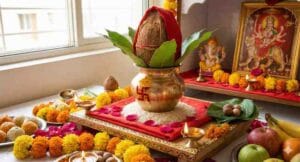
Kalash Sthapana Vidhi: The Complete Guide to Sacred Pot Installation
Table of Contents
- Introduction to Kalash Sthapana
- The Sacred Symbolism Behind the Kalash
- When is Kalash Sthapana Performed
- Types of Kalash and Their Purposes
- Essential Materials for Kalash Installation
- Complete Kalash Sthapana Vidhi Step by Step
- Mantras for Kalash Installation
- Different Regional Traditions
- Kalash Sthapana for Specific Occasions
- Maintaining the Kalash During Ceremonies
- Kalash Visarjan – The Conclusion Ritual
- Common Mistakes and How to Avoid Them
- Scientific and Spiritual Significance
- Kalash in Different Hindu Traditions
- Teaching the Tradition to Next Generation
- Kalash Sthapana in Temple vs Home
- Frequently Asked Questions
- Conclusion
You know what’s funny? I’ve watched priests perform Kalash Sthapana countless times at temples and family functions, yet it wasn’t until I had to install one for my own home puja that I realized I had no idea what I was actually doing. Sure, I knew you put a coconut on top of a pot filled with water, but the profound symbolism, the specific mantras, the exact procedure—all of that was a mystery wrapped in religious ritual.
Here’s the thing about Kalash Sthapana—it’s one of those foundational Hindu practices that’s simultaneously everywhere and nowhere. Everywhere because almost every significant puja, festival, or ceremony begins with installing a sacred pot. Nowhere because most of us have never been properly taught the complete procedure or understood its deeper meaning.
The Kalash, that beautifully decorated pot topped with a coconut and mango leaves, isn’t just decorative centerpiece or cultural artifact. It represents nothing less than the entire universe, all divine energies, and the presence of every deity compressed into one sacred vessel. When you perform Kalash Sthapana correctly, you’re essentially inviting the cosmic divine presence into your space, creating a focal point for all spiritual energies to gather and bless your ceremony.
This guide will walk you through everything—from why this ancient practice matters in modern times to the exact step-by-step procedure anyone can follow at home. Whether you’re preparing for Navaratri, Vastu Shanti, Griha Pravesh, Satyanarayan Puja, or any other ceremony, you’ll know exactly how to perform authentic Kalash Sthapana with confidence and understanding.
The Sacred Symbolism Behind the Kalash
Let me break down why this simple pot becomes so powerfully sacred when properly installed. The symbolism goes way deeper than most people realize.
The Pot as Universe
The Kalash itself represents the entire cosmos in miniature form. Think about it:
- The base of the pot symbolizes the earth and material reality
- The rounded body represents the world and atmosphere
- The neck signifies the transition between material and spiritual
- The mouth opening upward represents receptivity to divine grace
- The coconut on top symbolizes the supreme consciousness or head of cosmic being
Ancient texts describe the Kalash as representing Brahma (the creator) emerging from the cosmic waters of creation. It’s essentially a microcosm of the entire universe you can hold in your hands.
Water as Life Source
The water inside isn’t ordinary water once the Kalash is consecrated. It becomes teertha (sacred water) imbued with divine vibrations. Water itself holds profound symbolism:
- Source of all life on earth
- Represents purity and purification
- Flows like divine grace from higher to lower
- Takes the shape of any container like consciousness adapting to any form
- Essential for survival like spiritual wisdom is essential for liberation
When you add sacred items to the water—coins, grains, herbs—you’re creating a complete representation of earth’s abundance and blessings.
Mango Leaves and Their Significance
Those mango leaves arranged around the pot’s mouth aren’t random decoration. Mango leaves (aam ke patte) hold special spiritual importance:
- Considered extremely auspicious in Hindu tradition
- Their shape and structure create positive energy patterns
- Natural purifying properties (science confirms mango leaves absorb harmful radiation)
- Associated with Lakshmi and prosperity
- Used in all major Hindu ceremonies for thousands of years
The traditional arrangement uses 5, 7, or 11 leaves—odd numbers considered auspicious and representing completeness.
The Coconut Crown
That coconut sitting on top? It’s not just holding the leaves in place. The coconut represents:
- The human head or supreme consciousness
- Three eyes of Lord Shiva (the three marks on coconut)
- Hard shell of ego that must be broken to access the sweet water (wisdom) within
- Offering of ego and head to the divine
- Complete surrender and dedication
Some traditions draw a face on the coconut with kumkum and sandalwood, making the representation of the divine even more explicit.
Colors and Decoration
The red thread tied around the Kalash, the kumkum and turmeric applied, the sandalwood paste—each element adds layers of meaning:
- Red thread represents binding divine energy to remain present
- Turmeric symbolizes purity and auspiciousness
- Kumkum represents divine feminine energy and Shakti
- Sandalwood brings cooling, peaceful energy
The Complete Divine Presence
Here’s what really struck me when I learned this: traditional Kalash Sthapana mantras invoke not just one deity, but ALL divine energies to reside in the Kalash:
- Vishnu at the mouth
- Rudra (Shiva) at the neck
- Brahma at the base
- All mother goddesses in the middle
- Sacred rivers (Ganga, Yamuna, Saraswati, etc.) in the water
- Sacred mountains, oceans, and scriptures represented
So when you install a Kalash, you’re creating a portable temple, a concentrated presence of the entire Hindu pantheon and sacred geography. Pretty remarkable for a simple clay or metal pot, right?
Learn more about Hindu sacred symbols: Hindu Symbols and Meanings
When is Kalash Sthapana Performed
If you’re wondering when you actually need to perform this ritual, let me walk you through the various occasions. Kalash Sthapana isn’t just for one specific ceremony—it’s the foundation for numerous Hindu rituals.
Major Festivals
Navaratri: This is probably the most famous Kalash Sthapana occasion. On the first day of Navaratri (both Chaitra and Sharad Navaratri), families install a Kalash representing the Goddess. The Kalash remains in place for all nine days, serving as the focal point for daily puja.
Diwali and Dhanteras: Many families install a Lakshmi Kalash during Diwali or on Dhanteras, inviting the goddess of wealth into their homes.
Makar Sankranti: Some traditions perform Kalash Sthapana to mark this important solar transition.
Ganesh Chaturthi: When installing Ganesha idols, a Kalash often accompanies the setup.
Important Pujas and Yagnas
Satyanarayan Puja: This popular home ceremony always begins with Kalash Sthapana.
Griha Pravesh (Housewarming): Installing a Kalash is essential when moving into a new home, inviting divine blessings into the new space.
Vastu Shanti Puja: Before or after construction, Kalash Sthapana forms part of the ceremony to pacify negative energies and bless the property.
Mundan Ceremony: First hair-cutting ceremony for children often includes Kalash installation.
Thread Ceremony (Upanayana): The sacred thread ceremony begins with Kalash Sthapana.
Weddings: Hindu weddings involve Kalash installation at various stages—sometimes at both bride and groom’s homes.
Personal and Family Occasions
Pregnancy Ceremonies: Baby shower rituals (Seemantham/Godh Bharai) include Kalash worship.
60th Birthday (Shashtiabdapurti): This milestone celebration requires Kalash installation.
Anniversary Pujas: Significant wedding anniversaries might include Kalash ceremonies.
Health Recovery Pujas: When performing pujas for health recovery, Kalash Sthapana creates the sacred space.
Special Vrat Observances
Solah Somvar Vrat: The 16 Monday Shiva vrat includes Kalash installation.
Karva Chauth: Some communities install Kalash during this married women’s fast.
Varalakshmi Vratam: The Kalash itself becomes the primary deity representation in this South Indian festival.
Temple and Community Events
Kumbh Mela: The ultimate Kalash ceremony, where the pot becomes central to the entire festival.
Temple Consecrations: Installing new deities in temples always involves elaborate Kalash ceremonies.
Annual Temple Festivals: Major temple celebrations begin with Kalash Sthapana.
Yagnas and Havans: Sacred fire ceremonies include Kalash as part of the setup.
Daily Worship
While most Kalash Sthapanas are for special occasions, some orthodox families maintain a permanent Kalash in their puja room, replacing water regularly and performing daily worship.
Auspicious Timing Considerations
When you’re planning Kalash Sthapana, timing matters:
- Consult a panchang (Hindu calendar) for muhurat (auspicious time)
- Brahma Muhurta (pre-dawn) is considered highly auspicious
- Abhijit Muhurta (midday) works well
- Avoid inauspicious times like Rahu Kaal
- Check for favorable nakshatras (lunar mansions)
That said, if you’re performing it as part of a larger ceremony (like Navaratri), the festival’s designated timing overrides general muhurat considerations.
Essential Materials for Kalash Installation
Let me help you gather everything you’ll need. I’m organizing this comprehensively so you don’t forget anything important and have to rush to the store mid-ceremony (been there, done that, not fun).
The Kalash (Pot) Itself
- Material: Brass, copper, silver, or clay (earthen pot)
- Brass/copper preferred for permanence and conductivity
- Silver for very special occasions
- Clay for eco-friendly, traditional approach (but less durable)
- Size: Varies from small (6 inches) to large (12+ inches) depending on occasion
- Home pujas: Medium size (8-10 inches)
- Major ceremonies: Larger sizes
- Personal vrat: Smaller sizes acceptable
For Filling the Kalash
- Pure water (ideally Ganga jal, but clean water works)
- Coins: Gold, silver, or copper coins (5, 7, or 11 coins)
- Sacred grains: Whole rice, barley, or mixed grains (one handful)
- Betel nuts (supari): 5 whole nuts
- Durva grass (sacred grass): A few blades if available
- Turmeric root: Small piece
- Sacred thread: Red or yellow kalava
For Decoration
- Mango leaves: Fresh green leaves (5, 7, or 11)
- Must be fresh, not dried or yellowed
- If unavailable, other sacred leaves (ashoka, betel) can substitute
- Whole coconut: Fresh with husk intact
- Must have water inside (shake to verify)
- No cracks or damage
- Sacred thread: For tying around pot (red, yellow, or multicolor)
- Cloth: Red, yellow, or saffron cloth to place under Kalash
- Blouse piece: Unused fabric for draping (in some traditions)
For Puja and Worship
- Kumkum (red vermillion powder)
- Turmeric powder (haldi)
- Sandalwood paste (white and/or red chandan)
- Akshata (unbroken rice mixed with turmeric)
- Fresh flowers: Red, yellow, or white (21 flowers minimum)
- Incense sticks (agarbatti)
- Ghee lamp with wicks
- Camphor
- Small bell
For the Platform/Base
- Wooden platform (peetam) or low stool
- Rice grains: To create bed for Kalash to sit on
- Rangoli materials: To decorate around the platform (optional)
- Banana stem or leaves: Traditional base in South Indian practice (optional)
For Offerings
- Fruits: Bananas, coconuts (additional), seasonal fruits
- Betel leaves and nuts: For offering
- Panchamrit ingredients: Milk, yogurt, ghee, honey, sugar
- Sweets/prasad: For naivedya offering
- Water vessel: For achamana and offerings
Deity Images (Context-Specific)
Depending on which deity the Kalash represents:
- Navaratri: Goddess Durga/Lakshmi/Saraswati image
- Satyanarayan Puja: Vishnu image
- General: Ganesha image (always invoked first)
Additional Useful Items
- Puja thali (plate): For arranging items
- Small bowls: For holding different materials
- Matchbox/lighter: For lamps and incense
- Clean towel: For wiping
- Puja book: With mantras and procedures
- Mala: For mantra chanting (optional)
Where to Source Materials
Most items available at:
- Indian grocery stores (carry puja supplies)
- Temple shops (often sell complete Kalash kits)
- Online retailers: Amazon, specialized Hindu puja websites
- Local flower markets: For fresh flowers and mango leaves
- Coconut vendors: For fresh coconuts
Complete Kalash Kits
Many stores sell pre-assembled Kalash kits containing:
- Brass/copper Kalash
- Coconut with stand
- Mango leaves (sometimes artificial)
- Sacred thread
- Basic puja items
These kits are convenient, especially for first-timers or those in areas with limited access to individual components.
Budget Considerations
You don’t need expensive materials:
- Simple brass Kalash works as well as ornate silver
- Garden mango leaves equal store-bought
- Tap water becomes sacred through mantra—Ganga water isn’t mandatory
- Small quantities of offerings carry equal spiritual weight as abundance
- Devotion matters infinitely more than material value
I’ve seen beautiful Kalash Sthapanas done with very basic materials and elaborate temple versions. The divine responds to sincerity, not expense.
Complete Kalash Sthapana Vidhi Step by Step
Alright, here’s the main event—the complete procedure for installing a Kalash. I’ll walk you through every step so clearly that even if you’ve never done this before, you’ll be able to perform it with confidence.
Pre-Installation Preparation
Day Before (If Possible)
- Clean the puja area thoroughly
- Decide exact placement for Kalash
- Gather all materials and verify nothing is missing
- Review mantras and procedures
- If fasting is part of your observance, plan accordingly
Morning of Installation
- Wake early, ideally before sunrise for auspicious energy
- Complete morning ablutions
- Bathe with awareness of purification
- Wear clean, preferably traditional clothes (white, yellow, or red)
- Keep fasting or eat light sattvic breakfast depending on tradition
- Set up the puja area with all materials within reach
Setting Up the Space
- Clean the puja area spotlessly
- Create rangoli design where Kalash will be placed (optional but traditional)
- Position wooden platform or stool at the center
- Spread clean cloth (red, yellow, or saffron) over the platform
- Create a bed of rice grains on the cloth (the Kalash will sit on this)
- Ensure adequate lighting and ventilation
- Minimize noise and distractions
Step 1: Purification (Achamana)
Before starting the actual Kalash installation, purify yourself:
Sit comfortably facing East or North. Take water in your right palm, sip three times while chanting:
- “Om Keshavaya Namah” (sip)
- “Om Narayanaya Namah” (sip)
- “Om Madhavaya Namah” (sip)
This purifies your body and prepares you for sacred work.
Step 2: Pranayama (Breath Control)
Take three deep, conscious breaths to center your mind and invoke prana (life force energy). This calms mental chatter and creates focus.
Step 3: Sankalpam (Sacred Intention)
Hold water and akshata (rice grains) in your right hand. State your intention clearly:
“Om, on this auspicious day [day of week], in the month of [month name], year [year], I [your name], son/daughter of [father’s name], residing in [location], am performing this sacred Kalash Sthapana for [state specific purpose—Navaratri, Satyanarayan Puja, Griha Pravesh, etc.]. May all divine energies manifest in this Kalash. May this ceremony bring blessings, prosperity, peace, and spiritual merit to myself and my family.”
Release the water and rice at the base of where the Kalash will be placed.
Step 4: Ganesha Puja (Removing Obstacles)
Always invoke Lord Ganesha first to remove obstacles from your ceremony:
“Om Gam Ganapataye Namah” (chant 11 times)
Offer flowers and akshata to Ganesha image or invoke mentally. Request his blessings for smooth completion of the ceremony.
Step 5: Cleaning the Kalash
Take the empty Kalash (pot). Wash it thoroughly with clean water. Wipe dry with clean cloth. Hold it with both hands and chant purification mantra:
“Om Apavitrah Pavitro Va Sarvavastham Gato’pi Va
Yah Smaret Pundarikaksham Sa Bahyabhyantarah Shuchih”
This sanctifies the vessel, making it worthy of becoming a divine dwelling.
Step 6: Filling the Kalash
Now fill the Kalash with water (about 3/4 full, leaving space for items):
While pouring water, chant the sacred rivers invocation:
“Om Gange Cha Yamune Chaiva Godavari Saraswati
Narmade Sindhu Kaveri Jale’smin Sannidhim Kuru”
Meaning: O sacred rivers Ganga, Yamuna, Godavari, Saraswati, Narmada, Sindhu, and Kaveri, please manifest your presence in this water.
This transforms ordinary water into teertha (sacred water) containing the essence of all holy rivers.
Step 7: Adding Sacred Items
Add items to the water one by one, each with awareness:
Coins: Drop 5, 7, or 11 coins into the water
- “Om Lakshmyai Namah” (each coin represents wealth and prosperity)
Grains: Add a handful of whole rice or mixed grains
- Represents abundance and nourishment
Betel Nuts: Add 5 whole betel nuts
- Symbolizes auspiciousness
Turmeric Root: Add small piece
- Represents purity and Goddess Lakshmi
Durva Grass (if available): Add a few blades
- Sacred to Ganesha, represents longevity
Sacred Thread: Optionally add a piece of red/yellow thread
These items transform the water into a complete representation of Earth’s abundance and divine blessings.
Step 8: Arranging Mango Leaves
Take 5, 7, or 11 fresh mango leaves. Arrange them in a circular pattern around the mouth of the Kalash, tips pointing upward:
“Om Vriksharajaya Namah”
The leaves should create a collar or crown around the opening. If your Kalash has a narrow neck, gently insert leaf stems into the water so they stand upright around the rim.
Step 9: Placing the Coconut
Take the whole coconut. Place it firmly on top of the Kalash, nestled among the mango leaves. The coconut should sit stably, held in place by the leaves.
If the coconut won’t sit steady:
- Tie a cloth piece around the Kalash mouth first
- Adjust mango leaves to create better support
- Some Kalash designs include a special holder for the coconut
Step 10: Decorating the Coconut
Draw sacred marks on the coconut with kumkum and turmeric:
- Draw two eyes
- Draw a tilak mark (vertical line) on the “forehead”
- Some traditions draw Om symbol
- Apply turmeric and kumkum decoratively
This represents the coconut as the divine head or face.
Step 11: Tying Sacred Thread
Tie red or yellow sacred thread around the neck of the Kalash (where it narrows before the mouth). Make 3, 7, or 11 rounds of thread, tying it firmly.
This binds the divine presence to remain in the Kalash for the duration of your ceremony.
Step 12: Placing the Kalash
Carefully lift the filled, decorated Kalash. Place it gently on the rice bed on the cloth-covered platform. Ensure it’s stable and won’t tip over.
The Kalash should face East or North traditionally, though specific ceremonies might have different directional requirements.
Step 13: Applying Sacred Substances
Apply kumkum, turmeric, and sandalwood paste to the Kalash body:
- Create vertical lines down the sides
- Make patterns like tilak marks
- Apply generously but aesthetically
These applications beautify and sanctify the Kalash.
Step 14: Offering Flowers
Offer fresh flowers around the base of the Kalash and on top near the coconut:
“Om Pushpa Arhaya Namah”
Place flowers with devotion, creating a beautiful arrangement. Minimum 5-21 flowers, but more is fine.
Step 15: Inviting Divine Presence (Prana Pratishtha)
This is the crucial moment where you invoke divine energies to actually manifest in the Kalash. Ring the bell continuously during this invocation.
Chant the comprehensive invocation mantra (can be simplified if the full version is too complex):
“Om Kalashasya Mukhe Vishnuh
Kantha Rudra Samashritah
Moole Tatra Sthito Brahma
Madhye Matruganaah Smritaah
Kukshau Tu Sagaraah Sarve
Saptadwipa Vasundhara
Rigvedo’tha Yajurvedah
Samavedo Hyatharvanaḥ
Angaishcha Sahitah Sarve
Kalasham Tu Samashritah
Aayaantu Deva Pujaartham
Duhkha Kshaya Karaayate”
Simplified English Translation:
“Om, at the mouth of this Kalash resides Lord Vishnu, at the neck resides Rudra (Shiva), at the base resides Brahma, in the middle reside all mother goddesses. In the belly reside all oceans and seven continents. All four Vedas with their subsidiary texts reside in this Kalash. O divine beings, please manifest here to receive worship and remove all suffering.”
Feel the divine presence entering the Kalash as you chant.
Step 16: Offering Worship
Now perform brief worship to the installed Kalash:
- Gandha (Sandalwood): Apply to Kalash
- Pushpa (Flowers): Offer more flowers
- Dhupa (Incense): Light and wave before Kalash
- Deepa (Lamp): Light ghee lamp and wave in circular motions
- Naivedya (Food): Offer fruits and sweets
- Achamana: Offer water
Step 17: Aarti
Perform aarti to the Kalash:
- Light camphor
- Wave before Kalash in circular clockwise motions
- Ring bell throughout
- Sing aarti or chant mantras
Step 18: Pradakshina (Circumambulation)
Walk clockwise around the Kalash (or around your puja area if space doesn’t permit) 3 or 7 times.
Step 19: Namaskara (Prostration)
Bow or prostrate before the Kalash with complete reverence:
“Om Kalasha Devaya Namah”
Step 20: Final Prayer
Offer personal prayers requesting blessings for yourself, family, and all beings. Speak from your heart about your specific needs and gratitude.
Step 21: Prasad Distribution
Distribute the offered prasad to all present. The Kalash water should NOT be disturbed yet—it remains sacred for the duration of your ceremony.
Installation Complete!
The Kalash is now properly installed and consecrated. It should remain in place for the duration of your ceremony—which might be a few hours for Satyanarayan Puja, or nine days for Navaratri.
Duration of Complete Kalash Sthapana
- Elaborate traditional installation: 45-60 minutes
- Standard home installation: 30-45 minutes
- Simplified quick installation: 15-20 minutes
Remember, quality of devotion matters more than speed. Take your time, focus on each step, and enjoy this sacred practice.
Mantras for Kalash Installation
Let me share the key mantras you’ll need. Don’t worry if you can’t memorize all of them—sincerity matters more than perfection.
Primary Kalash Invocation Mantra
This is the main mantra for inviting divine presence:
“Om Kalashasya Mukhe Vishnuh
Kantha Rudra Samashritah
Moole Tatra Sthito Brahma
Madhye Matruganaah Smritaah”
Pronunciation Guide: Om Ka-la-sha-sya Mu-khe Vish-nuh
Kan-tha Rud-ra Sa-mash-ri-tah
Moo-ley Tat-ra Sthi-to Brah-ma
Madh-ye Mat-ru-ga-naah Smri-taah
Rivers Invocation
For consecrating the water:
“Om Gange Cha Yamune Chaiva Godavari Saraswati
Narmade Sindhu Kaveri Jale’smin Sannidhim Kuru”
Simple Universal Mantra
If the longer mantras feel overwhelming, this simple mantra works for the entire installation:
“Om Gan Ganapataye Namah” (for Ganesha)
“Om Namo Narayanaya” (for Vishnu)
“Om Namah Shivaya” (for Shiva)
Or simply: “Om Kalasha Devaya Namah” (Salutations to the Kalash deity)
Gayatri Mantra
The universal Gayatri works beautifully during installation:
“Om Bhur Bhuvah Swah
Tat Savitur Varenyam
Bhargo Devasya Dhimahi
Dhiyo Yo Nah Prachodayat”
Find audio guides for proper pronunciation: Kalash Mantras Audio
Read this also :
- 16 Steps Puja Shodashopachara Vidhi: Complete Traditional Hindu Worship Guide 2026
- Varalakshmi Vratam Puja Vidhi: Complete Guide to Kalash Decoration & Friday Worship 2026
- Surya Puja Vidhi Sunday: Complete Sun God Worship Guide with Arghya Method
- Hanuman Puja Tuesday: Complete Bajrang Bali Worship Guide
- Shiva Puja Vidhi Monday: Complete Abhishekam Guide with Bel Patra
Maintaining the Kalash During Ceremonies
Once installed, the Kalash requires specific care during your ceremony period.
Daily Maintenance
If the Kalash remains for multiple days (like during Navaratri):
- Change the water daily (early morning preferred)
- Replace wilted mango leaves with fresh ones
- Refresh flowers daily
- Reapply kumkum and turmeric if faded
- Perform brief daily puja to the Kalash
- Keep the area clean and sacred
What NOT to Do
- Don’t move the Kalash unnecessarily once installed
- Don’t let the water become dirty or depleted
- Don’t allow anyone to drink the sacred water until Visarjan
- Don’t place the Kalash on the floor—always on a raised platform
- Don’t point your feet toward it while sitting
Protecting the Sacred Space
- Keep pets away from the Kalash area
- Don’t allow shoes in the puja space
- Maintain cleanliness around the installation
- Light a lamp near the Kalash at least morning and evening
Kalash Visarjan – The Conclusion Ritual
When your ceremony concludes, the Kalash must be respectfully concluded—not just dismantled casually.
The Visarjan Procedure
- Perform final puja to the Kalash
- Thank all divine beings for manifesting
- Chant the farewell mantra:
“Om Yatra Yatra Sthitah Kalashaha Tatra Tatra Jayah”
(Wherever the Kalash is present, there is victory)
- Request the divine energies to return to their celestial abodes
- Ring bell during this farewell
Distributing the Sacred Water
The Kalash water is highly sacred (Teertha):
- Distribute small amounts to all family members to drink
- Pour on house plants or tulsi plant
- Sprinkle around the home for blessings
- Pour at the base of a sacred tree
- Never pour down drains or in impure places
Disposing of Materials
- Coconut: Can be consumed as prasad or offered in flowing water
- Mango leaves: Place in garden or at base of trees
- Coins: Keep in puja room or wallet for continued blessings
- Flowers: Compost in garden or offer to sacred plants
- Kalash itself: Clean and store for future use
Important: Treat all components with continuing reverence even after Visarjan.
Common Mistakes and How to Avoid Them
Let me share some errors I’ve seen (and made myself) so you can avoid them.
Installation Errors
Using Damaged Kalash: Cracked or broken pots are inauspicious. Always verify the Kalash has no defects.
Stale Materials: Wilted mango leaves, dry coconuts, or old flowers show disrespect. Everything should be fresh.
Wrong Water Level: Overfilling causes spills; underfilling looks incomplete. Fill 3/4 full for optimal balance.
Unstable Placement: If the Kalash wobbles or might tip, the entire ceremony feels anxious. Ensure absolutely stable positioning.
Missing Crucial Items: Discovering mid-ceremony you forgot betel nuts or coins disrupts the flow. Prepare thoroughly beforehand.
Procedural Mistakes
Skipping Ganesha Invocation: Always invoke Ganesha first—ignoring this invites obstacles.
Wrong Directional Placement: Most Kalash installations face East or North. Verify proper orientation for your specific ceremony.
Rushing the Installation: Speeding through steps defeats the purpose. Each action deserves mindful attention.
No Mantra Chanting: Installing Kalash silently or absent-mindedly reduces it to decorative prop rather than divine presence.
Mental and Spiritual Errors
Treating It as Decoration: Viewing the Kalash as merely aesthetic rather than actually sacred diminishes its power.
Lack of Devotion: Mechanical actions without heart-felt devotion create empty ritual.
Impatience: Getting frustrated with the procedure or checking your phone mid-ceremony.
No Understanding: Performing actions without knowing their meaning reduces depth of experience.
Maintenance Mistakes
Neglecting Daily Care: If keeping Kalash for multiple days, ignoring it between pujas shows disrespect.
Casual Handling: Moving the Kalash carelessly or treating it roughly after installation.
Improper Disposal: Throwing sacred items in regular trash or pouring teertha down drain.
Corrections
If you realize a mistake:
- Don’t panic or abandon the installation
- Mentally apologize to the divine presence
- Correct if possible
- Continue with renewed focus
- Request forgiveness at conclusion
The divine understands human imperfection. Sincere devotion covers minor errors.
Frequently Asked Questions
Can I perform Kalash Sthapana without knowing Sanskrit mantras?
Absolutely yes. While traditional mantras are powerful, sincere prayers in your native language work perfectly well. The divine responds to devotion, not linguistic perfection.
How long can the Kalash remain installed?
Duration depends on the ceremony—a few hours for Satyanarayan Puja, nine days for Navaratri, or until your specific ceremony concludes. Always perform proper Visarjan before removing.
What if I can’t find mango leaves?
Use other sacred leaves like betel, ashoka, or banana leaves. In their absence, you can even use fresh green leaves from your garden—devotion matters more than specific botanical requirements.
Can women perform Kalash Sthapana during menstruation?
Traditional practices vary by family and region. Many modern interpretations allow full participation, while orthodox traditions suggest postponing. Follow your comfort level and family customs.
What’s the difference between Kalash for different deities?
The basic procedure remains similar, but decorations and specific mantras change based on whether you’re invoking Lakshmi, Durga, Vishnu, or other deities. The Kalash itself universally represents divine presence.
Is expensive Kalash better than simple one?
Not at all. A simple brass or even clay Kalash installed with pure devotion holds equal spiritual power as an ornate silver one. The divine measures hearts, not materials.
Can I reuse the same Kalash for different occasions?
Yes, absolutely. Clean it thoroughly between uses, and it remains perfectly acceptable for repeated installations. Many families keep dedicated Kalash specifically for puja purposes.
What if the coconut doesn’t have water inside?
This is considered inauspicious. Always shake the coconut to verify water presence before purchase. The internal water represents life force and consciousness.
Conclusion
There’s something profoundly moving about Kalash Sthapana when you truly understand it. You’re not just arranging a pot with a coconut—you’re creating a doorway for the infinite to enter your finite space. You’re inviting the entire cosmos, compressed into one sacred vessel, to bless your home and ceremony.
What I love most about this practice is its perfect blend of simplicity and profundity. The materials are completely ordinary—a pot, some water, leaves, a coconut. Yet through proper procedure, devotion, and sacred mantras, these humble items transform into a portable temple housing every divine energy.
As you perform your first Kalash Sthapana (or your hundredth), remember that you’re participating in a tradition that stretches back thousands of years. Countless hands before yours have filled this same pot, arranged these same leaves, chanted these same mantras. You’re connecting with an unbroken chain of devotion that transcends time and geography.
Don’t worry about getting every tiny detail perfect, especially when you’re learning. The divine being you’re inviting is infinitely compassionate and easily pleased by sincere effort. What matters most isn’t the perfection of your pronunciation or the expense of your materials—it’s the quality of presence and devotion you bring to each moment.
Start wherever you are, with whatever you have. If this is your first attempt, maybe simplify the mantras, focus on the core steps, and prioritize devotion over complexity. As you practice, the procedures will become natural, the mantras will flow easily, and the deeper significance will reveal itself progressively.
May your Kalash installations always be successful. May divine energies joyfully manifest in the vessels you prepare. May the sacred pot bring blessings, prosperity, and spiritual fulfillment to your life and loved ones.
Om Kalasha Devaya Namah! Have you performed Kalash Sthapana? Share your experiences, family traditions, or questions in the comments below!