Discover Jai Santoshi Mata Aarti lyrics meaning, Friday worship rituals, benefits & complete puja guide. Learn Santoshi Maa aarti significance with step-by-step instructions.
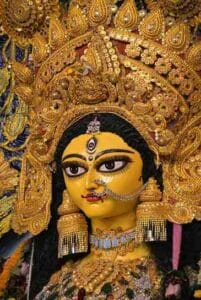
Santoshi Mata Aarti Explained: Line-by-Line Meaning & Complete Friday Worship Guide
Over 20 million households worldwide perform Santoshi Mata aarti every Friday, yet many devotees recite the words without understanding their profound spiritual significance. Whether you’re beginning your 16-Friday vrat in Toronto, continuing a family tradition in Mumbai, or exploring Hindu devotional practices in London, understanding what you’re actually singing transforms mechanical recitation into powerful spiritual communion.
This comprehensive guide decodes the Santoshi Mata aarti verse by verse, explaining its spiritual depth, historical context, and proper usage in worship. You’ll discover not just what the words mean, but how each phrase functions to invoke the goddess’s blessings, why specific imagery is used, and how to apply these teachings to modern life challenges. By the end, you’ll understand the complete devotional framework that has brought contentment and peace to millions across six continents.
Table of Contents
- Understanding Santoshi Mata Aarti: Structure and Purpose
- Opening Invocation: Calling the Divine Mother
- First Section: Describing the Goddess’s Divine Form
- Second Section: Celebrating Her Powers and Attributes
- Third Section: Recounting Her Compassion and Grace
- Fourth Section: Petitions and Prayers for Devotees
- Closing Salutations: Completing the Circle of Devotion
- Musical Structure and Melodic Significance
- How to Use the Aarti in Daily Worship
- Where to Find Authentic Aarti Lyrics
- Common Misunderstandings About the Aarti
- Frequently Asked Questions
- Conclusion
Understanding Santoshi Mata Aarti: Structure and Purpose
What Makes This Aarti Unique
The Santoshi Mata aarti differs significantly from classical Sanskrit hymns and ancient Vedic mantras. Composed in accessible Hindi during the modern era, it democratized goddess worship, making it available to ordinary households without requiring Sanskrit scholarship or priestly intermediaries.
Key Characteristics:
Simple Language: Unlike Sanskrit stotras requiring years of study, the aarti uses everyday Hindi vocabulary that even children can understand and memorize.
Repetitive Structure: The call-and-response pattern with recurring phrases (“Jai Santoshi Mata”) makes it ideal for group worship and easy memorization.
Emotional Accessibility: The aarti expresses universal human emotions—fear, hope, gratitude, surrender—in relatable terms rather than abstract philosophical concepts.
Musical Adaptability: The melody can be sung in various ragas and tempos, from slow meditative versions to energetic group celebrations.
Contemporary Relevance: References to modern problems (family disputes, financial struggles, social conflicts) make it immediately applicable to 21st-century life.
The Aarti’s Spiritual Architecture
Think of the aarti as a carefully constructed journey with five distinct phases:
Phase 1: Invocation (Lines 1-4)
The devotee calls the goddess’s attention, much like greeting a beloved mother. This establishes the devotional relationship and requests divine presence.
Phase 2: Description (Lines 5-12)
Detailed portrayal of the goddess’s form, qualities, and divine attributes. This section helps devotees visualize and connect with Santoshi Mata’s energy.
Phase 3: Glorification (Lines 13-20)
Celebration of the goddess’s powers, miracles, and capacity to help devotees. This builds faith and confidence in her abilities.
Phase 4: Petition (Lines 21-28)
Direct requests for specific blessings—removal of obstacles, granting of wishes, protection from harm. This is where devotees express their needs.
Phase 5: Surrender (Lines 29-End)
Final salutations and complete surrender to the goddess’s will, acknowledging that her wisdom exceeds human understanding.
How the Aarti Functions Spiritually
On the Physical Level:
The act of singing, waving lamps, and ringing bells engages the body in worship, preventing the mind from wandering. The rhythmic movements and sounds create a meditative state.
On the Energetic Level:
Traditional belief holds that specific sound vibrations (shabda shakti) invoke corresponding divine energies. The aarti’s phonetic patterns are designed to resonate with Santoshi Mata’s particular frequency.
On the Psychological Level:
Repeated affirmations of the goddess’s power to help rewire negative thought patterns. The practice cultivates hope, reduces anxiety, and builds emotional resilience.
On the Social Level:
Group aarti singing creates community bonds and shared spiritual identity, especially important for diaspora communities maintaining cultural connections.
On the Devotional Level:
The aarti serves as a love song to the divine, expressing bhakti (devotion) through poetic imagery and emotional intensity.
Opening Invocation: Calling the Divine Mother
Understanding “Jai Santoshi Mata”
The aarti typically begins with the repeated phrase “Jai Santoshi Mata” (Victory/Hail to Mother Santoshi), often sung multiple times to build devotional intensity.
Linguistic Breakdown:
“Jai” (जय): This Sanskrit-origin word means victory, triumph, or glory. When used in devotional context, it’s both a salutation and an affirmation—acknowledging the deity’s supremacy while requesting their victorious intervention in the devotee’s life.
“Santoshi” (संतोषी): Derived from “santosh” (contentment/satisfaction), the feminine form indicates the goddess who embodies and grants contentment. This isn’t passive resignation but active cultivation of inner peace regardless of external circumstances.
“Mata” (माता): Means mother. This establishes the devotional relationship as child to mother—the most intimate, trusting, and unconditional bond in human experience.
Why Repetition Matters
The opening typically repeats “Jai Santoshi Mata” 3-7 times. This isn’t mere redundancy but serves several purposes:
Attention Focusing: Just as you might call “Mom! Mom! Mom!” to get your mother’s attention, the repetition signals urgency and earnestness.
Mental Transition: The repetition helps devotees transition from worldly consciousness to devotional awareness, like a mental gear shift.
Energy Building: Each repetition increases devotional intensity, creating momentum that carries through the entire aarti.
Community Synchronization: In group worship, repetition allows everyone to join in, creating unified energy.
Mantra Effect: The sound vibrations themselves are considered spiritually potent, with power amplifying through repetition.
The Opening’s Emotional Tone
The beginning establishes an emotional atmosphere of:
Joy and Celebration: “Jai” is a victory cry, not a solemn prayer. This sets a positive, celebratory tone rather than fearful supplication.
Intimate Connection: “Mata” immediately establishes warmth and personal relationship rather than distant formality.
Confident Faith: The repetition conveys certainty that the goddess is listening and will respond, not desperate pleading.
Inclusive Welcome: The simple, repeated phrase allows everyone—children, elderly, those still learning—to participate immediately.
First Section: Describing the Goddess’s Divine Form
Physical Appearance and Iconography
The aarti’s early verses typically describe Santoshi Mata’s divine form, helping devotees visualize her during worship.
Common Descriptive Elements:
“Beautiful/Radiant Form”
References to the goddess’s captivating beauty aren’t superficial but represent spiritual truth—divine consciousness manifests as beauty, light, and grace. When devotees visualize beauty, they’re actually connecting with sattvic (pure) qualities.
“Seated on Lotus Throne”
The lotus symbolizes spiritual elevation above material existence. Though rooted in mud (material world), the lotus rises above water (emotions/desires) to bloom in sunlight (spiritual illumination). Santoshi Mata seated on a lotus indicates her transcendence while remaining accessible to devotees still struggling in worldly mud.
“Adorned with Red/Pink Garments”
Red represents shakti (divine feminine power), action, and auspiciousness in Hindu iconography. Pink combines red’s power with white’s purity. These colors indicate the goddess’s active involvement in devotees’ lives—she doesn’t merely observe but powerfully intervenes.
“Holding Symbolic Items”
Descriptions of items in the goddess’s four hands carry specific meanings:
- Sword: Cuts through ignorance and destroys negativity
- Trident: Controls the three gunas (qualities of nature) and grants spiritual evolution
- Blessing Gesture (Varada Mudra): Open palm granting boons and fulfilling wishes
- Protection Gesture (Abhaya Mudra): Raised palm assuring fearlessness and safety
Why Physical Description Matters
Meditation Support: Detailed description provides a clear mental image for meditation and visualization practices. Devotees close their eyes and “see” the goddess as described.
Archetypal Connection: The specific iconographic elements connect to universal archetypal patterns—the divine mother, the protective warrior, the compassionate benefactor—that resonate across cultures.
Devotional Focus: Having a clear image prevents the mind from wandering during worship. The description keeps attention anchored.
Emotional Engagement: Visual imagery engages emotions more powerfully than abstract concepts. Seeing the goddess’s compassionate face creates feelings of safety and love.
Symbolic Interpretation for Modern Devotees
Beyond literal description, each element offers practical spiritual guidance:
The Beautiful Form teaches: Divine consciousness is inherently attractive; spiritual practice naturally draws us when we understand its true nature.
The Lotus Throne teaches: We can rise above difficult circumstances without escaping them; transformation happens where we are.
The Red Garments teach: Spiritual power isn’t passive or weak; divine feminine energy is dynamic, strong, and actively protective.
The Multiple Arms teach: The goddess’s capacity is unlimited; she can address multiple devotee needs simultaneously without depletion.
Second Section: Celebrating Her Powers and Attributes
The Goddess as Obstacle Remover
A central theme in this section is Santoshi Mata’s power to remove obstacles (vighna nashini).
Conceptual Framework:
The aarti describes various types of obstacles the goddess removes:
“Sankat Haran” (Crisis Remover):
“Sankat” refers to acute difficulties—sudden financial loss, health emergencies, legal troubles, or relationship breakdowns. The aarti affirms the goddess’s intervention in critical situations.
Practical Application: When facing crisis, devotees mentally invoke this section of the aarti, reminding themselves that divine help is available. This psychological shift from panic to faith itself begins solving the problem by enabling clearer thinking.
“Dukh Bhanjan” (Sorrow Destroyer):
“Dukh” encompasses all forms of suffering—physical pain, emotional grief, mental anguish, spiritual confusion. The goddess doesn’t just manage suffering but destroys it at the root.
Psychological Insight: Modern psychology recognizes that how we relate to suffering matters as much as the suffering itself. The aarti’s confident assertion of suffering’s destruction helps devotees avoid the secondary suffering of hopelessness and despair.
“Kasht Nivaran” (Difficulty Preventer):
This goes beyond removing existing problems to preventing future difficulties. The goddess’s protective umbrella shields devotees from potential troubles.
Spiritual Teaching: Regular worship creates a protective energy field. While not magical thinking, this reflects reality—people cultivating contentment, gratitude, and faith naturally avoid many self-created problems and respond better to unavoidable ones.
The Goddess as Wish Fulfiller
“Manokamna Purti” (Desire Fulfillment):
The aarti celebrates Santoshi Mata as the granter of sincere wishes. However, understanding how this works requires spiritual sophistication:
Righteous Desires: The goddess fulfills wishes aligned with dharma (righteousness) and the devotee’s ultimate wellbeing. Wishes for others’ harm or unethical gain won’t manifest.
Divine Timing: Wish fulfillment happens when circumstances are optimal, not necessarily when devotees demand. This requires trust and patience.
Better Alternatives: Sometimes the goddess grants something better than what was requested because her wisdom sees what devotees cannot.
Internal Transformation: Often the “wish fulfillment” is actually a change in the devotee—they either get what they wanted or stop wanting it. Both outcomes bring contentment.
The Goddess as Protector
“Raksha Karan” (Granter of Protection):
This section describes comprehensive protection:
Physical Protection: Safety from accidents, violence, natural disasters, and health threats.
Economic Protection: Shielding from financial ruin, job loss, or business failure.
Social Protection: Defense against enemies, false accusations, social ostracism, or relationship betrayals.
Spiritual Protection: Guarding against negative energies, evil eye (nazar), black magic, and spiritual attacks.
Psychological Protection: Shielding mental peace from anxiety, depression, and destructive thought patterns.
Power Descriptions and Modern Life
For Anxious Minds:
When the aarti describes the goddess’s unlimited power, anxious devotees find relief. Their problems, which seem insurmountable to them, are manageable for divine consciousness.
For Depressed Hearts:
Descriptions of the goddess as “giver of joy” and “remover of sorrow” offer hope during depression’s darkness. The aarti becomes an affirmation that joy is possible and sorrow is temporary.
For Stressed Professionals:
References to the goddess resolving all difficulties speak directly to modern workplace pressures, competitive anxieties, and career uncertainties.
For Relationship Struggles:
The goddess’s ability to “create harmony” and “remove conflicts” addresses family tensions, marital problems, and social difficulties.
Third Section: Recounting Her Compassion and Grace
The Maternal Nature of Divine Grace
This section typically emphasizes Santoshi Mata’s motherly compassion, using imagery that evokes the protective, nurturing aspects of motherhood.
“Dayalu” (Compassionate One):
The goddess’s compassion is described as:
Unconditional: Like a mother’s love, it doesn’t depend on the child’s worthiness, behavior, or achievements. This is revolutionary in religious contexts that often emphasize merit and deservingness.
Immediate: A mother responds instantly to her child’s cry. Similarly, the goddess’s grace is portrayed as immediately available, not requiring years of penance or perfect virtue.
Unlimited: Maternal compassion never depletes. The goddess can help infinite devotees simultaneously without exhaustion.
Forgiving: Mothers forgive children’s mistakes. The goddess overlooks devotional imperfections and ritual errors when sincerity is present.
Stories and Miracles Referenced
Many aarti versions allude to (or explicitly mention) stories of the goddess helping devotees:
The Poor Woman’s Story:
Often referenced is the archetypal tale of an impoverished woman whose sincere Friday worship despite extreme poverty led to miraculous prosperity. This establishes that material wealth isn’t required for effective worship—only faith matters.
Spiritual Teaching: Economic disadvantage doesn’t create spiritual disadvantage. The goddess responds to heart quality, not offering quantity.
The Falsely Accused Devotee:
Stories of devotees facing false accusations or legal troubles resolved through the goddess’s intervention appear frequently.
Modern Relevance: In an era of social media accusations, workplace politics, and legal complexities, this resonates powerfully. The goddess represents ultimate justice beyond human systems.
The Harmonized Family:
Narratives of families torn by conflict reuniting through Santoshi Mata’s grace.
Psychological Insight: Often the “miracle” is internal—the goddess softens hearts, increases understanding, and reduces ego, enabling natural reconciliation.
Grace as Transformative Power
The aarti’s description of grace isn’t about receiving external gifts but undergoing internal transformation:
“Buddhi De” (Granting Wisdom):
The goddess grants the wisdom to see situations clearly, make correct decisions, and understand life’s deeper purposes.
Practical Application: Before major decisions, devotees invoke this aspect through the aarti, then trust their intuition—believing the goddess guides their judgment.
“Shakti De” (Granting Strength):
This isn’t just physical strength but:
- Emotional resilience to endure difficulties
- Mental strength to resist temptations
- Spiritual strength to maintain faith during trials
- Moral strength to choose right over expedient
“Santosh De” (Granting Contentment):
The ultimate gift—inner peace regardless of external circumstances. This is Santoshi Mata’s signature blessing, her very namesake.
Fourth Section: Petitions and Prayers for Devotees
Structure of Devotional Requests
This section typically shifts from describing the goddess to direct requests from devotees. The tone becomes more personal and intimate.
Common Prayer Themes:
1. Family Harmony and Peace
Typical Phrasing Themes: “Bring peace to my home,” “Unite my family,” “Remove conflicts.”
Cultural Context: In Hindu joint family systems (still common in India and diaspora communities), multiple generations live together, creating complex relationship dynamics. Santoshi Mata specializes in domestic harmony.
Modern Application: Even in nuclear families, relationship tensions—marital conflicts, parent-child struggles, sibling rivalries—remain universal. This petition addresses fundamental human needs for connection and peace.
2. Economic Prosperity and Security
Typical Phrasing Themes: “Bless my livelihood,” “Remove financial difficulties,” “Grant prosperity.”
Spiritual Balance: The aarti requests prosperity within the context of contentment—enough for comfortable living, not greedy accumulation. This distinguishes it from prosperity gospel approaches.
Practical Wisdom: Economic security enables spiritual practice. Constant survival stress impedes devotional development. The goddess is asked to provide sufficient material foundation for spiritual growth.
3. Health and Healing
Typical Phrasing Themes: “Grant health to my family,” “Remove diseases,” “Protect from illnesses.”
Complementary Approach: These petitions complement medical treatment rather than replacing it. The goddess works through doctors, medicines, and the body’s healing capacity.
Wholistic Understanding: Health requests often include mental and emotional wellbeing, not just physical conditions—reflecting traditional Hindu medicine’s integrated approach.
4. Protection from Enemies and Evil
Typical Phrasing Themes: “Protect from evil eye,” “Defend against enemies,” “Remove negative influences.”
Psychological Dimension: “Enemies” often represent internal saboteurs—self-doubt, destructive habits, negative thought patterns—as much as external opponents.
Social Reality: In competitive professional environments and complex social situations, devotees face genuine opposition. The goddess is petitioned for both protection and the wisdom to respond skillfully.
5. Success in Endeavors
Typical Phrasing Themes: “Bless my work,” “Grant success,” “Remove obstacles to achievement.”
Ethical Framework: Success requests assume righteous effort. The goddess helps dharmic pursuits, not unethical shortcuts.
Comprehensive Success: Beyond professional achievement, this includes success in relationships, spiritual practice, personal growth, and life’s broader purposes.
The Art of Spiritual Petition
The aarti teaches effective prayer through its structure:
Specificity with Surrender: Devotees can make specific requests while simultaneously surrendering to divine wisdom about outcomes.
Gratitude with Petition: Requests are framed within larger context of thanking for blessings already received.
Personal with Universal: Individual needs are expressed using universal language that allows all devotees to participate.
Confident Humility: Petitions express confident faith in the goddess’s power while maintaining humble recognition of human limitations.
From Petition to Transformation
The deepest teaching embedded in this section is that petitions themselves transform the petitioner:
Articulating Needs: Clearly expressing what you need creates self-awareness about true priorities versus superficial wants.
Releasing Control: Voicing requests and surrendering outcomes reduces anxiety-producing attempts to control everything.
Building Trust: Repeated petition and response experiences build faith in benevolent universal intelligence.
Cultivating Receptivity: Prayer postures the heart to receive—many blessings go unnoticed by those not paying attention.
Closing Salutations: Completing the Circle of Devotion
The Final Praises
The aarti’s conclusion returns to glorification and gratitude, creating circular structure: invocation → description → petition → gratitude.
“Teri Jai Ho” (Victory to You):
This phrase or similar victory salutations close most versions. The repetition of “Jai” at both beginning and end creates completeness—the devotional circle closes where it opened.
Psychological Closure: Humans need clear beginnings and endings. The closing salutations signal completion, allowing the mind to transition back to ordinary consciousness while retaining the devotional benefit.
Affirmation of Faith: Ending with victory declarations affirms confidence that prayers will be answered, creating positive expectation that itself facilitates manifestation.
Gratitude as Spiritual Technology
The closing gratitude section serves multiple functions:
Energetic Completion: Just as a business letter needs a closing signature, devotional practice needs proper conclusion. Gratitude provides this.
Shifting Focus: From “what I need” (petition section) to “what I’ve received” (gratitude section), shifting consciousness from lack to abundance.
Future Magnetism: Gratitude for current blessings creates magnetic quality that attracts future blessings—a principle recognized in both ancient wisdom and modern psychology.
Present Moment Awareness: Thanking for specific blessings forces attention to the present, counteracting worry about future or regret about past.
The Final Surrender
“Tumhari Sharan Mein” (In Your Refuge):
Most versions include explicit surrender phrases, acknowledging:
Human Limitation: “I’ve done what I can; the results are in your hands.”
Divine Wisdom: “You know better than I what’s truly good for me.”
Complete Trust: “Whatever you decide, I accept as your grace.”
Permanent Relationship: “This isn’t a one-time transaction but ongoing relationship.”
This surrender isn’t passive resignation but active trust—continuing to work diligently while releasing attachment to specific outcomes.
Concluding with Community
“Santoshi Mata Ki Jai” (Final Group Declaration):
The very last line is typically a collective “Jai” that all participants shout or sing together, creating:
Unity Experience: Individual practice culminates in community affirmation.
Energy Peak: The volume and enthusiasm peak at the end, leaving devotees energized rather than depleted.
Joyful Completion: The celebration tone counteracts any solemnity, ensuring worship feels uplifting rather than burdensome.
Easy Participation: Even those who don’t know the entire aarti can join the final “Jai,” creating inclusive belonging.
Musical Structure and Melodic Significance
The Traditional Melody
The Santoshi Mata aarti has a distinctive melodic structure that differs from classical ragas yet follows traditional devotional music principles.
Tempo and Rhythm:
Medium Tempo (Madhya Laya): Neither too fast nor too slow—approximately 80-100 beats per minute. This tempo is:
- Sustainable for multiple repetitions
- Conducive to meditative state without inducing sleep
- Allows clear pronunciation of each word
- Matches natural heartbeat rhythm when calm
Simple Rhythmic Pattern: The beat structure is straightforward, allowing non-musicians to clap and participate. Common patterns are 4/4 or 6/8 time signatures.
Call-and-Response Sections: The melody often alternates between lead singer and group response, creating dialogue structure.
Why the Melody Matters
Emotional Impact: The specific melodic curves evoke particular emotions:
- Rising phrases create hope and aspiration
- Sustained notes allow emotional absorption
- Falling phrases bring peace and resolution
Memory Enhancement: Melody aids memorization far more effectively than spoken words. Children learn the aarti through tune before understanding meaning.
Transcendent Experience: Music accesses non-verbal consciousness, creating states that words alone cannot achieve. The aarti’s melody opens devotional pathways beyond intellectual understanding.
Cultural Identity: For diaspora communities, the melody carries homeland memories, creating emotional connection across generations and geographies.
Regional and Individual Variations
No Single “Correct” Version:
Unlike Vedic mantras with precise pronunciation requirements, the Santoshi Mata aarti exists in multiple valid versions:
North Indian Classical Style: Influenced by Hindustani classical music, with ornamentation (alankara) and extended sustained notes.
Bhajan Style: Simpler folk melody, easier for group singing, emphasizing rhythmic clapping.
Film Music Influence: The 1975 movie “Jai Santoshi Maa” popularized specific melodic versions that many consider standard.
Contemporary Arrangements: Modern versions add instruments (harmonium, tabla, synthesizers) and Western harmonic concepts.
Personal Variations: Individual families develop slight melodic variations transmitted across generations, creating unique household traditions.
Instrumental Accompaniment
Traditional Instruments:
Harmonium: Provides melodic foundation and harmonic support. Its portable nature makes it ideal for home worship.
Tabla or Dholak: Percussion instruments maintain rhythm and add excitement, especially during group worship.
Hand Cymbals (Manjira): Small cymbals keep basic beat and add bright, joyful sound.
Bell (Ghanta): Rung continuously during aarti, believed to purify atmosphere and keep negative energies away.
Modern Adaptations:
- Synthesizers in temples with sound systems
- Audio tracks for home worship
- App-based accompaniment
- YouTube videos with full orchestration
Using Music in Personal Practice
For Beginners:
- Listen repeatedly to establish muscle memory
- Hum along before attempting words
- Don’t worry about perfect pitch—sincerity matters more
- Use recorded versions until confident singing alone
For Experienced Devotees:
- Explore different melodic interpretations
- Allow spontaneous variations during deep devotional states
- Teach the melody to children and new devotees
- Consider learning traditional instruments to enhance practice
For Non-Singers:
- Mental recitation while listening is completely valid
- Focus on meaning rather than melody
- Ring the bell with the rhythm
- Join only on repeated phrases like “Jai Santoshi Mata”
How to Use the Aarti in Daily Worship
Incorporating Aarti into Friday Vrat
Complete Ritual Sequence:
Step 1: Preparation (30 minutes before)
- Complete household chores so you’re not distracted
- Bathe and wear clean clothes
- Arrange the altar with fresh flowers and clean the area
- Prepare the gur-chana prasad
- Light incense to create sacred atmosphere
- Keep aarti text or device ready
Step 2: Initial Prayers (5 minutes)
- Sit before the altar in comfortable position
- Perform achamana (sipping water for purification)
- Invoke Lord Ganesha to remove obstacles: “Om Gam Ganapataye Namaha”
- State your sankalpa (intention) for the worship
- Close eyes and meditate on Santoshi Mata’s form for 2-3 minutes
Step 3: Offerings (10 minutes)
- Offer flowers while reciting goddess’s names
- Apply kumkum and turmeric to the image
- Offer incense and lamp
- Place the prasad before the deity
- Offer water in small vessel
Step 4: The Aarti Performance (5-10 minutes)
- Light the aarti lamp (5 wicks or camphor)
- Begin singing or playing the aarti
- Wave the lamp in traditional circular pattern
- Ring the bell throughout
- Maintain focus on the goddess’s form
- Sing with devotion, not just mechanically
- Repeat 1-3 times depending on time and devotion
Step 5: Personal Prayers (3-5 minutes)
- After completing the aarti song, sit quietly
- Speak to the goddess from your heart
- Share your challenges, gratitude, and requests
- This unstructured prayer time is crucial for personal connection
Step 6: Conclusion (5 minutes)
- Perform aarti with the flame to all family members
- Distribute the prasad to everyone present
- Consume prasad with reverence as first food after the fast
- Bow to the goddess in final salutation
- Sit quietly for a moment absorbing the peace
Daily Practice Beyond Friday Vrat
The aarti isn’t limited to the 16-Friday vrat. Many devotees incorporate it into daily life:
Daily Evening Aarti:
- Brief 10-minute practice every evening
- Maintains connection with the goddess
- Creates household routine and rhythm
- Especially beneficial during stressful periods
Morning Invocation:
- Sing just the opening “Jai Santoshi Mata” section each morning
- Takes only 2-3 minutes
- Sets positive tone for the day
- Can be done even during rushed mornings
Crisis Moments:
- Mentally recite during anxious moments
- Creates psychological anchor during stress
- Invokes the goddess’s protective presence
- Shifts focus from problem to solution
Gratitude Practice:
- Sing the closing gratitude section when good things happen
- Associates positive experiences with the goddess
- Builds habit of recognizing blessings
- Strengthens devotional relationship
Group Worship Applications
Family Aarti:
- Weekly family gathering for collective singing
- Strengthens family bonds through shared spiritual practice
- Teaches children traditional values
- Creates warm childhood memories
Community Satsang:
- Neighborhood devotees gathering at someone’s home
- Typically on Friday evenings
- Powerful collective energy created
- Social support network formed
Temple Participation:
- Joining organized temple aarti programs
- Experiencing larger collective consciousness
- Learning from more experienced devotees
- Contributing to community spiritual vitality
Adapting for Modern Schedules
For Working Professionals:
Time-Constrained Version (10 minutes total):
- Quick purification (wash hands/feet)
- Light lamp and incense
- Sing aarti once
- Brief prayer
- Consume prasad
Weekend Extended Version (45 minutes):
- Full elaborate puja on Fridays when time permits
- Abbreviated version on weekdays if continuing daily practice
For Students:
Exam Period Practice:
- Morning aarti before studying
- Evening gratitude after completing study
- Stress reduction through devotional routine
- Invokes wisdom and memory retention
For Parents with Young Children:
Family-Friendly Approach:
- Involve children in preparations (arranging flowers, lighting lamps)
- Teach melody gradually, making it fun
- Keep the practice shorter to maintain attention
- Reward participation with prasad distribution responsibility
For Elderly or Health-Challenged:
Simplified Practice:
- Remain seated throughout
- Use recorded aarti if singing is difficult
- Mental recitation is equally valid
- Focus on devotional feeling over physical ritual
Where to Find Authentic Aarti Lyrics and Resources
Legitimate Print Sources
Authorized Prayer Books:
Gita Press, Gorakhpur
- Website: https://www.gitapress.org
- Published authentic Hindu prayer compilations for over 100 years
- Book: “Aarti Sangrah” contains Santoshi Mata aarti
- Available in Hindi, English, and regional languages
- Extremely affordable (subsidized pricing)
- International shipping available
Bhavan’s Book University (Bharatiya Vidya Bhavan)
- Website: https://www.bvbdelhi.org
- Reputable cultural organization
- Publishes scholarly devotional literature
- Multiple language options
Diamond Pocket Books
- Popular devotional book publisher
- “Santoshi Mata Vrat Katha and Aarti” compilation
- Available on Amazon and Indian bookstores
- Includes stories, worship procedures, and aarti text
Where to Purchase:
- Amazon India (ships internationally)
- Indian grocery stores in USA, UK, Canada, Australia
- Hindu temple bookshops
- Online: ExoticIndia.com, Vedic Books
Digital and Audio Resources
Legitimate Music Platforms:
YouTube:
- Search “Santoshi Mata Aarti” for thousands of versions
- Recommended channels:
- Rajshri Soul (professional devotional music label)
- T-Series Bhakti Sagar (major music company)
- Individual temple channels for authentic traditional versions
- Look for high view counts and comments indicating authenticity
Spotify:
- “Santoshi Mata Aarti” albums available
- Artists: Anuradha Paudwal, Narendra Chanchal, Lata Mangeshkar
- Can download for offline listening
Apple Music / iTunes:
- Same devotional albums as Spotify
- One-time purchase options available
Gaana.com / JioSaavn:
- Indian music streaming platforms
- Extensive devotional music catalogs
- Free with ads or premium subscriptions
Amazon Music:
- Devotional albums available for purchase or streaming
- Often bundled with Prime membership
Temple Resources
Physical Temples:
In USA:
Hindu Temple of Greater Chicago
Address: 10915 Lemont Road, Lemont, IL 60439
Phone: +1 630-972-0300
Website: https://www.ramatemple.org
Resources: Bookshop with prayer books; Friday evening aarti programs
Sri Venkateswara Temple, Pittsburgh
Address: 1230 S McCully Drive, Penn Hills, PA 15235
Phone: +1 412-373-3380
Website: https://www.svtemple.org
Resources: Cultural classes, devotional music programs
In UK:
Shree Sanatan Hindu Mandir, Leicester
Address: Weymouth Street, Leicester LE4 6FP
Resources: Weekly aarti programs; prayer book library
ISKCON Bhaktivedanta Manor, London
Address: Hilfield Lane, Aldenham, Watford WD25 8EZ
Website: https://www.bhaktivedantamanor.co.uk
Resources: Extensive devotional resources; cultural programs
In UAE:
Shiva and Krishna Mandir, Dubai
Address: Sindagha Road, Bur Dubai (Hindu Lane area)
Timing: 6 AM-12 PM, 4 PM-10 PM
Resources: Friday special programs; prasad distribution
In Canada:
BAPS Shri Swaminarayan Mandir, Toronto
Address: 61 Claireville Drive, Toronto, ON M9W 5Z7
Website: https://www.baps.org/Toronto
Resources: Cultural programs, devotional music classes
In Australia:
Sri Durga Temple, Sydney
Address: 38 Rochester Street, Homebush, NSW 2140
Resources: Friday worship programs; community satsangs
In Singapore:
Sri Srinivasa Perumal Temple
Address: 397 Serangoon Road, Singapore 218128
Website: https://www.heb.gov.sg/srinivasaperumal
Resources: Daily worship; cultural heritage programs
Mobile Applications
Devotional Apps (Free/Freemium):
“Hindu Calendar”
- Contains prayer texts including aartis
- Panchang (Hindu calendar) for auspicious timings
- Available: iOS and Android
“Aarti Sangrah”
- Collection of multiple Hindu aartis
- Audio and text versions
- Offline capability
“iTelugu – Devotional Songs”
- Extensive devotional music library
- Includes Santoshi Mata content
- Free with ads
“Santoshi Mata Chalisa and Aarti”
- Dedicated Santoshi Mata app
- Text, audio, and meaning explanations
- Reminder features for Friday worship
Online Text Resources
For Reference (Not Download):
Many educational and cultural websites provide aarti text for reference:
Sacred-Texts.com
- Archive of religious texts
- Academic/educational fair use
- Multiple Hindu devotional texts
Sanskrit Documents
- University and research compilations
- Transliteration resources
Temple Websites
- Many temples publish aartis performed in their sanctuaries
- Check websites of temples listed above
Learning Resources
YouTube Tutorial Channels:
- “Learn Bhajans” channels offering line-by-line teaching
- Pronunciation guides for non-Hindi speakers
- Melodic variations explained
Language Learning:
For Understanding Hindi:
- Duolingo Hindi course (basic language foundation)
- YouTube channels: “Learn Hindi with Anil”
- Understanding the aarti becomes much richer with basic Hindi knowledge
Important Advisory
Verify Authenticity:
- Cross-reference texts from multiple sources
- Traditional temple versions are most reliable
- Be cautious of heavily commercialized or “modernized” versions that may alter original meanings
- When in doubt, consult knowledgeable priests or long-time devotees
Copyright Respect:
- Don’t illegally reproduce or distribute copyrighted recordings
- Support artists and publishers who create devotional content
- Free resources exist, but paid options often offer better quality and support the devotional music ecosystem
Common Misunderstandings About the Aarti
Misconception 1: The Aarti Has Magical Power Independent of Devotion
The Misunderstanding:
Some devotees treat the aarti like a magic spell—believing that merely reciting words produces automatic results regardless of internal state.
The Reality:
The aarti is a devotional tool that works through the devotee’s sincere engagement. The words themselves don’t have mechanical power; they create pathways for devotional consciousness to connect with divine consciousness.
Proper Understanding:
Think of the aarti as sheet music. The notes on paper don’t create music—only when played with skill and feeling does music emerge. Similarly, aarti words are frameworks for devotional expression, not magical formulas.
Practical Implication:
One sincere, heartfelt recitation with complete focus exceeds one hundred mechanical repetitions. Quality of devotion always supersedes quantity of repetition.
Misconception 2: Exact Pronunciation Is Required
The Misunderstanding:
Some devotees obsess over perfect pronunciation, fearing that mistakes will anger the goddess or nullify benefits.
The Reality:
Santoshi Mata, as the goddess of contentment, values sincere effort over technical perfection. She responds to the heart’s devotion, not the tongue’s precision.
Cultural Context:
Sanskrit mantras do have specific pronunciation requirements due to their vibrational technology. However, the Santoshi Mata aarti is Hindi devotional poetry, not Sanskrit mantra. The standard is different—emotional sincerity matters most.
Practical Implication:
Non-Hindi speakers, children, and those with speech impediments should worship confidently, knowing the goddess hears the heart’s language. Make honest efforts to pronounce correctly, but don’t let fear of mistakes prevent practice.
Misconception 3: The Aarti Only Works During Formal Worship
The Misunderstanding:
Devotees sometimes believe the aarti is only effective when performed with full ritual setup—altar, lamps, incense, etc.
The Reality:
While formal worship enhances the experience, the aarti remains powerful in any context:
- Mentally recited during commute
- Hummed while doing housework
- Played on devices during work breaks
- Sung in car or while walking
Traditional Support:
The concept of “smarana” (remembrance) in Hindu devotion validates informal practice. Remembering the divine in any way, any time, creates connection.
Practical Implication:
Don’t let lack of ritual materials prevent practice. The goddess is everywhere, accessible always. Use formal worship when possible; use informal practice when necessary.
Misconception 4: Results Must Be Immediate
The Misunderstanding:
Modern consumer mentality sometimes infects spiritual practice—expecting instant results like fast food or internet shopping.
The Reality:
Spiritual practices work on divine timing, not human schedules. Benefits unfold in three timeframes:
Immediate: Psychological peace and stress reduction happen during practice itself.
Medium-term: Life changes often manifest within weeks or months—the traditional 16-Friday period exists for this reason.
Long-term: Deepest transformations—character development, karmic purification, spiritual evolution—unfold over years.
Wisdom Teaching:
The goddess often delays wish fulfillment because premature granting would harm rather than help. Trust develops through delayed gratification.
Practical Implication:
Maintain consistent practice without obsessing over timelines. Focus on the internal peace developed during worship rather than external results.
Misconception 5: Friday Fasting Alone Brings Benefits
The Misunderstanding:
Some devotees reduce the entire practice to fasting—skipping sour foods on Friday while ignoring devotional aspects.
The Reality:
The fast is one element within a comprehensive devotional system:
- Aarti singing (devotional expression)
- Fasting (physical discipline)
- Charity (compassionate action)
- Purity of thought (mental cultivation)
- Story listening (wisdom absorption)
Integrated Approach:
Benefits emerge from the synergy of all elements, not any single component. Fasting without devotion is just dieting. Devotion without fasting is incomplete discipline.
Practical Implication:
If health prevents fasting, maintain other elements and receive benefits. If circumstances prevent elaborate worship, sincere simple aarti with fasting still works. Integrate what you can; don’t abandon everything if you can’t do everything.
Misconception 6: The Goddess Punishes Mistakes
The Misunderstanding:
Fear-based belief that forgetting aarti, breaking fast accidentally, or making ritual errors will result in divine punishment.
The Reality:
Santoshi Mata embodies maternal compassion. Like any good mother, she corrects lovingly and forgives readily. Punishment narratives come from fear, not understanding of divine nature.
Story Context:
The Santoshi Mata katha (story) includes incidents where the goddess’s “tests” taught devotees deeper lessons. These weren’t punishments but educational experiences.
Proper Understanding:
If you make mistakes:
- Acknowledge them honestly
- Apologize sincerely
- Correct going forward
- Trust in divine forgiveness
- Learn from the experience
Practical Implication:
Don’t let fear of mistakes prevent starting or continuing practice. The goddess wants devotees to grow through practice, not achieve perfection before beginning.
Misconception 7: Only Women Should Worship Santoshi Mata
The Misunderstanding:
Because the devotee base is predominantly female and the deity is feminine, some assume male worship is inappropriate or ineffective.
The Reality:
Hindu theology recognizes that souls are neither male nor female—these are temporary bodily identifications. All souls can worship any divine form.
Historical Precedent:
Major male devotees of feminine deities include:
- Ramakrishna Paramahamsa (Kali devotee)
- Adi Shankaracharya (composed Devi hymns)
- Countless male priests serving goddess temples
Practical Observation:
Men seeking contentment, family harmony, and protection benefit equally from Santoshi Mata worship. The goddess’s maternal nature welcomes all children regardless of gender.
Practical Implication:
Men should worship without hesitation or self-consciousness. The path of contentment transcends gender.
Misconception 8: Expensive Offerings Bring Better Results
The Misunderstanding:
Belief that elaborate offerings, costly decorations, or large donations produce proportionally larger benefits.
The Reality:
The defining story of Santoshi Mata involves a poor woman whose sincere worship with minimal offerings brought tremendous blessings—specifically contradicting this materialistic view.
Spiritual Principle:
The goddess values:
- Sincerity of devotion over size of offering
- Purity of heart over wealth of materials
- Consistency of practice over grandeur of ritual
- Inner transformation over external performance
Scriptural Support:
The Bhagavad Gita (9.26) states Krishna accepts even a leaf, flower, fruit, or water when offered with devotion—establishing that love matters, not expense.
Practical Implication:
Don’t let financial limitations prevent worship. Simple home altar, basic offerings, and sincere heart constitute complete worship. Conversely, don’t assume expensive offerings compensate for lack of devotion.
Read this also :
- Hindu Temples Near Me USA: Complete Directory State Wise Mandirs
- Aarti Hanuman Lala Ki Lyrics: Bajrang Bali Aarti Complete Guide with Meaning
- Hanuman Chalisa Lyrics Hindi English PDF: Complete 40 Verses Meaning & Free Download
- Achyutam Keshavam Krishna Damodaram Lyrics Hindi English: Complete Bhajan Guide
- Om Jai Shiv Omkara Aarti Lyrics Hindi English: Complete Shiva Aarti
Frequently Asked Questions About Santoshi Mata Aarti
How is Santoshi Mata aarti different from other Hindu aartis?
The Santoshi Mata aarti has several distinctive features:
Modern Composition: Unlike ancient aartis (Ganesha, Durga, Lakshmi) composed in Sanskrit centuries ago, the Santoshi Mata aarti is relatively recent, composed in accessible Hindi.
Simplified Language: Uses everyday vocabulary rather than classical Sanskrit terminology, making it accessible to common people without religious education.
Specific Focus: Emphasizes contentment (santosh) as the primary blessing, rather than wealth (Lakshmi), knowledge (Saraswati), or power (Durga), though it includes these elements.
Contemporary Relevance: Addresses modern problems—family disputes, financial stress, workplace challenges—in more explicit terms than classical aartis.
Friday Association: Specifically connected to Friday worship and the 16-week vrat, creating a unique temporal rhythm.
Film Influence: Popularized through cinema rather than solely through temple tradition, giving it unique cultural positioning.
These differences don’t make it superior or inferior to classical aartis—simply different in purpose and approach.
Can I sing Santoshi Mata aarti for other goddesses or vice versa?
Technically Possible but Not Recommended:
Each aarti is specifically composed for a particular deity, referencing their unique attributes, iconography, and powers. Singing Durga aarti to Santoshi Mata or vice versa would be like sending a letter with the wrong name—the sentiment might be appreciated, but the specificity is lost.
Better Approach:
- Learn the specific aarti for each deity you worship
- Santoshi Mata aarti for Santoshi Mata worship
- Lakshmi aarti for Lakshmi worship
- Generic devotional songs work across deities, but specific aartis should match their deity
Exception:
If you genuinely don’t know the appropriate aarti and are worshipping sincerely, the divine responds to devotional intent. But learning the proper aarti shows greater respect and creates more precise energetic connection.
What if I don’t understand Hindi at all?
You have several valid options:
Option 1: Learn Through Repetition
Many non-Hindi speakers successfully learn the aarti phonetically through repeated listening, much like people learn songs in foreign languages. Understanding comes gradually.
Option 2: Study Translation
Use resources like this guide to understand meaning, then recite the original Hindi (or transliteration) with full comprehension of what you’re saying.
Option 3: Translate and Recite
Some devotees create their own English translations and recite those instead. While non-traditional, sincere devotion in any language reaches the divine.
Option 4: Mental Devotion
Listen to traditional versions while mentally offering prayers in your own language. Participate where you can (the repeated “Jai Santoshi Mata”) and absorb the devotional atmosphere.
Recommendation:
Combination approach—learn the Hindi phonetically for tradition and connection, while studying the meaning in English for deep understanding.
How many times should I sing the aarti during one worship session?
No Fixed Rule:
Traditional practice varies widely:
Once: Sufficient for busy schedules or daily practice; completion matters more than repetition
Three Times: Common traditional number; represents dedication to the divine trinity or past-present-future
Seven Times: Associated with spiritual completeness (seven chakras, seven lokas/realms)
Eleven Times: Considered auspicious number; often used for special occasions or wishes
Twenty-one Times: Deep devotional practice; creates profound meditative state
One Hundred Eight Times: Reserved for intense sadhana; 108 is spiritually significant number
Practical Guideline:
Quality exceeds quantity. Factors to consider:
- Available time
- Ability to maintain focus (repetition loses benefit when attention wanders)
- Specific intention (serious wishes may warrant more repetitions)
- Physical capacity (elderly or health-challenged devotees shouldn’t strain)
Recommended Starting Point:
New practitioners should begin with once per session, gradually increasing as devotion and capacity grow.
Can I perform the aarti at any time or only during evening?
Evening is Traditional but Not Mandatory:
Why Evening is Common:
- Conclusion of workday allows focused attention
- Twilight (sandhya) time is spiritually potent in Hindu tradition
- Breaking Friday fast after evening aarti follows traditional timing
- Family members can gather after work/school
Other Valid Times:
Morning (6-9 AM): Excellent for setting daily intention; some devotees prefer morning practice
Afternoon (12-1 PM): Acceptable if morning and evening are impossible due to work schedules
Night (8-10 PM): Works for those with evening commitments; provides peace before sleep
Anytime: Emergency situations, crisis moments, or spontaneous devotional impulse—the goddess is always accessible
Consistency Matters More Than Timing:
Regular practice at the same time (even if non-traditional) exceeds irregular practice at “correct” times.
Is there any time when I should NOT perform the aarti?
Very Few Restrictions:
Hindu tradition identifies some inauspicious times (Rahu kaal, eclipse periods), but Santoshi Mata worship is generally considered appropriate anytime.
Traditional Cautions:
During Extreme Impurity: Immediately following childbirth or death in household (10-13 day mourning period). However, even this varies by tradition—some say the goddess’s name can be chanted anytime for comfort.
Under Intoxication: Performing worship while drunk or high disrespects the divine and prevents genuine devotional connection.
With Malicious Intent: Using the aarti to harm others or for unethical purposes violates the goddess’s nature.
While Eating: Actively consuming food while singing aarti is considered disrespectful.
Modern Perspective:
Santoshi Mata, as the goddess of contentment and compassion, is particularly accessible. When in crisis—regardless of traditional timing considerations—calling upon her is always appropriate.
Best Practice:
Maintain regular practice during auspicious times. During traditionally inauspicious periods, mental recitation or listening to recordings maintains connection while respecting tradition.
What should I do with aarti materials after worship?
Proper Disposal and Care:
The Aarti Lamp:
- Clean and store respectfully
- Reuse for future worship
- Keep in clean, designated place
- Don’t use for non-religious purposes
Flowers:
- Can be dried and saved
- Offer to tulsi plant or sacred tree
- Compost respectfully
- Never throw in garbage directly; use leaf/paper wrapping if necessary
- Some traditions immerse in flowing water
Incense Ash:
- Collect and save in designated container
- Mix with holy water for spiritual cleansing
- Sprinkle in garden (natural fertilizer)
- Apply to forehead as blessing
Prasad (Food Offering):
- Never waste or discard
- Consume with reverence
- Share with others
- If excess remains, give to animals or birds rather than trash
Sacred Texts/Lyrics:
- Store carefully when not in use
- Never place on floor
- If paper deteriorates beyond use, immerse in flowing water or bury respectfully
- Digital versions can be deleted but should be consciously closed, not left open disrespectfully
General Principle:
All items used in worship carry sacred energy. Treat with ongoing respect, not just during the ritual itself.
Can children participate in Santoshi Mata aarti?
Absolutely Yes—Encouraged!
Benefits for Children:
Spiritual Foundation: Early exposure creates lifelong devotional capacity
Cultural Identity: Maintains heritage connection, especially important for diaspora communities
Family Bonding: Shared worship creates warm family memories
Moral Development: Devotional practice cultivates values like discipline, gratitude, and compassion
Stress Management: Even children experience anxiety; devotional practice provides coping tools
Age-Appropriate Participation:
Ages 2-5:
- Simple participation: ringing bells, offering flowers
- Learning melody through repetition
- Very short attention span—5 minutes maximum
- Focus on making it fun and positive
Ages 6-10:
- Can learn full aarti with practice
- Understand basic meaning when explained simply
- Can participate in fasting (modified—fruits, milk)
- Take responsibility for parts of ritual
Ages 11+:
- Full participation capability
- Can perform complete worship independently
- Understand philosophical teachings
- May complete full Friday vrat with parental guidance
Important Cautions:
Never Force: Spiritual practice should be invitation, not obligation. Forcing creates resentment and rebellion.
Age-Appropriate Expectations: Don’t expect adult-level focus or devotion from children.
Make It Enjoyable: Incorporate stories, songs, treats (prasad) to create positive associations.
Model Rather Than Lecture: Children learn devotion by watching parents’ sincere practice more than through verbal instruction.
Does performing the aarti create any karmic obligations?
Understanding Devotional Karma:
No Negative Obligations:
Sincere devotion creates only positive karmic consequences. You’re not “trapped” or obligated beyond your willing commitment.
Natural Continuation:
When the aarti brings blessings, natural gratitude motivates continued practice—this is organic, not obligatory.
Vrat Completion:
The 16-Friday vrat should be completed once begun, but this is self-imposed discipline, not cosmic obligation. If genuine emergency prevents completion, the goddess understands.
Vow Specificity:
If you make specific vows (“I’ll perform aarti daily for one year if you grant this wish”), you create your own obligation. Be thoughtful about such promises—the goddess doesn’t need them, but your integrity does.
Freedom in Devotion:
True bhakti (devotion) is characterized by freedom, not bondage. You practice because you want to, not because you must.
Practical Guidance:
Approach devotion with joyful commitment rather than fearful obligation. If life circumstances change making practice difficult, adjust rather than abandon—the goddess values sincere effort over rigid perfection.
Conclusion: The Path of Contentment Through Devotion
Understanding the Santoshi Mata aarti transforms it from religious ritual to profound spiritual practice. Each phrase carries layers of meaning—from the simple joy of “Jai Santoshi Mata” to the deep surrender of the closing verses. This guide has provided you with the framework to engage these meanings consciously, making every recitation an opportunity for devotional deepening and personal transformation.
The aarti’s true power lies not in magical words but in the consciousness you bring to them. When you understand that “removal of obstacles” refers to internal blockages as much as external challenges, the practice becomes psychological therapy. When you grasp that “granting of wishes” often means transformation of desires themselves, you access wisdom traditions. When you recognize the goddess as your own deepest consciousness clothed in divine imagery, you approach enlightenment.
Your Next Steps on the Devotional Path:
- Deepen Understanding: Return to this guide regularly as your practice evolves; each reading reveals new layers
- Establish Consistency: Commit to regular practice, starting with manageable frequency
- Obtain Resources: Acquire legitimate lyric sources and quality audio recordings
- Join Community: Connect with other devotees through temple participation or online groups
- Share the Practice: Teach children, introduce friends, spread the path of contentment
- Track Transformation: Journal about insights, experiences, and life changes emerging from practice
- Balance Knowledge and Devotion: Study meaning while cultivating heart connection
Authentic Resource Reminder:
For complete aarti lyrics, visit:
- Legitimate temples in your area (addresses provided in previous sections)
- Authorized publishers: Gita Press (https://www.gitapress.org)
- Licensed music platforms: YouTube (Rajshri Soul, T-Series Bhakti Sagar), Spotify, Apple Music
- Verified Hindu cultural organizations and temple websites
Sacred Locations for Deepening Practice:
- Hindu Temple of Greater Chicago: 10915 Lemont Road, Lemont, IL 60439, USA
- Shiva Krishna Mandir, Dubai: Bur Dubai, Sindagha Road, near Hindu Lane, UAE
- Shree Sanatan Mandir, Leicester: Weymouth Street, Leicester LE4 6FP, UK
- BAPS Mandir, Toronto: 61 Claireville Drive, Toronto, ON M9W 5Z7, Canada
- Sri Durga Temple, Sydney: 38 Rochester Street, Homebush, NSW 2140, Australia
- Sri Srinivasa Perumal Temple: 397 Serangoon Road, Singapore 218128
The Ultimate Teaching:
Santoshi Mata’s greatest blessing isn’t wish fulfillment but the contentment that makes wish fulfillment unnecessary. As you progress in this practice, you may discover that the peace cultivated during aarti becomes more valuable than any external blessing you initially sought. This discovery marks spiritual maturity—the transition from transactional religion to transformational spirituality.
May your aarti singing bring the goddess’s presence into your heart. May your Friday fasting purify body and mind. May your devotion transform challenges into opportunities. May you find the contentment that transcends circumstances. May Santoshi Mata’s grace illuminate your path and establish permanent residence in your consciousness.
Jai Santoshi Mata Ki Jai!
Share your aarti practice experiences below! How has understanding the meaning changed your worship? What challenges have you faced in maintaining Friday vrat? What blessings have you received? Your story might inspire thousands of fellow devotees worldwide.